
Profile
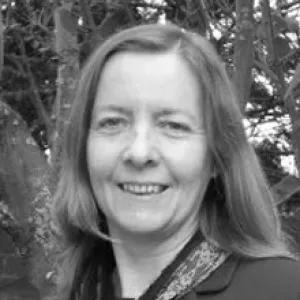
Alison is a Senior Research Associate in the Ecosystems Group at the Environmental Change Institute, where she works closely with the Leverhulme Centre for Nature Recovery and the Nature-based Solutions Initiative.
Her first degree was in Natural Sciences (University of Cambridge) followed by an MSc in Exploration Geophysics. She worked for 15 years as a senior environmental consultant, specialising in climate change, transport, energy and waste management policy. She was then a freelance consultant and writer for a few years, and wrote The Climate Bonus: co-benefits of climate policy, which explores the additional benefits that society can gain through tackling climate change, including cleaner air, biodiversity protection, a more resource-efficient economy and healthier lifestyles.
Since joining ECI in 2014, Alison has worked closely with a range of non-academic partners to develop and apply practical methods of mapping and modelling opportunities for nature recovery and nature-based solutions, and assessing the outcomes for people, climate and biodiversity. Her main interest is in the synergies and trade-offs between different approaches to tackling societal challenges, and she sees nature-based solutions and green infrastructure as having a strong role to play in providing multiple benefits for climate adaptation, mitigation, biodiversity and human well-being.
Alison has worked on many different projects around nature recovery and sustainable land-use. As part of the European Commission's OPENNESS project, she carried out a major review of the links between natural capital attributes and ecosystem services. She also worked with stakeholders in Essex and Warwickshire to explore methods for mapping ecosystem services, including hard-to-measure cultural services such as aesthetic value, recreation and a 'sense of place'. On the European Commission's IMPRESSIONS project, she explored the potential for integrated climate mitigation and adaptation pathways to tackle high levels of climate change.
Since then, Alison has been working closely with local and national government organisations, nature groups and other stakeholders in the UK, building links between research and practice. She has tested and applied a range of tools for mapping and assessing the value of urban green infrastructure, starting with a project in Bicester for Cherwell District Council, and then helping to develop Ecosystems Knowledge Network's Tool Assessor service. Alison built on this knowledge to develop natural capital maps for strategic planning in Oxfordshire and the wider Oxford-Cambridge arc. As part of the Agile Initiative research 'sprint' on scaling up Nature-based Solutions in the UK, these maps later evolved into the Agile Opportunity Maps which are intended to help to deliver the right nature recovery interventions in the right places to meet community needs. These maps have been applied to support development of Local Nature Recovery Strategies in several counties, including Yorkshire, Somerset, Surrey and Shropshire. The Agile sprint also produced the NbS Knowledge Hub website, a one-stop-shop with tools and guidance to support practitioners in developing nature-based solution projects in the UK.
As part of the HERO network (Healthy Ecosystem Restoration in Oxfordshire), Alison also contributed to Oxfordshire’s Local Nature Recovery Strategy and supported Oxfordshire’s Local Nature Partnership to assess opportunities for nature finance.
Working closely with Natural England, she developed the Environmental Benefits from Nature (EBN) Tool. This complements the Biodiversity Metric, and aims to help improve the design of new urban developments by indicating their impacts on 18 ecosystem services. Alison also worked with Natural England on the design of their Green Infrastructure Standards, and contributed to a study of equitable access to green space in Oxfordshire. This evolved into development of a new Accessible Green Infrastructure Equity tool which will be available across England.
Alison also leads development of the UK FABLE (Food, Agriculture, Biodiversity, Land use and Energy) model, which assesses land-use synergies and trade-offs, most recently as part of the Land Use for Net Zero, Nature and People (LUNZ) Hub.
Projects
- Infrastructure systems
- HERO – Healthy Ecosystems Restoration in Oxfordshire
- AGILE – Scaling up Nature-based Solutions in the UK
- FABLE - Food, Agriculture, Biodiversity, Land Use and Energy
- Environmental Benefits from Nature (EBN) Tool - for Natural England
Report
Pathways to a Zero Carbon Oxfordshire: report
Oxfordshire has made good progress on achieving its climate goals, with success in decarbonising electricity and reducing energy demand over the last. This report addresses how Oxfordshire can sustain the momentum of the last decade to achieve net-zero emissions. There remains significant work to do to decarbonise transport, reduce reliance on fossil fuels for heating, and protect and enhance carbon stored in the natural environment.