




A new study from researchers at the Environmental Change Institute (ECI), has developed a simple way to better understand how policy and practical interventions in the food system affect health, social values, economy, and the environment.
The study, published in Global Food Security, introduces the Food Co-Centre Sustainability Compass. It was led by Dr Alice Gilmour, with Dr Jing Zhang, Dr John Ingram, and Dr Monika Zurek from ECI’s Food Systems Transformation Group.
Food policy is often developed in separate “silos” — for example, farming, health, and environmental policies are usually designed independently. While this can make policy easier to manage, it can also mean that decisions in one area unintentionally create problems in another. For instance, a policy that improves public health may affect food prices or farm incomes, while changes in farming practices can influence emissions, biodiversity, and water quality.
The Compass is designed to make these relationships easier to see. Instead of focusing on single issues in isolation, it brings together a wide range of food system outcomes in one place, including health and nutrition, affordability, farming livelihoods, environmental impacts, food safety, and social wellbeing. This helps highlight both trade-offs — where improving one outcome may worsen another — and synergies, where one action can deliver benefits in several areas at once.
Lead author Dr Alice Gilmour said:
Food systems are highly interconnected, but policy is still often developed in separate departments. The Compass wording and structure is applicable in any geography and can be used by the public sector and/or private sector as an ‘aide-mémoire’ to inform decision-making."
The tool was developed as part of the Co-Centre for Sustainable Food Systems and involved close collaboration with stakeholders across Ireland and the UK, including government, industry, research, and civil society. This ensured it reflects real-world decision-making challenges as well as academic research.
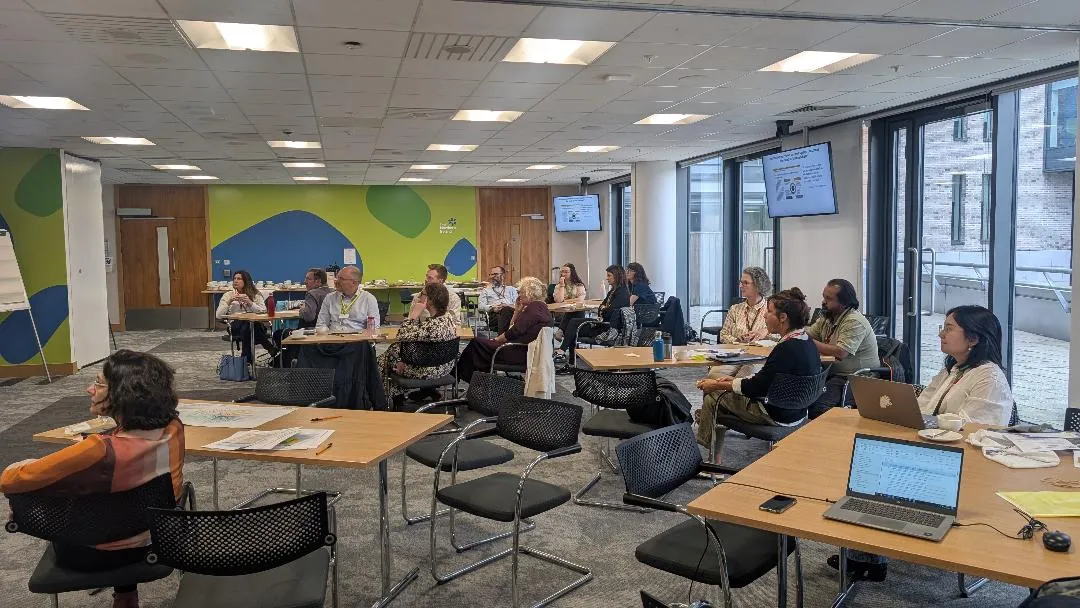
In practice, the Compass can be used in workshops and policy discussions to explore questions such as what happens to food prices if farming practices change, or how improvements in diets might affect emissions or farm incomes. Rather than offering fixed answers, it is intended to support more joined-up thinking about complex decisions.
The researchers hope the Compass will help governments, organisations, and communities take a more integrated approach to food policy, and better reflect the complexity of how food systems actually operate. As pressure grows to deliver healthier, fairer, and more sustainable food systems, they argue that tools like this can help move conversations beyond single issues and towards a more connected view of the system as a whole.
Read the full paper in Global Food Security: A compass identifying outcomes for sustainable food systems