


A new report has set out how the UK might respond to major disruptions to food supplies triggered by events such as war, extreme weather, or cyber-attacks, and what can be done now to prevent such disruptions from escalating into a crisis.
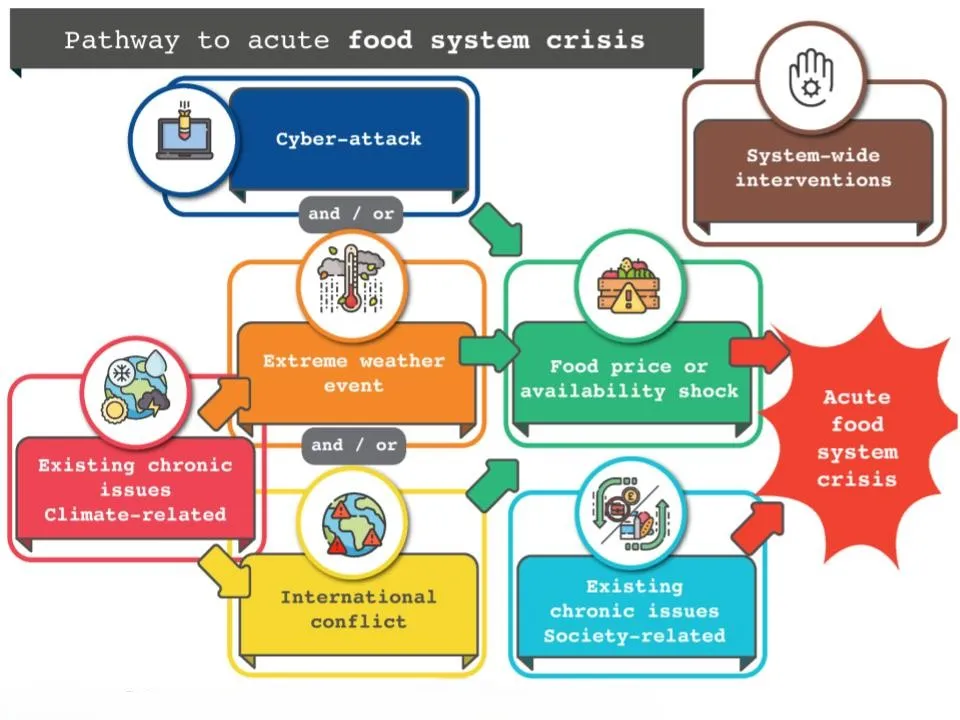
39 food system experts, including two from the Environmental Change Institute at the University of Oxford, have mapped how shocks to the food system, such as sudden price hikes or food shortages, could intensify pressure on already vulnerable parts of the system, ultimately increasing strain, instability, and the risk of social unrest.
Recent events have served as a wake-up call. From cyber-attacks disrupting major retailers like M&S and Co-op, to the global price shocks caused by the war in Ukraine, the dependence of the UK food system on fragile, just-in-time networks has been laid bare.
Published in the journal Sustainability, the study argues that long-standing structural issues are leaving the UK dangerously exposed. Addressing these weaknesses, the researchers say, is critical to improving national food resilience.
The report outlines how a major international conflict could lead to trade disruptions, surging energy prices, disrupted agricultural and food supply chains, and escalating food costs. Rising prices would disproportionately affect low-income households, restricting access to nutritious food and heightening food insecurity. This, in turn, could fuel social tensions and lead to increases in food fraud and sales on the black market, which could result in more food-related illnesses. In a worst-case scenario, public trust in government and business could erode to the point of unrest or riots.
To reduce these risks, the researchers recommend key interventions, including increasing UK energy security, diversifying food value chains, and promoting more varied and resilient diets.
The report also explores how other triggers, such as cyber attacks or extreme weather events, could cause similar cascading crises, either independently or in combination.
Based on interviews with more than 30 food system experts from academia, government, and industry, the study identifies key systemic weaknesses, crisis triggers, and interventions that could prevent them. It also presents a detailed, interconnected map of the UK food system, building on principles of systems thinking (1,2), a new tool already being used by policymakers to guide more resilient decision-making.
Dr Monika Zurek, Food Systems Transformation Group Lead at the ECI, said:
The paper shines light on current, often overlooked vulnerabilities of the UK food system and how they could lead to serious consequences for UK consumers as we take access of cheap food all year round for granted. There is an urgent need for us to rethink how to increase the resilience of the whole UK food system”.
Dr John Ingram, Senior Researcher, added:
This study shows the importance of taking a food system approach rather than assessing impacts on individual food system activities such as agriculture or food processing or logistics”.
Professor Sarah Bridle, Chair of Food, Climate and Society at the University of York, and lead author, said: “The stability of the UK’s food system is a critical aspect of national security. While we can’t always prevent future shocks, we can build resilience to withstand them, and stop a bad situation from becoming a crisis. While there is a growing awareness of the potential risks, not enough coordinated work is being done to address the weak spots in the system, and how people are likely to be affected. Understanding how the system might react to extreme pressure is the first step to preventing worst-case scenarios unfolding in the future.”
Read the full report in Sustainability: Potential Pathways and Solutions to Acute Food System Crisis in the UK