






The recently completed iDODDLE research project reveals that digital technologies in daily life can both increase and reduce carbon emissions — outcomes depend on technology design, social context, and users’ motivations.

A major research project led by the Environmental Change Institute (ECI) at the University of Oxford has found that digital technologies and AI applications are fundamentally reshaping how people use energy — but often not in straightforward or predictable ways.
The iDODDLE project on the ‘Digitalisation of Daily Life and Climate Change’ tracked how digital technologies like on-demand services, home automation, mobility apps, and agentic systems are affecting people’s everyday lives at home and on the move.
Funded by the European Research Council for four and a half years, the iDODDLE team conducted behavioural experiments, national surveys, field trials with living lab households, and quantitative systems-level analysis.
They found compelling evidence that the ongoing digitalisation of daily life - is neither inherently good nor bad for the climate — but instead produces mixed, context-dependent effects.
Key findings: the digitalisation of daily life benefits climate but also has both unintended and undesirable consequences
On the bright side, iDODDLE researchers found that digital technologies can:
- Improve efficiency and reduce energy use through automation and integration
- Deliver multiple benefits for time, cost, convenience, and carbon through smarter controls and user flexibility
- Win over sceptical households by helping with a wide range of domestic activities
But on the dark side, the researchers also found that digital technologies can:
- Increase overall consumption of energy and materials as lower effort leads to more frequent or intensive use
- Cause distrust, privacy concerns, and the rejection of digital dependency
- Amplify inequalities of opportunity between digital haves and have nots
Putting all the evidence on digitalised daily life into a global model simulation showed that which way digitalisation cuts is hugely consequential and highly uncertain for climate.
Professor Charlie Wilson who led the iDODDLE project said the findings challenge common assumptions about the ‘twin green digital transition’ or ‘AI for Good’:
There’s an understandable techno-optimism in wanting to see digital technologies as a force for good in helping tackle carbon emissions. There are many good examples of where this indeed the case – like smart EV charging, home automation, or agentic AI designed to support low-carbon choices. But the same digital technologies can reduce emissions in one context and increase them in another, or can reduce emissions for one household but increase them in another. It all depends on how they’re designed and used.”
Across the research, three consistent insights emerged:
- Rebound effects are widespread — efficiency gains are commonly offset by increased use or new forms of consumption
- Social factors like motivation, trust, and life stage interact with technological factors in shaping climate outcomes
- System-level effects can amplify both benefits and harms, particularly as digital platforms and AI-enabled services scale rapidly
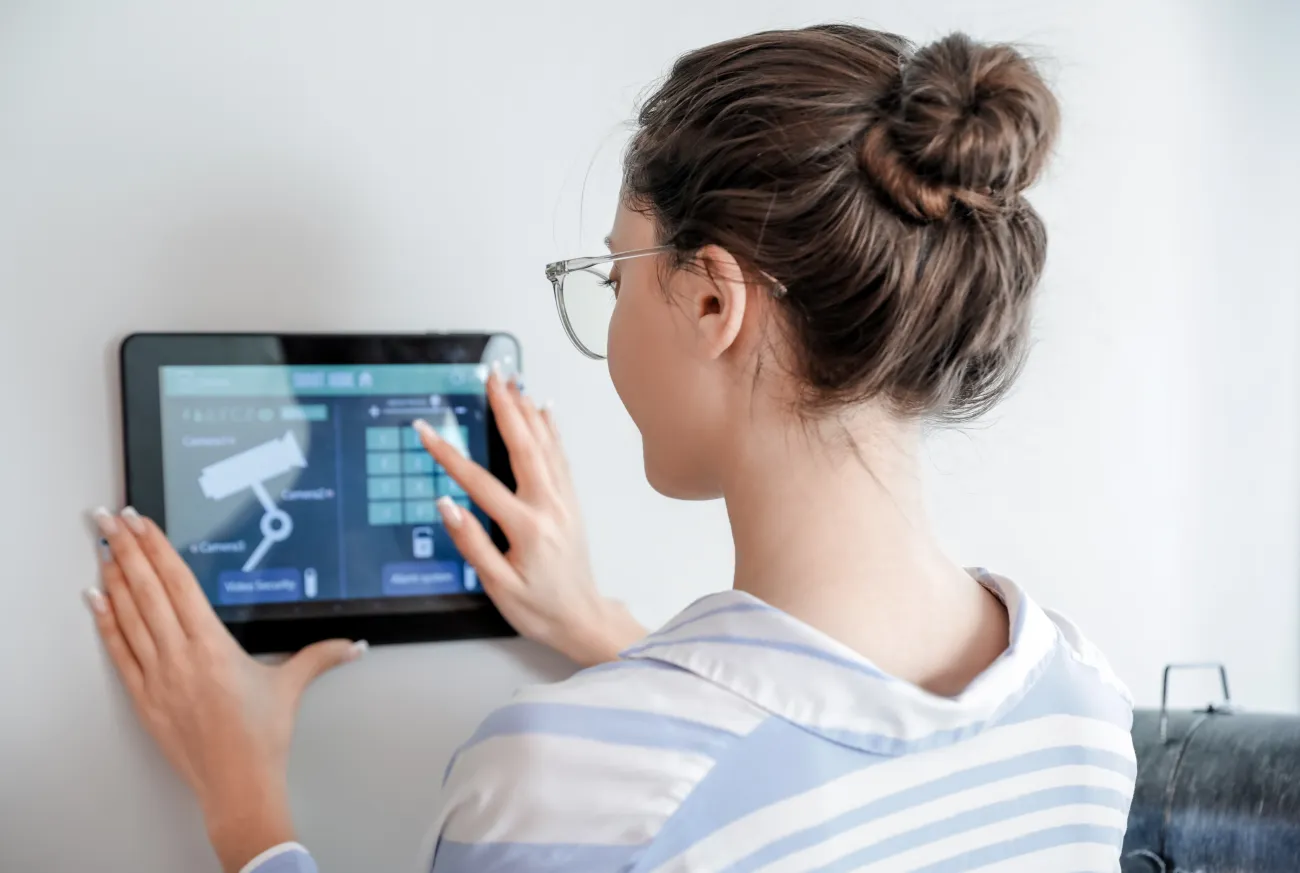
Living Labs reveal how digitalisation plays out in real households
An important part of the iDODDLE project was a three-year Living Lab study in which researchers worked directly with around 50 households to test and learn about digital technologies in everyday settings.
This included trials of automated appliances, on-demand digital services, food waste reduction apps, and meal kit delivery services.
Dr Emilie Vrain, Senior Researcher at the ECI, said the Living Labs revealed the importance of lived experience in shaping climate outcomes:
What people actually do with digital technologies in their homes often differs from what designers or policymakers expect. The Living Labs showed that trust, control, routines, and everyday pressures are just as important as efficiency when it comes to climate impact.”
By tracking Living Lab households from start to finish over a three-year period, the iDODDLE team were able to show that digitalised daily life evolves in response to changing life circumstances, expectations, and levels of confidence. Participants often described becoming more aware of the cumulative impact of “small” digital choices that subtly shift patterns of energy use and consumption.
Key insights from the Living Labs included:
- Automation can reduce effort but also increase overall reliance on energy-intensive activities
- Households often prefer systems that support decision-making rather than fully replacing human control
- Convenience-driven digital services can reshape expectations across food, retail, media, and mobility
- Use of digital technologies and applications is highly uneven across households and life stages
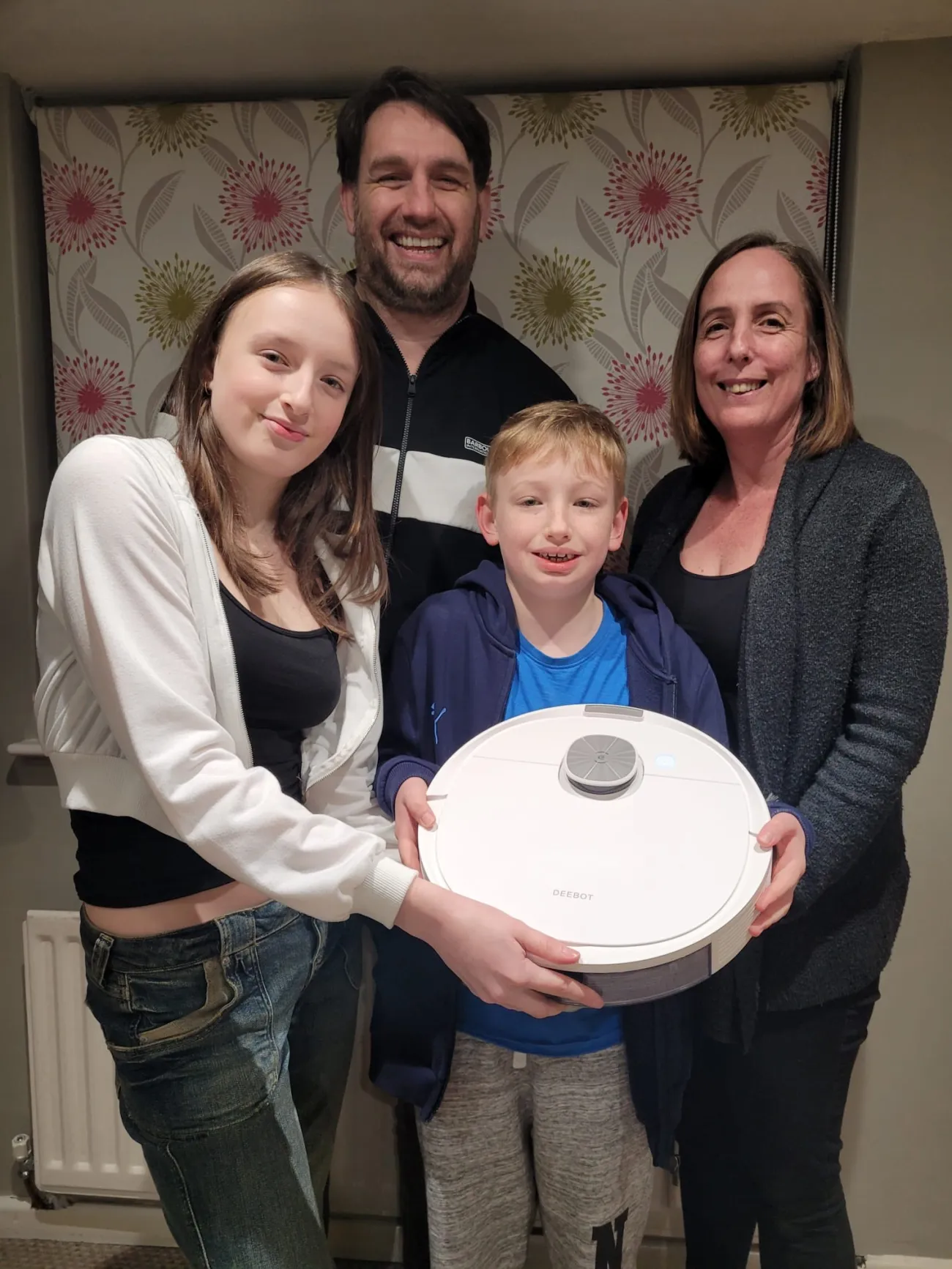
The Selley family, Charlotte (13), Mark, James (9) and Amy with Haaland the Deebot Ecovac robot vacuum
Digital convenience is reshaping demand
The project also found that the rise of on-demand digital services — including streaming, delivery platforms, and rapid retail — is amplifying expectations of convenience and speed.
These changes are not confined to a single sector. Instead, they are spreading across different domains of everyday life, increasing demand and carbon emissions as they go.
But at the same time, digital technologies such as smart electric vehicle charging and demand management systems offer significant system-level benefits when properly designed and coordinated.
System-wide implications for climate and policy
The iDODDLE project highlights that digitalisation is already a structural force in energy systems and climate trajectories. AI is both amplifying and accelerating outcomes - creating systemic risks but also opportunities for progressing on climate targets.
This makes the governance, design, and incentive structures for digitalisation all the more important.
From its system-level analysis, the project found:
- Digitalisation can support decarbonisation if deployment incentives are aligned
- Ever-rising demand for more, faster, cheaper digitally-enabled consumption needs managing or constraining
- Tackling digital inequalities ensures benefits are more evenly accessible and distributed
About the iDODDLE project
The iDODDLE project ran from 2021–2026 at the University of Oxford’s Environmental Change Institute. iDODDLE was funded by the European Research Council under grant number 101003083.
It combined data analysis in multiple streams and at different scales from local to global:
- Living Lab household trials
- Nationally-representative surveys
- Behavioural and AI experiments
- System dynamics modelling
- Expert workshops
- Evidence synthesis and causal mapping
- Global energy transition modelling
The full synthesis report from the iDODDLE project as well as a wide range of articles, talks, blogs and other outputs from the iDODDLE team are all available for download at: https://iDODDLE.org
Further information
A series of short videos showcasing the iDODDLE Living Lab research is available to watch on YouTube.