

Why do public electric vehicle (EV) charge points fail drivers, and are some communities more affected than others? Marcel Seger, incoming Postdoctoral Researcher at the Environmental Change Institute, introduces a new project that will combine data on charge point locations with drivers’ reports of charging problems to help identify where improvements are most needed.
For the first time in the UK, we will link data on public charge points with the support contacts drivers make when charging goes wrong, providing new insight into the problems drivers face at public charge points.
Our nine-month project, Where Charging Fails: Reliability and Equity in the UK’s Public EV Charging Network, will run from January to September 2027. We will explore where and when drivers run into problems at public charge points, and in which communities. We will look at whether the problems drivers report differ between rural and urban areas and across areas with different levels of social deprivation, helping to identify where public charging needs to improve to support a fair transition to electric vehicles.
The research is being led by Professor Jan Rosenow, Principal Investigator, and myself. It is funded by Energy Systems Catapult through the Smart Energy Data Service (SENSE), part of the Smart Data Research UK family of data services, and is being carried out in partnership with Munich-based EV charging AI company Lemonflow.
SENSE gives researchers access to key energy datasets and supports research collaborations using smart energy data to help accelerate the transition to net zero. Our project is one of a number of projects supported through SENSE’s 2026 grant programme, which is funding data-driven research across areas including equitable access to EV charging, energy use in buildings, forecasting and understanding inequalities in the transition to net zero.
We will use charge point location data from SENSE’s ZapMap EV Chargepoint Locations dataset, which provides information about public charge points across Great Britain, including their location, operator, connector type and power rating. We will combine this with data from Lemonflow on drivers contacting charging customer support across its UK customer base.
The Lemonflow data will consist of de-identified records of support contacts, covering issues such as failed payments, broken connectors and difficulties using charging apps. We will use language models to sort these contacts into types of problem. Where available, we will link the contacts to technical fault data recorded by the operator.
By bringing these different sources together, we will build a more detailed picture of the public charging experience – not just where charge points are located, but where and why they let down the people who rely on them.
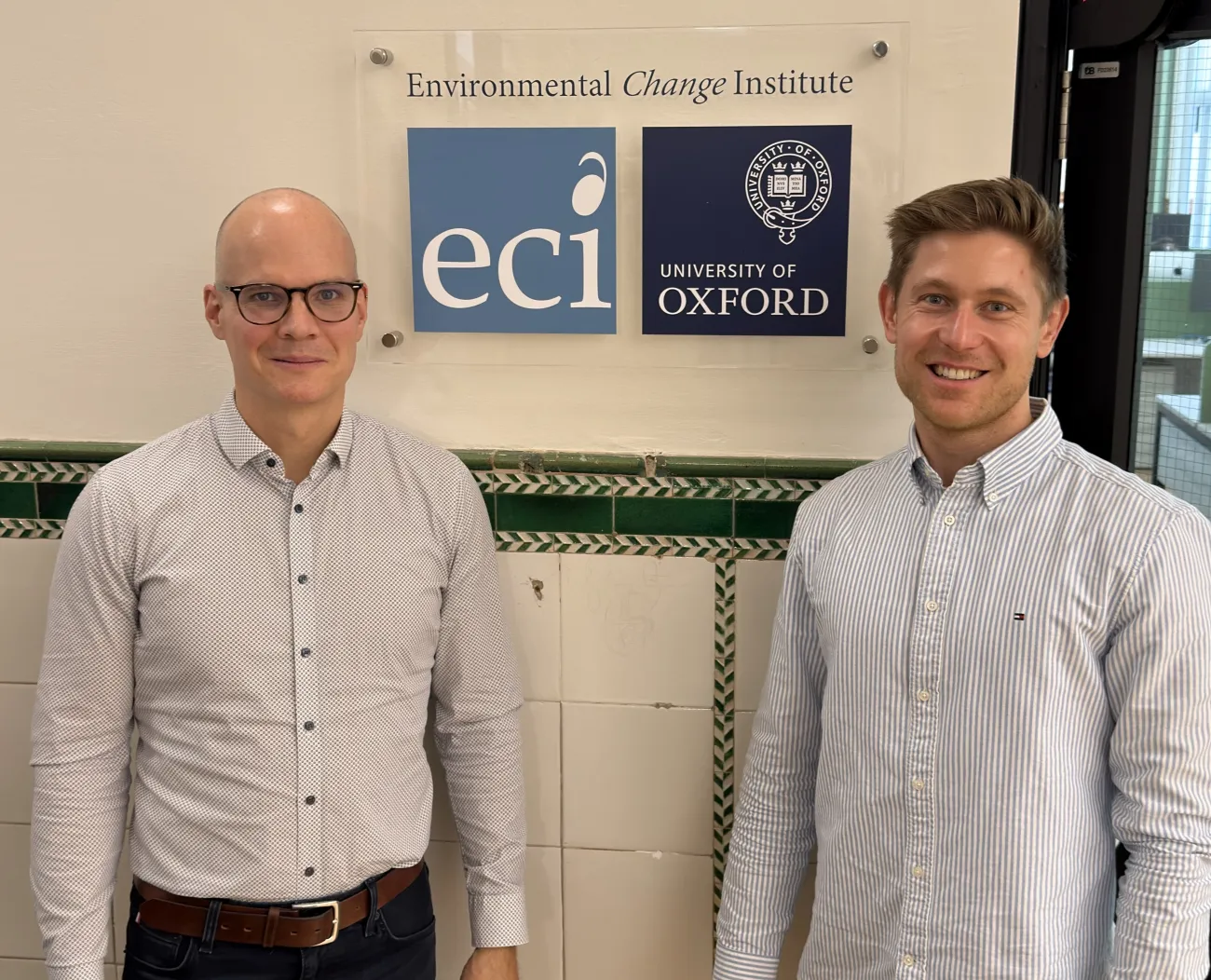
Professor Jan Rosenow and Marcel Seger
Electrifying transport is only viable if public charging works for everyone, wherever they live. Right now, policymakers can count chargers but cannot see where and why drivers experience difficulties interacting with these charge points. This project will give government the evidence to target the problems that matter most to drivers.” Professor Jan Rosenow
The collaboration with Lemonflow also has personal connections. Both of Lemonflow’s founders studied at Oxford: Konstantin Huneke completed a graduate degree and Dr Lukas Fieber his doctorate at the university. I first met Konstantin through the Center for Digital Technology and Management (CDTM) in Munich, saw the research potential of Lemonflow’s support data, and proposed the partnership.
Most data on public charging describes the infrastructure, not the person standing in front of it. By mapping driver support contacts, we will be able to see which problems drivers report, where they cluster, and whether some communities fare worse than others. This is only possible because Lemonflow was willing to share this data for public-interest research.
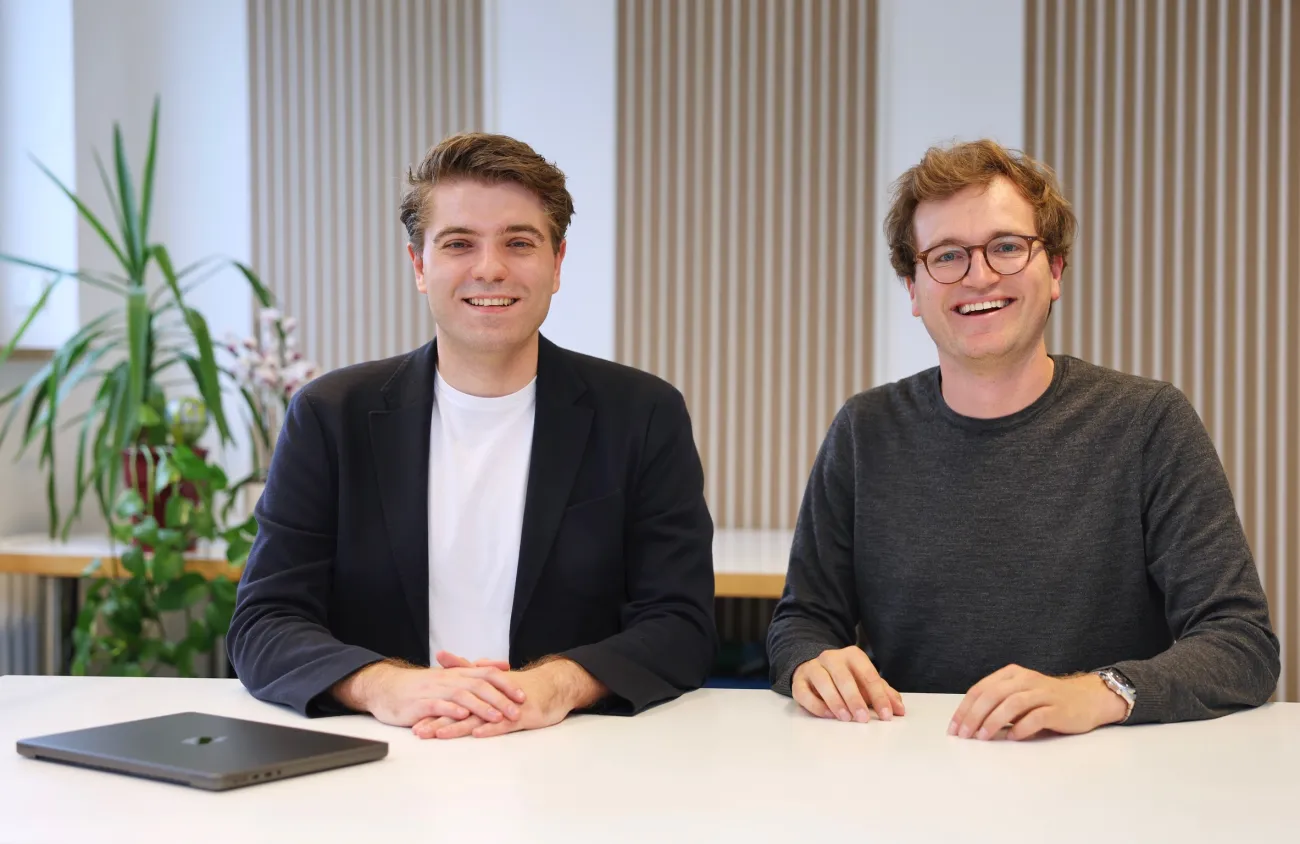
Konstantin Huneke and Dr Lukas Fieber, Co-founders of Lemonflow
Lemonflow co-founders Konstantin Huneke (CEO) and Dr Lukas Fieber (CTO) added: “Every support conversation tells you something a status light cannot: what actually stopped a driver from starting a charging session. We are proud to put these insights into the hands of the Oxford team, so the UK gets evidence on where public charging most needs to improve, and for whom.”
We will produce a new aggregated, anonymised dataset that, subject to the data provider’s approval, will be returned to the SENSE platform for others to reuse. We will also develop a method that could be applied by other charge point operators, and generate evidence for policymakers, including the Department for Transport, on where improvements to public charging infrastructure may be most needed. We will discuss the findings at a workshop with Lemonflow and participating UK charge point operators.
Richard Snape, Co-Director of SENSE, added: “This project is exactly what SENSE was set up to enable: bringing trusted energy datasets together with new sources to answer questions that matter for a fair transition to net zero. By linking the ZapMap charge point data with real drivers’ experiences, the team will show not just where chargers are, but where they’re letting people down. We’re especially pleased that the resulting dataset will come back to the SENSE platform, so other researchers can build on it.”