
A recent study highlights concerning declines in Atlantic sea urchin populations, with important implications for coral reef ecosystems.
Rising ocean temperatures could dramatically alter the distribution of key species that underpin reef health and stability.
The study, co-authored by Dr André Acosta, Research Associate at the Environmental Change Institute (ECI), University of Oxford, warns that warming oceans may shrink the range of some sea urchin species while opening new areas further from the tropics.
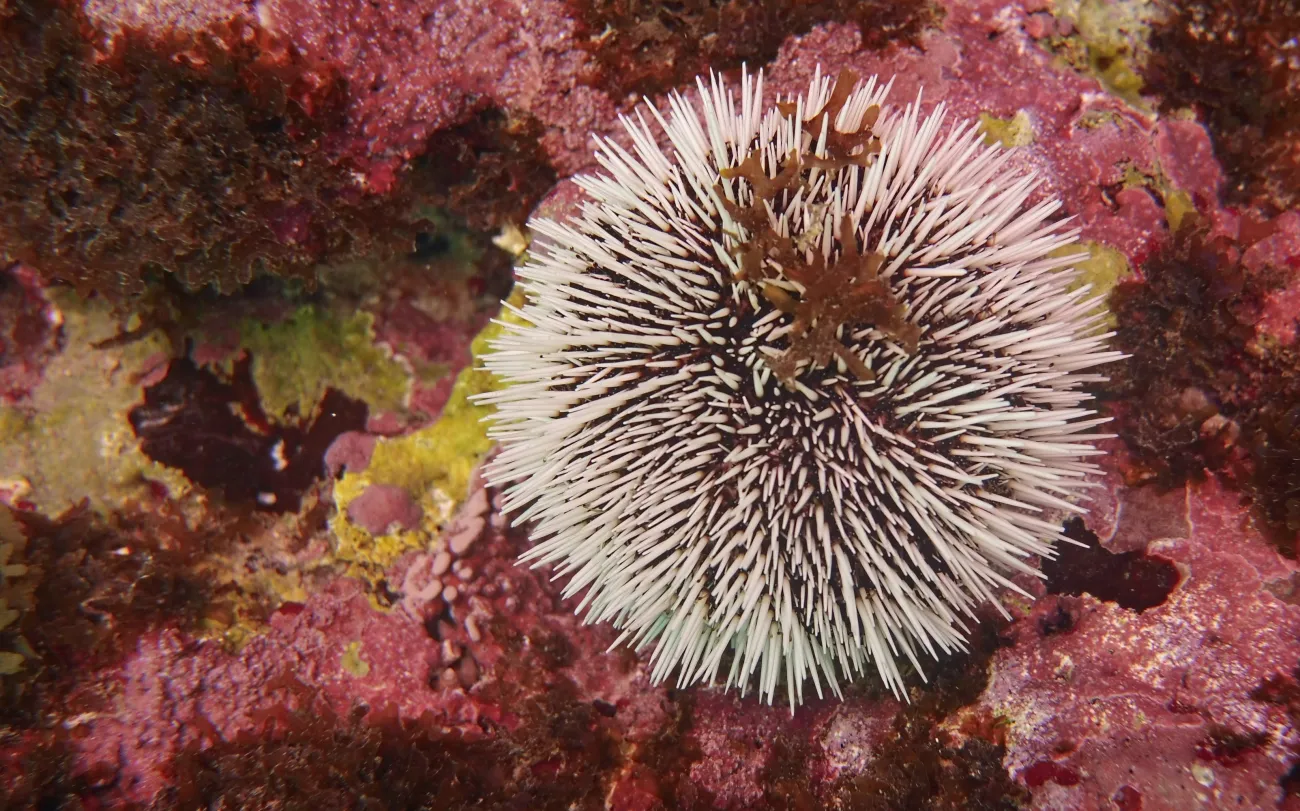
White pincushion urchin, Tripneustes ventricosus
Sea urchins play a critical role in maintaining coral reef health by grazing on algae that can otherwise overwhelm corals. The research finds that over the past several decades, some populations in the tropical Western Atlantic have declined by as much as 70%, threatening the balance of reef ecosystems and the many species that rely on them.
Key factors driving these declines include rising sea temperatures and ocean acidification, both consequences of climate change. Acidic waters impair sea urchins’ ability to build and maintain their calcium carbonate shells, increasing their vulnerability.
Published in Springer Nature, the study uses advanced species distribution models (SDMs) and thermal niche analysis to project how three sea urchin species — Lytechinus variegatus, Echinometra lucunter, and Tripneustes ventricosus — may respond to future climate scenarios through the end of the century.
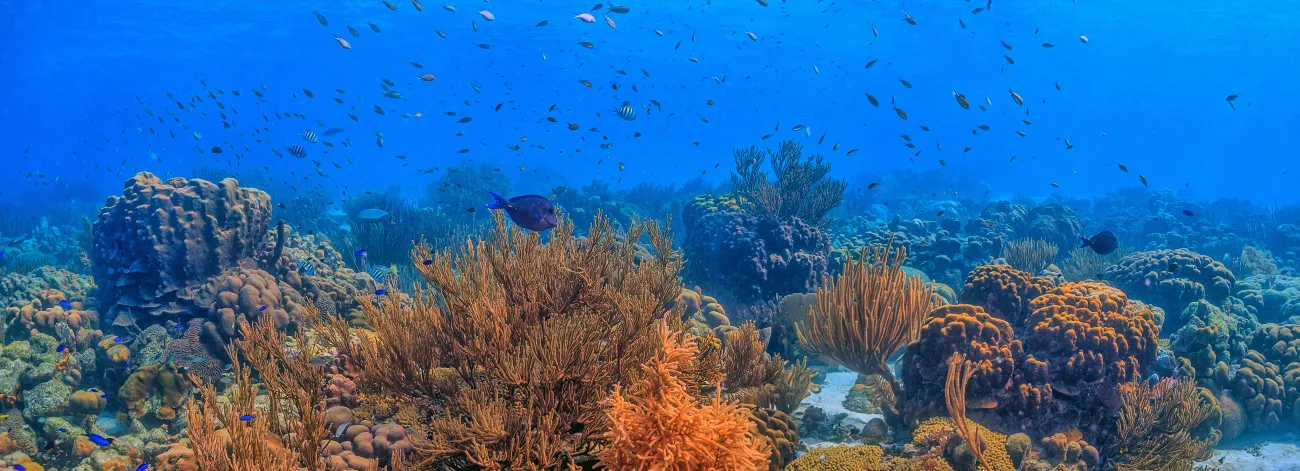
The research reveals that while sea urchins may expand their range toward higher latitudes as tropical waters warm, they are likely to lose significant portions of their current habitats, particularly in the Caribbean and Gulf of Mexico. These shifts highlight both the vulnerability and adaptability of marine organisms to climate change — and the complex consequences for the coral reef ecosystems that depend on them.
Dr Acosta, who works in the Biodiversity and Earth Observation Lab (BioEO Lab) at the ECI, said:
Sea urchins are ecological engineers. They regulate algae growth and sustain reef health. As ocean temperatures rise, some current habitats may become too hot for survival, while new areas may become suitable, potentially reshaping entire reef ecosystems.”
The study was led by Silas Principe of the University of São Paulo and the Ocean Biodiversity Information System, with co-author Tito Lotufo also from the University of São Paulo.
Dr Acosta contributed to the study’s climate–ecology modelling framework, applying machine learning and ecological modelling approaches drawn from his expertise in tropical resilience and planetary health. His work at the ECI focuses on how climate change and human activities influence the resilience of tropical ecosystems — and how these transformations interact with socioeconomic systems and public health.
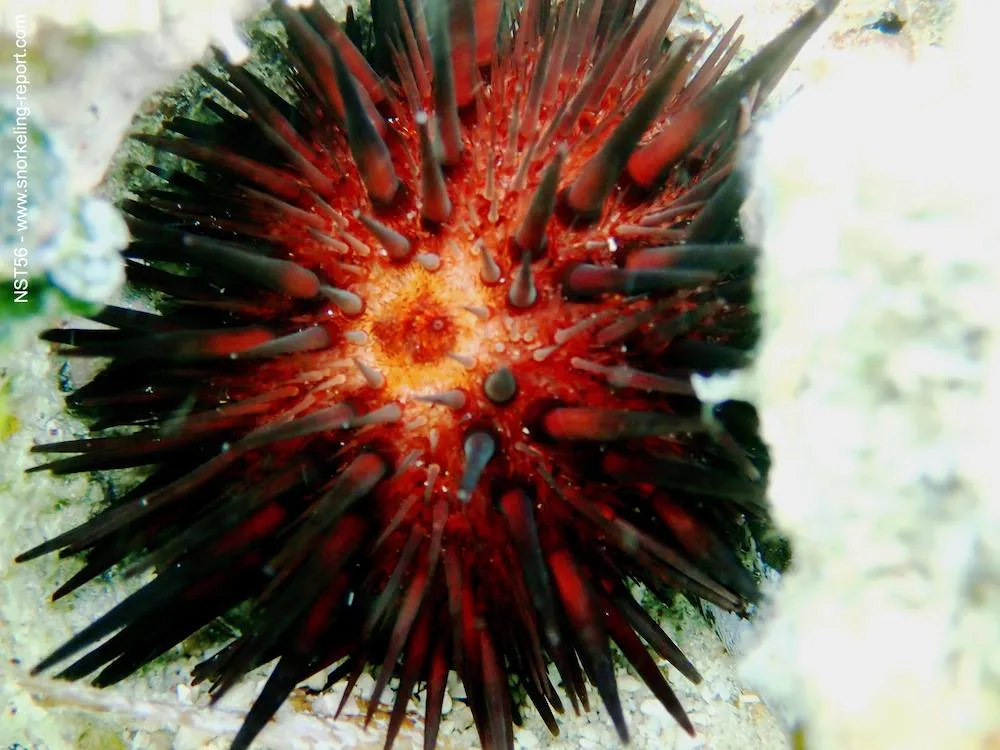
Rock boring urchin, Echinometra lucunter
The team found that the most widely distributed species, Lytechinus variegatus, could lose up to 64% of its suitable range under the most pessimistic climate scenario (SSP3). The other species, Echinometra lucunter and Tripneustes ventricosus, may initially expand poleward but will still face shrinking thermally suitable zones by 2100. These changes could lead to “tropicalisation” of temperate reefs, altering species interactions and ecosystem functioning.
Dr Acosta added:
Understanding how key reef species respond to climate stressors is vital for anticipating future ecological change. The same modelling approaches we use for marine ecosystems can also help forecast how tropical forests and vector-borne diseases respond to a warming world. Across systems, resilience depends on how fast species and societies can adapt.”
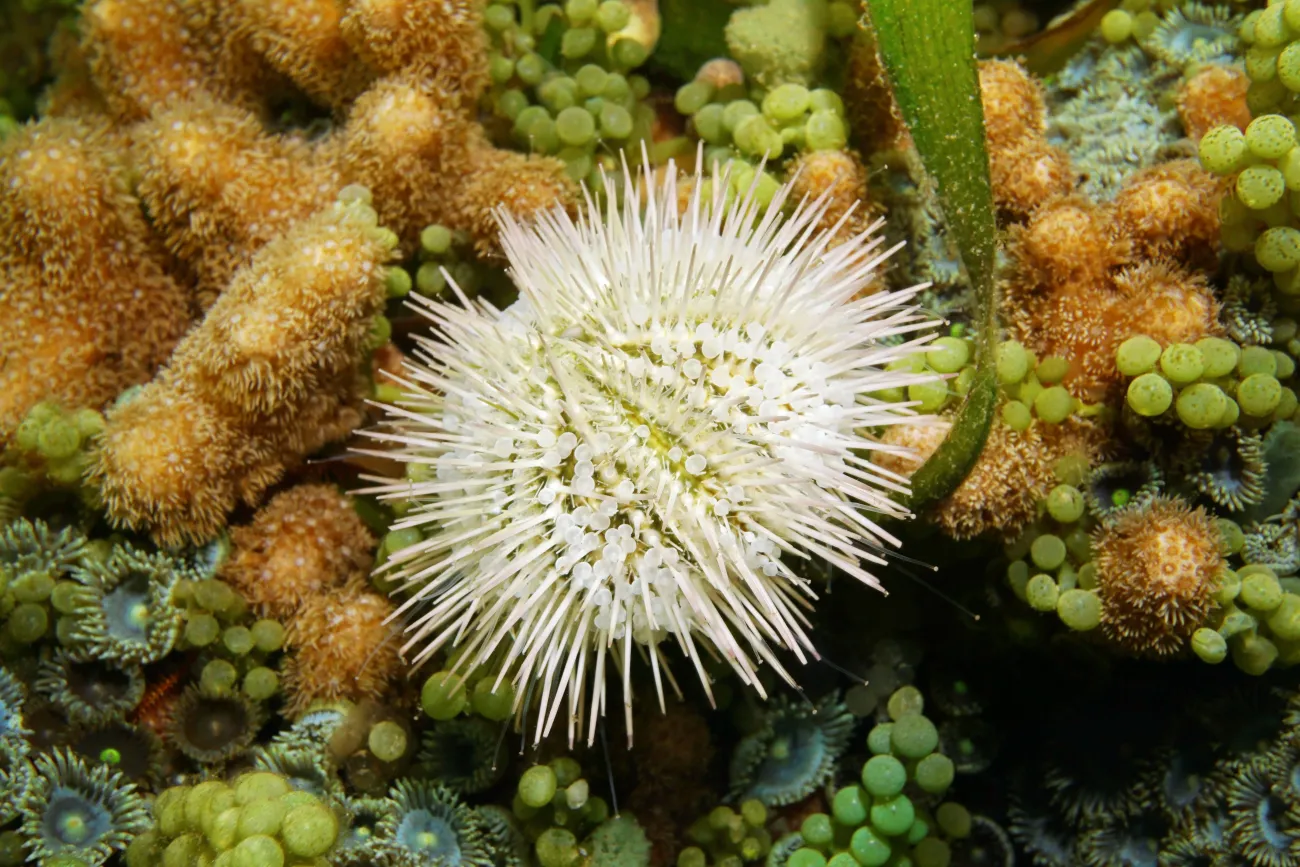
Variegated sea urchin, Lytechinus variegatus
The study underscores the urgency of limiting global warming under the Paris Agreement targets. Even under the most optimistic scenario (SSP1 – Sustainability), several current reef areas are projected to become less suitable for sea urchins, emphasizing the need for climate action and biodiversity monitoring across the Atlantic and beyond.
This research provides vital insights for conservation efforts aimed at preserving the Tropical Western Atlantic’s marine biodiversity.
Read the study in full in Springer Nature: A thorny future for sea urchins in the tropical Western Atlantic