

ECI MSc student Toby Bliss’ journey to Oxford included time in Ecuador — a fitting connection, as the Claudia Comberti Scholarship that made his studies possible was created in memory of Claudia, a former MSc ECM student whose research focused on South America. In this blog, Toby reflects on how the scholarship opened the door to Oxford and shares the experiences that have shaped his master’s year.
Pursuing a master’s at the University of Oxford was a dream that always felt out of reach, but thanks to some incredibly supportive friends, I was encouraged to try and to believe it could be possible. Eight months later, and still unsure if I would be able to accept my place on the MSc Environmental Change and Management, I received an email confirming I had received the honour of the Claudia Comberti Scholarship for 2024/25. Without this scholarship Oxford would have never become a reality, remaining just out of reach, so I will always be truly grateful for the degree, the opportunities, and the countless happy memories this scholarship has given me.
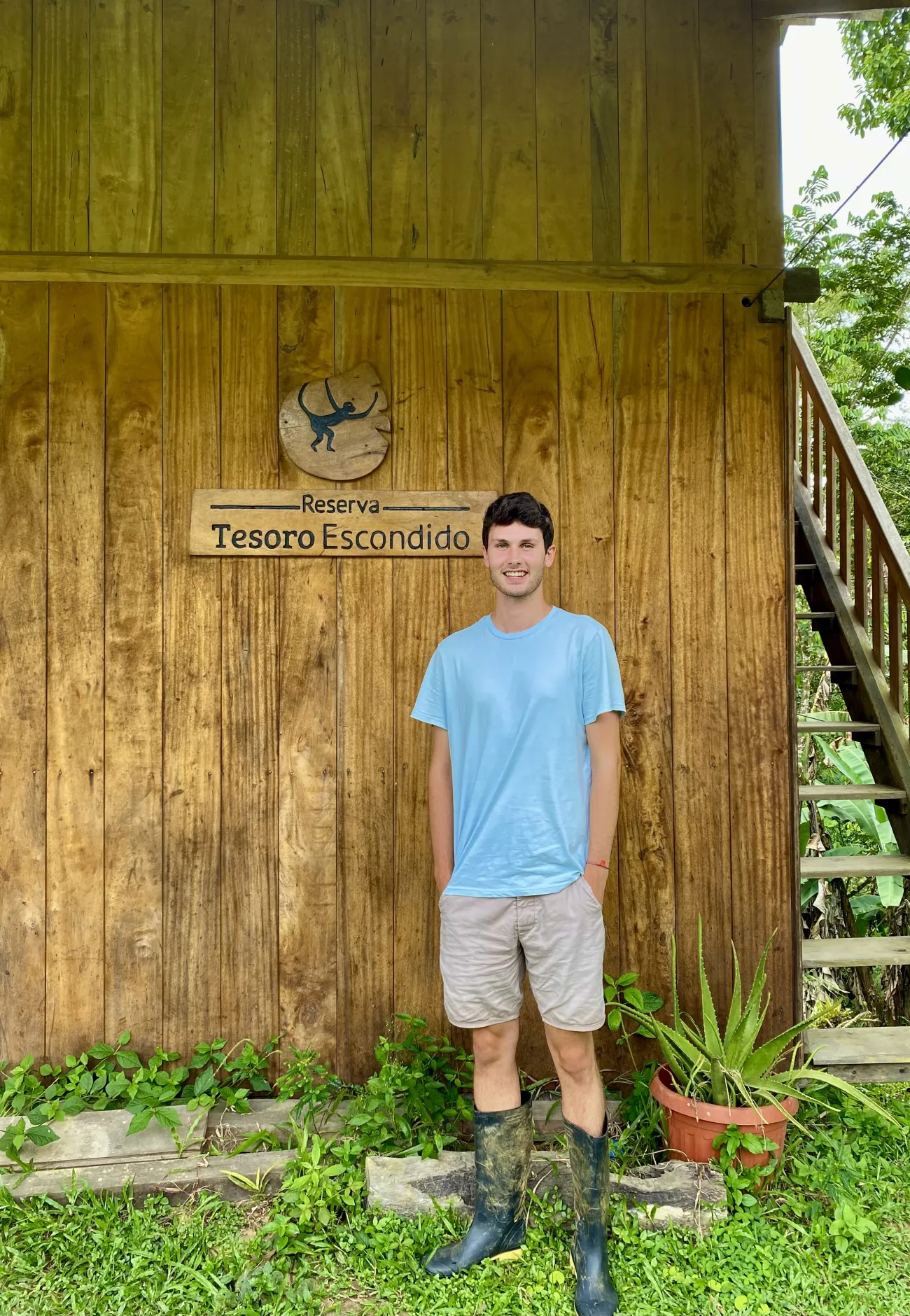
Reserva Tesoro Escondido spans across over 2,000 hectares of lowland primary forest
During my undergraduate degree in Ecology, Conservation and Environment I took the opportunity to undertake a study abroad year at Monash University in Melbourne. This year abroad taught me so much, exposing me to new environmental perspectives and contrasting ecosystems to anything I had learnt about in the UK. But the true beauty of this year was the people I got to meet, individuals who pushed me to be confident and make the most of every single opportunity. So, when I came across an application for a summer placement in a rainforest conservation reserve in remote Ecuador, I knew I had to go for it.
Arriving in Ecuador alone with almost no Spanish was at first incredibly daunting but became such an unbelievable chance to let go of inhibitions and fully immerse myself into the joy and excitement of saying yes and discovering everything. Spending six weeks living and working with the amazing team at Reserva Tesoro Escondido in the Chocó lowlands, a global biodiversity hotspot, was an ecologist’s dream. In this serene jungle landscape, I spent my days following critically endangered brown-headed spider monkeys for hours on end, taking part in late-night herpetofauna surveys, collecting seeds of a previously thought extinct species of magnolia for reforestation efforts, and so much more.
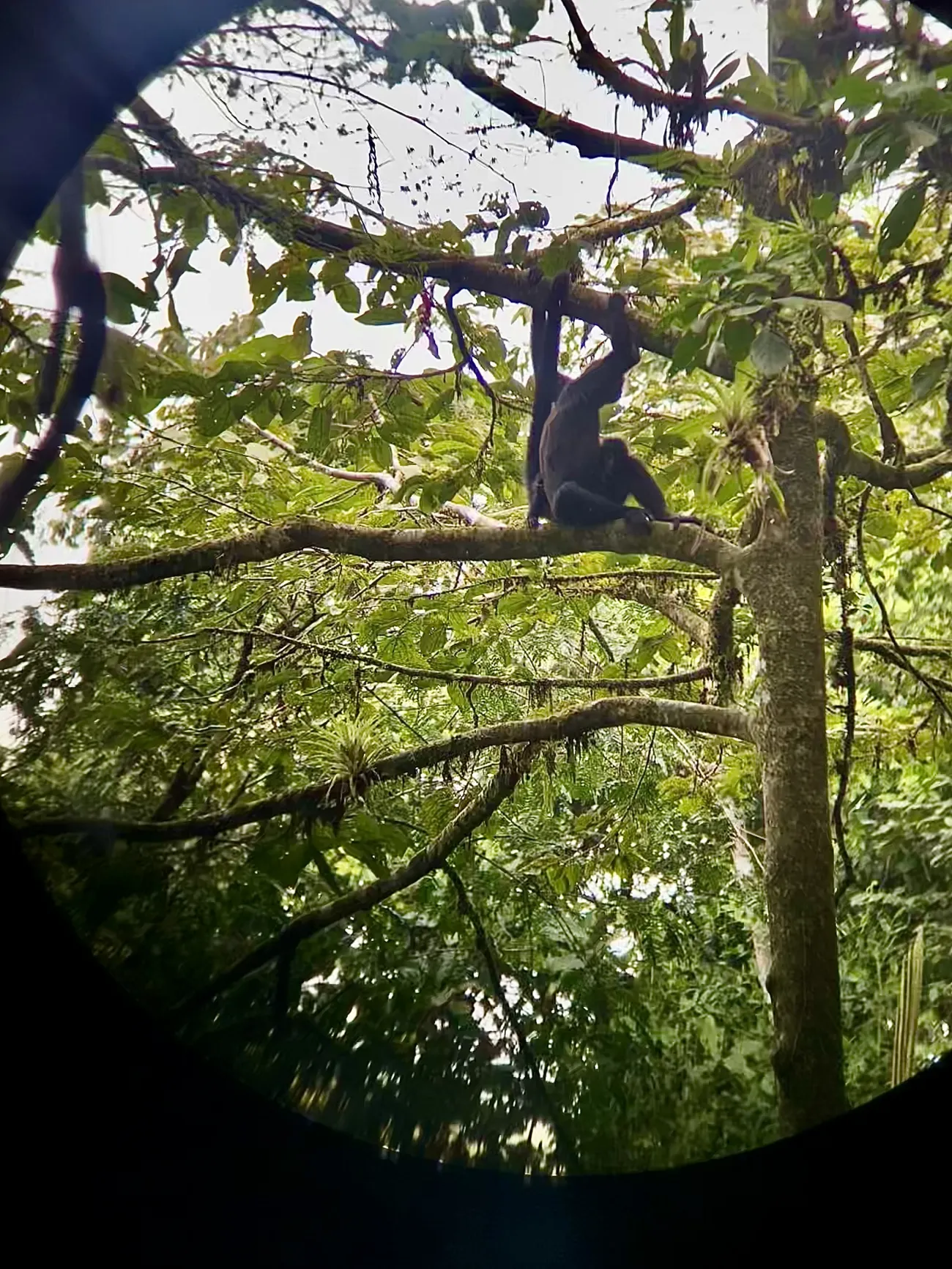
Critically endangered, a mother and baby brown-headed spider monkey resting in the canopy; Tesoro Escondido protects one of the last healthy populations of this species in the world
However, what captivated me most during this experience was the time I spent with the reserve’s managers. Joining them on their social outreach and youth environmental education projects, I saw firsthand how their model of successful conservation was rooted in the engagement and empowerment of the communities surrounding the reserve. The decisions they made to allocate their funding and resources for both direct and indirect conservation was fascinating, and this approach of holistic solutions to environmental problems is what motivated me to apply to the master’s in Environmental Change and Management at the ECI. This excitement was carried and developed further on field courses in the Red Sea exploring the broader implications of overfishing impacts to predator-prey interactions, and in Zambia’s Kasanka National Park where I was able to join in local community consultations on long-term solutions to poaching.
This MSc challenged me to look beyond and build on my ecological background by integrating knowledge from a diverse range of fields from governance and social science theory to climate science, environmental economics, and sustainable policy responses. The interdisciplinary and collaborative foundations of this course have equipped me with the confidence to engage effectively with individuals across industries, sectors and disciplines. Just as importantly, it has instilled in me the drive to always approach environmental and sustainability issues from diverse perspectives, recognising how such issues can never be solved from reductive efforts to compartmentalise them from their intersecting complexities.
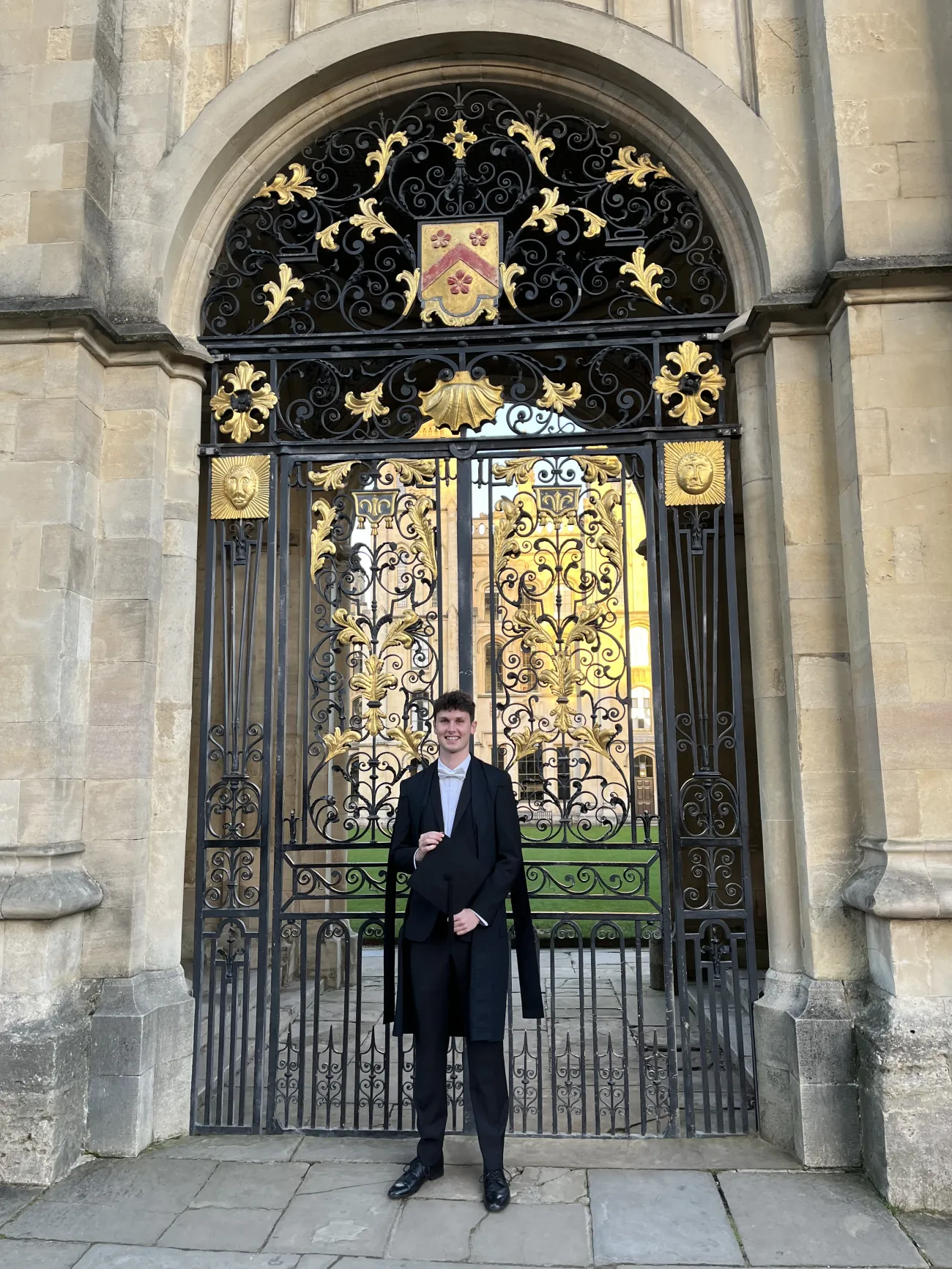
Toby at matriculation in October 2024, marking the start of his year on the MSc ECM
For me, what really set this course apart was the students who made up my cohort - far more realistically described as a community. As a course, the MSc ECM is truly embodied by its students, coming to Oxford from all around the world and across a whole range of undergraduate and career backgrounds, yet each and every one sharing this same motivation to bring real and meaningful change. This community challenged me to be better throughout the year, bringing new perspectives and ideas, whilst never failing to be some of the kindest and most supportive individuals I have ever met. My master’s year with the ECI has given me so much to be thankful for, and I cannot begin to fully describe the gratitude I have for all that was made possible for me by the Claudia Comberti Scholarship.