

A major new African-led study published today in Nature has found that sub-Saharan Africa has already lost 24% of its biodiversity since pre-industrial times — with large mammals among the most severely affected. The research delivers the most comprehensive assessment yet of biodiversity intactness across the region and highlights the importance of “working lands” where people and nature coexist.
Dr Nicola Stevens, Senior Researcher at the Environmental Change Institute (ECI) played a central role in the study as co-lead for the plant component. Working alongside more than 200 ecological experts from across sub-Saharan Africa, Nicola co-ordinated African plant experts to help build a uniquely detailed and context-rich picture of biodiversity change.
Dr Stevens said:
Often these working lands are labelled as ‘degraded’. But if we write them off because they don’t look pristine, we risk losing an enormous amount of ecological value. These are the everyday landscapes that still hold much of Africa’s biodiversity and support millions of people’s livelihoods.”
A new picture of biodiversity across the region
The study draws on five years of work and a large-scale expert-elicitation process involving researchers, rangers, tour guides, museum curators, and other ecological practitioners working directly in African landscapes. Their combined knowledge was used to build a continent-wide Biodiversity Intactness Index (BII), offering an assessment grounded in African ecological expertise rather than extrapolations from global models.
The findings show considerable variation across ecosystems and species groups. Some disturbance-tolerant plants have declined by as little as 10%, while populations of elephants, lions, and other large mammals have dropped by more than 75%. Central African countries retain some of the highest levels of intactness, whereas West Africa shows the lowest following decades of intense land-use change.
Dr Hayley Clements, Centre for Sustainability Transitions at Stellenbosch University, and lead author, said:
Many global biodiversity assessments do not represent African conditions well because they rely on sparse local measurements and draw insights from more data-rich regions of the world, where contexts are very different. By working directly with the people who study and manage African ecosystems, we were able to capture a much more realistic picture of where biodiversity is declining, where it is being sustained, and why.”
The significance of working lands
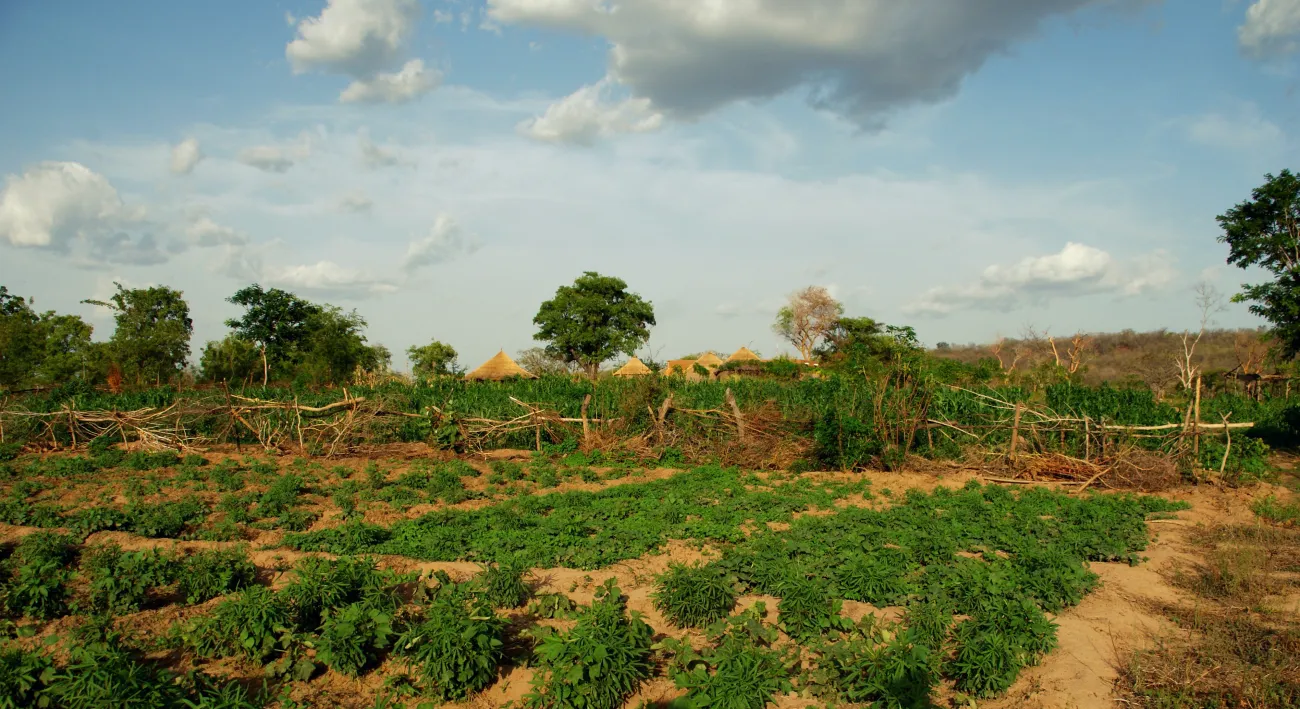
A key insight from the study is that over 80% of remaining wild plants and animals in sub-Saharan Africa live outside formally protected areas. These working landscapes — including rangelands and forests shaped by centuries of human use — support more than 500 million people and provide essential ecosystem services such as clean water, grazing resources, wild foods, and carbon storage.
The results underscore the need to look beyond protected areas alone and ensure that conservation and land management approaches support nature within the everyday landscapes where people live and work.
Pressures shaping biodiversity loss
The research highlights the major pressures driving biodiversity declines, with cropland expansion emerging as one of the most significant. Countries with the highest cropland coverage, such as Nigeria and Rwanda, show the lowest levels of intactness. Intensive agriculture reduces habitat diversity and increases chemical inputs, heavily affecting a wide range of species.
By contrast, traditional smallholder systems and lower-intensity pastoralism support higher biodiversity, emphasising the importance of farming and rangeland practices that maintain ecological complexity.
Supporting policy and planning
The new Africa-specific BII gives national and regional decision-makers an evidence base grounded in local ecological knowledge. It can support national biodiversity planning, reporting, land-use decisions, and more accurate representation of Africa in global biodiversity assessments.
Read the full paper in Nature: A place-based assessment of biodiversity intactness in sub-Saharan Africa