



Researchers have used four decades of satellite data to uncover subtle but important changes in one of Brazil’s most extraordinary mountain ecosystems.
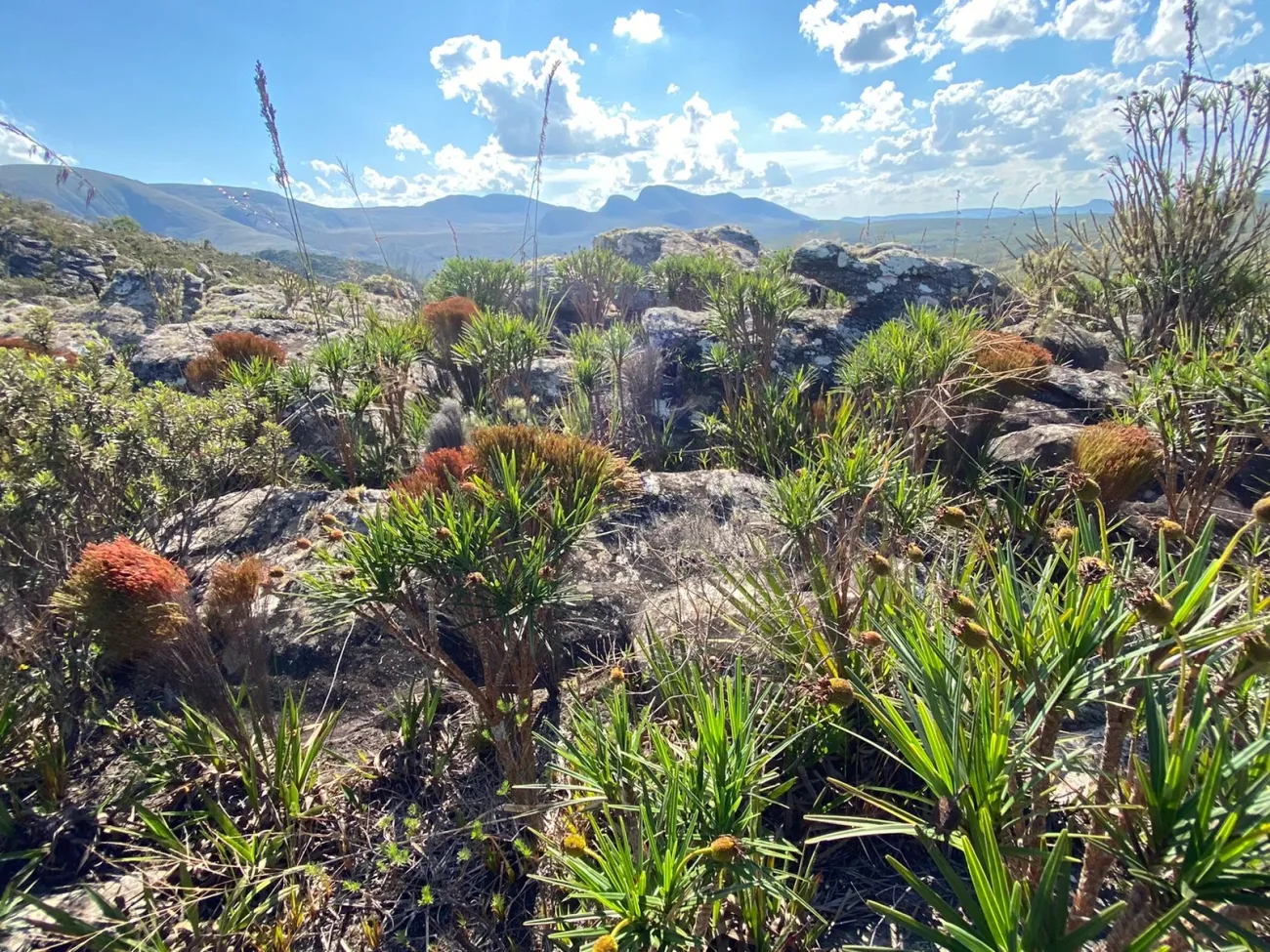
A woody shrub growing from a rocky outcrop in the Brazilian campo rupestre, a montane ecosystem shaped by shallow soils, intense solar radiation, and seasonal water limitation, Serra do Cipó, Espinhaço Range, Minas Gerais, Brazil.
In a new study published in Ecography, scientists from the Environmental Change Institute (ECI), at the University of Oxford, show that plant communities in the biodiverse Campo Rupestre grasslands have shifted slightly away from highly conservative survival strategies over the past 40 years — despite a warming and drying climate.
The research was led by Dr Renata Maia, Researcher in the Biodiversity and Earth Observation (BioEO) group at the ECI and also with the Federal University of Minas Gerais, alongside ECI colleagues Dr Milton Barbosa, Researcher, Professor Yadvinder Malhi, Ecosystems and Biodiversity Programme Lead and Director of the Leverhulme Centre for Nature Recovery, and Dr Jesus Aguirre-Gutiérrez, Associate Professor and Lead of BioEO. They worked with partners at the Federal University of Minas Gerais in Brazil, Professor Geraldo Wilson Fernandes and Dr Daniel Negreiros.
Dr Maia said:
Our results suggest that Campo Rupestre communities are slightly less conservative today than they were in the past, although these changes are modest and the system remains strongly constrained within a predominantly conservative functional space.
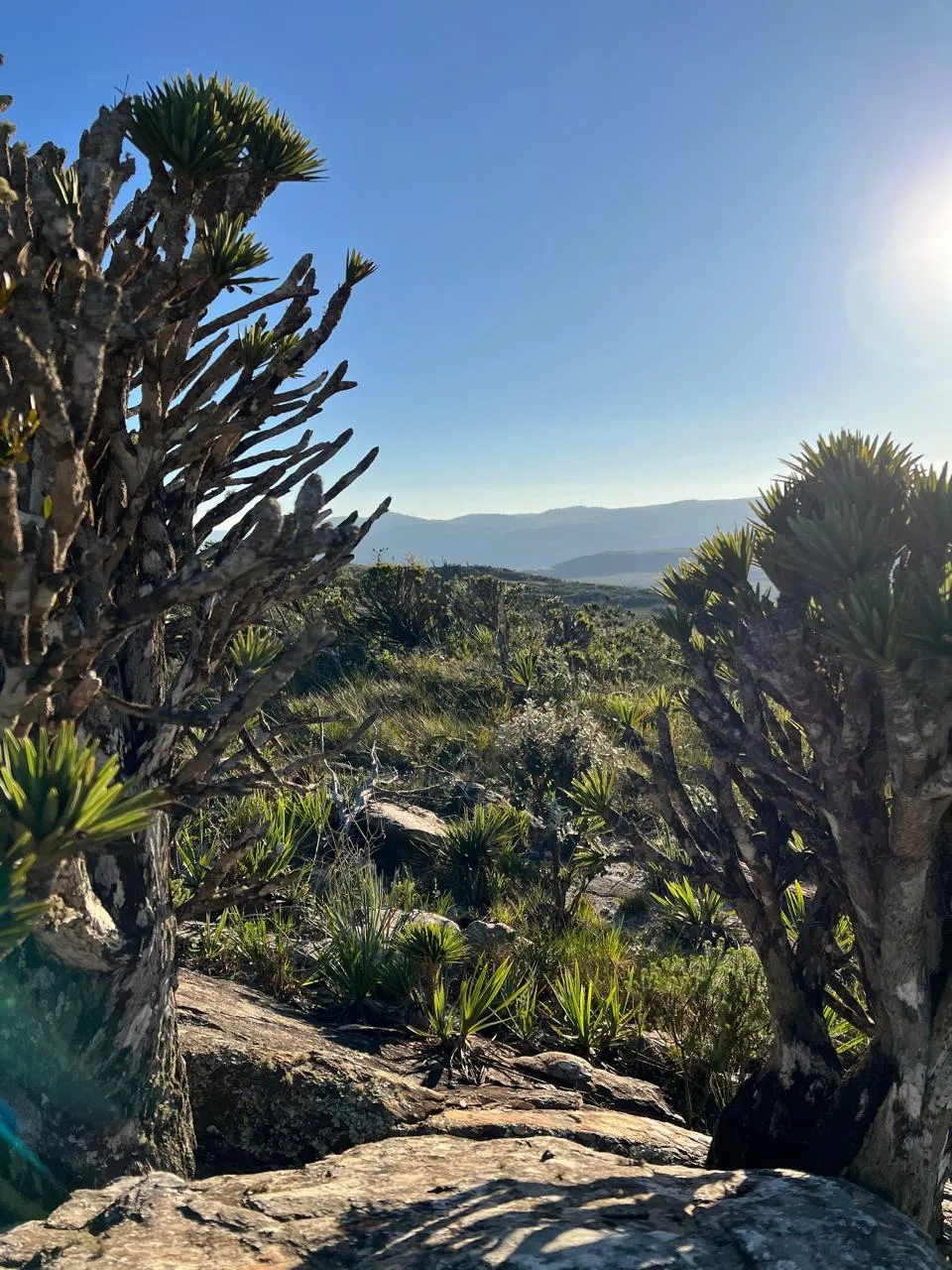
Velloziaceae growing on a Rock outcrop in the Brazilian campo rupestre. Serra do Cipó, Espinhaço Range, Minas Gerais, Brazil.
Tracking plant strategies from space
The Campo Rupestre is a mosaic of ancient mountaintop grasslands in Brazil, known for exceptional biodiversity and nutrient-poor soils. These harsh conditions favour plants with “conservative” traits: small, tough leaves that use resources slowly and efficiently.
To understand how these communities are responding to environmental change, the team combined detailed field measurements from 247 vegetation plots with long-term satellite imagery from NASA’s Landsat programme, dating back to 1984. By linking leaf traits to patterns in spectral reflectance, they reconstructed how key plant characteristics have changed through time.
The focus was on three core leaf traits that reflect how plants balance growth and survival:
- Specific leaf area (SLA) – linked to growth rate
- Leaf dry matter content (LDMC) – linked to toughness and stress tolerance
- Leaf area (LA) – linked to light capture and water use
A subtle relaxation of conservatism
The researchers expected that increasing heat and drought stress would push communities towards even more conservative strategies.
Instead, they found the opposite pattern.
Across most habitats, specific leaf area and leaf size increased slightly over the past four decades, while leaf dry matter content declined. In simple terms, leaves have become marginally less tough and slightly more geared towards growth.
The shifts are modest compared with the strong differences seen between habitats, but they are consistent across time.
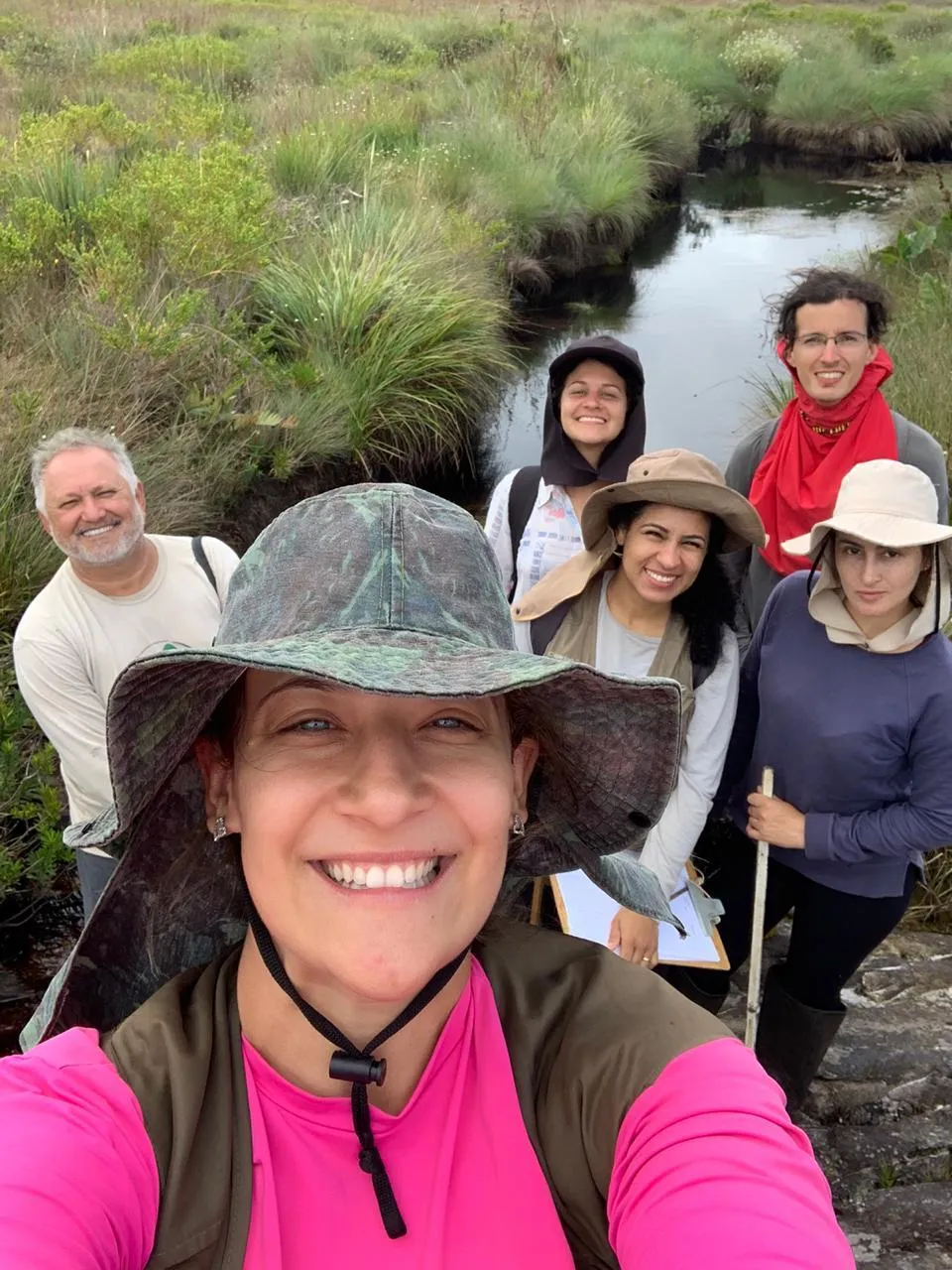
Members of the Field team on an expedition
Functional inertia in an ancient landscape
The Campo Rupestre is what ecologists describe as an ancient, nutrient-poor landscape that has remained relatively stable over millions of years. Ecosystems like this are generally thought to change very slowly.
The findings suggest that while these grasslands are still dominated by tough, stress-tolerant plants, they are not completely static. Small shifts are taking place — possibly because different species are gradually becoming more or less common, or because plants are adjusting slightly within their existing limits.
However, the scale of change is modest, especially compared with the clear differences between habitats. This points to strong “functional inertia” — meaning the ecosystem’s core survival strategy remains largely intact, despite a trend towards warmer and drier conditions.
Why it matters
Understanding whether ecosystems are becoming more or less conservative helps scientists assess resilience to climate change. If plant strategies are shifting only slowly — and within tight limits — this may signal both stability and constraint.
The study also demonstrates the power of combining long-term satellite archives with field-based ecology to track ecosystem change over decades — especially in biodiverse regions where long-term monitoring data are rare.
As climate pressures intensify, approaches like this will be increasingly important for detecting early signs of ecological reorganisation and informing conservation strategies in vulnerable landscapes.
Read the full paper in Ecography: Spatial patterns and temporal changes in foliar traits in Brazilian mountain vegetation over four decades
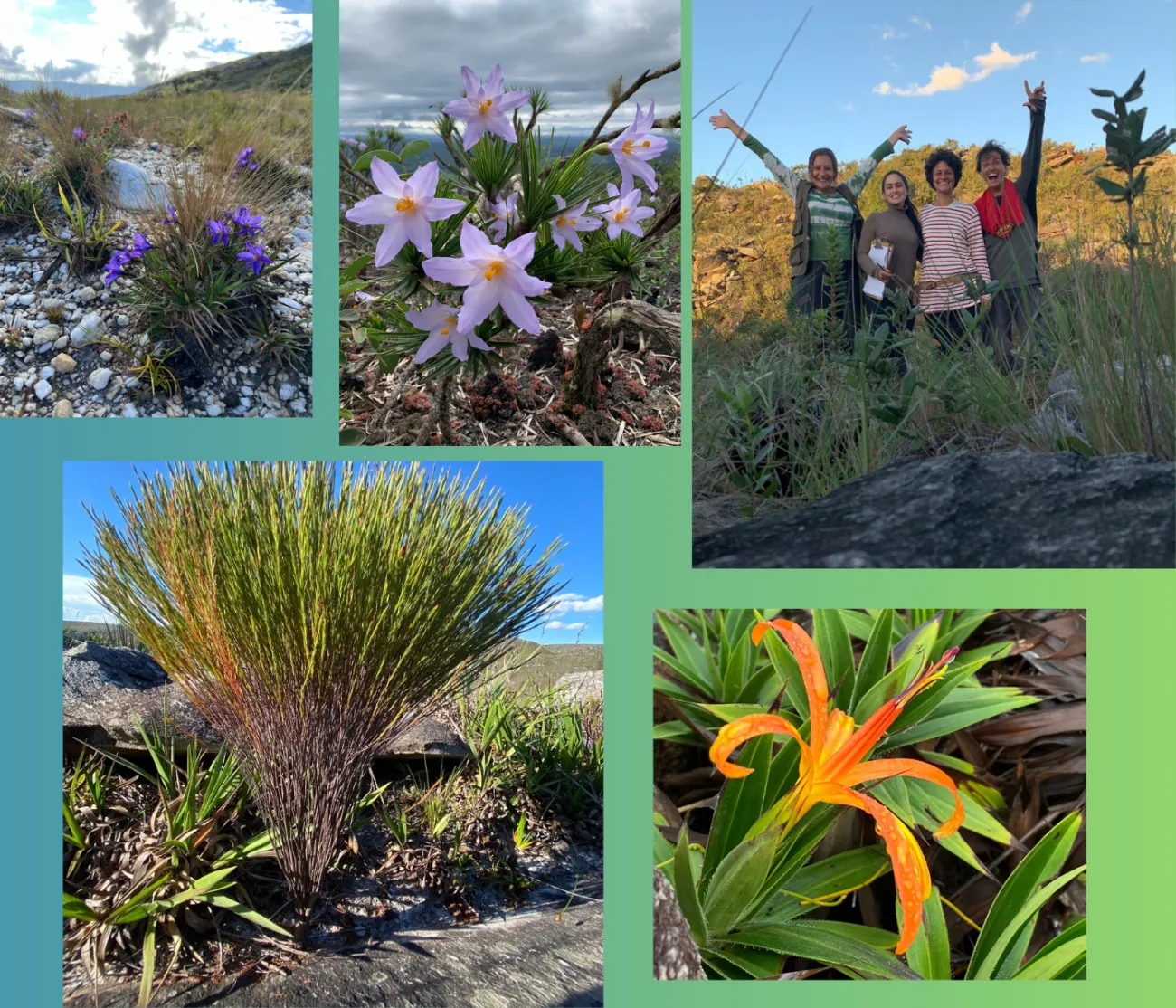
Clockwise from top left:
Vellozia caruncularis growing in quartzitic grassland in the Brazilian campo rupestre of the Serra do Cipó region. Espinhaço Range, Minas Gerais, Brazil.
Photo: Milton Barbosa.
A flowering member of Velloziaceae growing in Brazilian ironstone grasslands. Serra do Cipó region, Espinhaço Range, Minas Gerais, Brazil.
Photo: Jessica Cunha Blum.
Field team out on expedition
A flowering Barbacenia gentianoides in the Brazilian campo rupestre. Espinhaço Range, Minas Gerais, Brazil.
Photo: Jessica Cunha Blum.
Microlicia multicaules growing on a quartzitic grassland in the Brazilian campo rupestre. Serra do Cipó, Espinhaço Range, Minas Gerais, Brazil.
Photo: Geraldo Fernandes.