
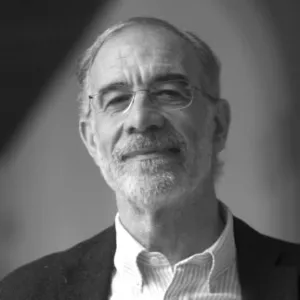
Professor Emilio Chuvieco, Honorary Research Associate at the Environmental Change Institute (ECI), used his inaugural address as a recently elected member of the Royal Academy of Exact, Physical and Natural Sciences of Spain (RAC) to highlight the urgent challenges of climate change and the need to connect scientific knowledge with ethical responsibility.
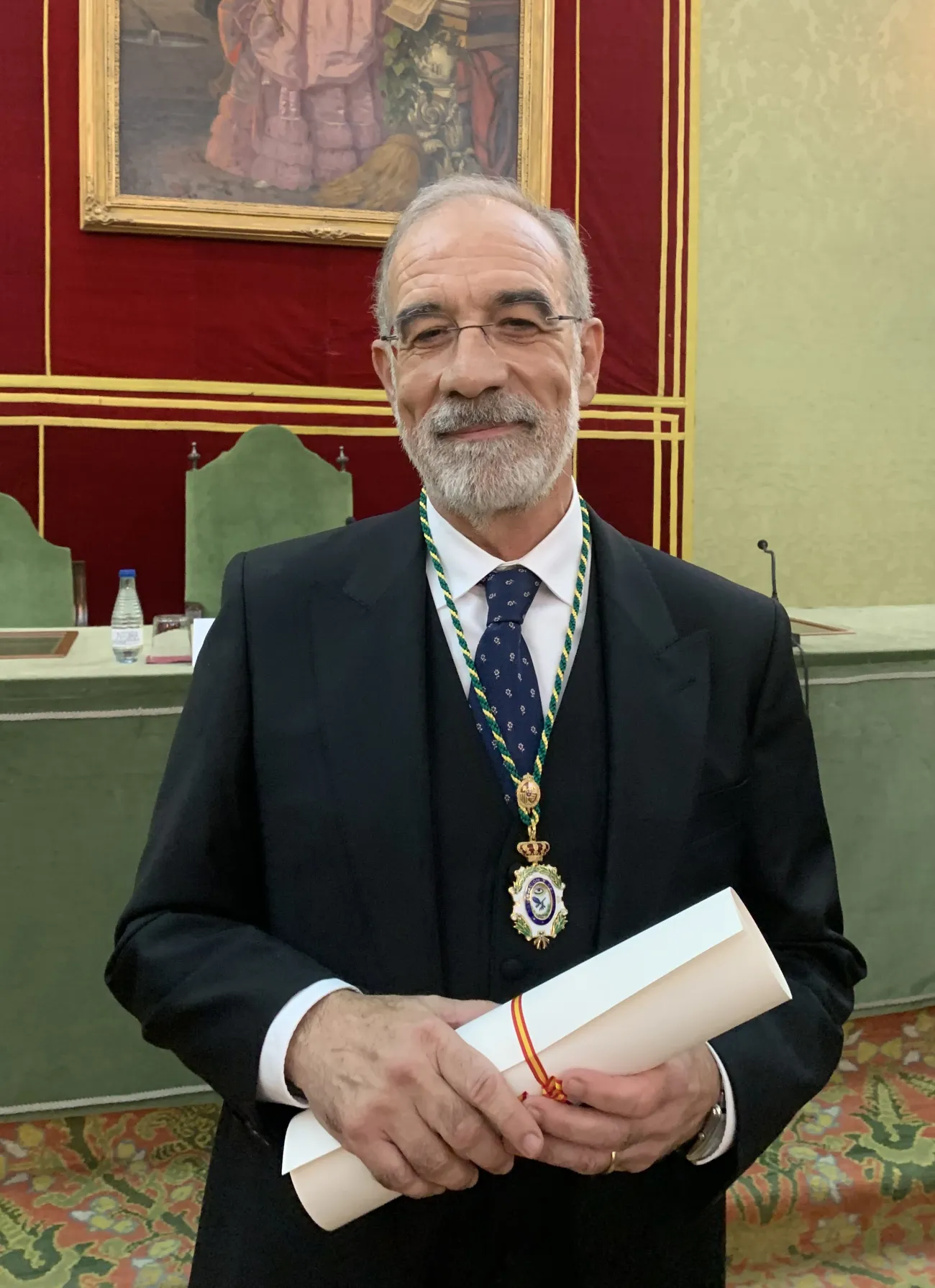
The Royal Academy of Exact, Physical and Natural Sciences of Spain is a public institution whose purpose is to promote the study, research, and public dissemination of the Mathematical, Physical, Chemical, Geological, and Biological Sciences and their applications, as well as to foster support for them.
In his address, Prof Chuvieco, who is also Chair of Geography at the University of Alcalá, emphasised that Earth observation from satellites and remote sensing technologies is essential for understanding global environmental trends, but science alone cannot drive societal change. He outlined the economic and social impacts of climate change, projecting potential global GDP losses of up to 23 percent by 2100 if current emission trends continue, with the most severe effects on the world’s poorest nations. Effective mitigation, he argued, could prevent far greater economic and human harm.
Prof Chuvieco also explored the role of human behaviour, ethics, and emotion in tackling environmental challenges. He stressed that fostering empathy, admiration for nature, and moral engagement is crucial to motivate action. Using examples such as reducing meat consumption, using energy-efficient appliances, and choosing low-emission transport, he illustrated how individual choices can collectively have a significant impact.
The address further highlighted the synergy between science and ethical or spiritual frameworks, noting that traditions emphasising stewardship of the Earth can reinforce scientific knowledge and inspire lasting commitment to conservation. Prof Chuvieco encouraged viewing the planet not as a commodity, but as a shared home to be preserved for future generations.
Concluding, he reflected on the first image of Earth taken from space by Apollo 8 in 1968 alongside contemporary satellite imagery. These images, he said, remind us of the fragility and beauty of our planet and reinforce the moral imperative to protect it.
Prof Chuvieco’s inaugural address underscored a holistic vision: addressing global environmental challenges requires not just science, but ethical engagement, informed action, and a cultural shift in how humanity relates to the natural world.
Watch the address on YouTube.