

Brazil’s Ambassador to the United Kingdom, Antonio Patriota, highlighted the country’s groundbreaking Tropical Forests Forever Facility (TFFF)—an ambitious financing mechanism that will reward nations for preserving tropical forests.
His comments came during a special pre-COP30 dialogue at the University of Oxford, where Ambassador Patriota was invited to speak by Dr Erika Berenguer, Senior Researcher at the Environmental Change Institute (ECI) and Dr Aline Soterroni, Senior Research Fellow at the Nature-based Solutions Initiative (NbSI), Department of Biology. The event, titled “Forests and the Future: Brazil’s Path to Climate Solutions,” was hosted in partnership with the Embassy of Brazil to the UK.
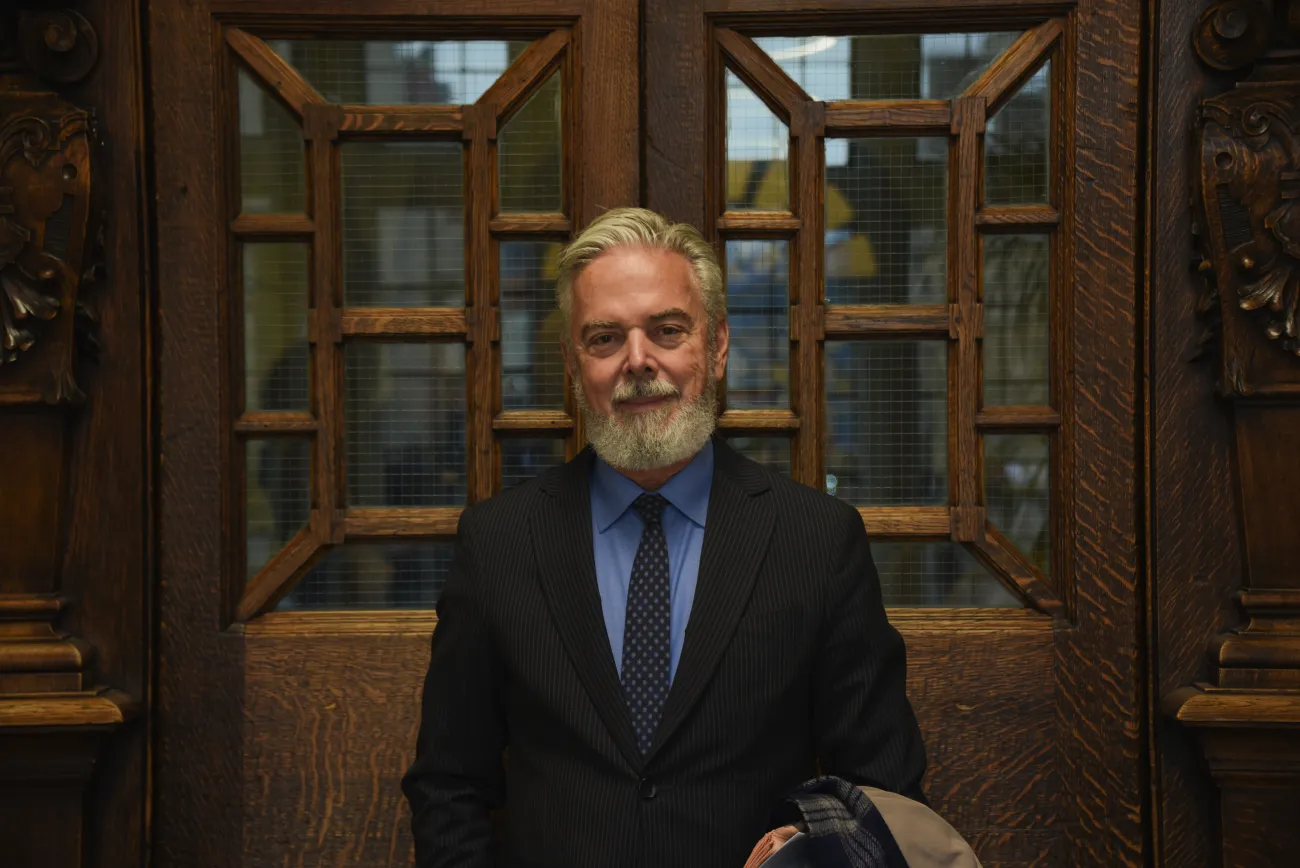
Antonio Patriota, Brazil's Ambassador to the UK
The event featured two panel discussions bringing together leading experts from academia, government, and civil society, moderated by James Allen.
‘The Role of Forest Protection for Climate & Biodiversity’ explored how scientific evidence can inform effective forest governance and featured Prof Nathalie Seddon, (NbSI), Dr Aline Soterroni, (NbSI) Dr Erika Berenguer, (ECI) and Prof Jos Barlow (Lancaster University).
‘From Science to Action – The New TFFF Mechanism for Forest Protection’ examined how innovative finance can support conservation at scale. Speakers included Dr Rachel Waterhouse (UK Foreign, Commonwealth and Development Office), Fernando Bastos (Embassy of Brazil in London), Prof Nicola Ranger (Earth Capital Nexus, LSE) and Dr Gisele Neuls (Trase).
The discussion centred on how Brazil is driving global efforts to align science, policy, and finance to protect tropical forests—culminating in the TFFF, a proposal expected to be launched at COP30 in Belém, Brazil.
The Tropical Forests Forever Facility aims to provide large-scale, long-term funding to countries that conserve tropical forests, channelling resources both to governments and local communities. More than 70 developing nations are expected to be eligible for support under the mechanism, which could become one of the world’s largest multilateral conservation funds.
Under the proposal, 20% of all funds will go directly to Indigenous peoples and traditional communities, recognising their central role as forest stewards. Countries will receive payments of roughly USD 4 per hectare preserved, verified through satellite monitoring. Brazil’s own forest monitoring, conducted by the National Institute for Space Research (INPE), is seen as a model for the system.
Beyond its environmental impact, the TFFF represents a paradigm shift in climate finance—moving from short-term donations to market-based investment. For every dollar of public investment, the fund is expected to attract four dollars of private capital, creating a permanent trust estimated at USD 125 billion.
The mechanism excludes investments linked to fossil fuels and prioritises green financial instruments, with strict eligibility rules requiring transparency and accountability. Countries can allocate funds toward national conservation initiatives such as Bolsa Verde, Payments for Environmental Services, and bioeconomy programs.
The initiative, first proposed by President Luiz Inácio Lula da Silva at COP28, has since gained traction among tropical forest nations including Colombia, Ghana, Indonesia, Malaysia, and the Democratic Republic of Congo, with investor interest from Germany, France, Norway, the UAE, and the United Kingdom.
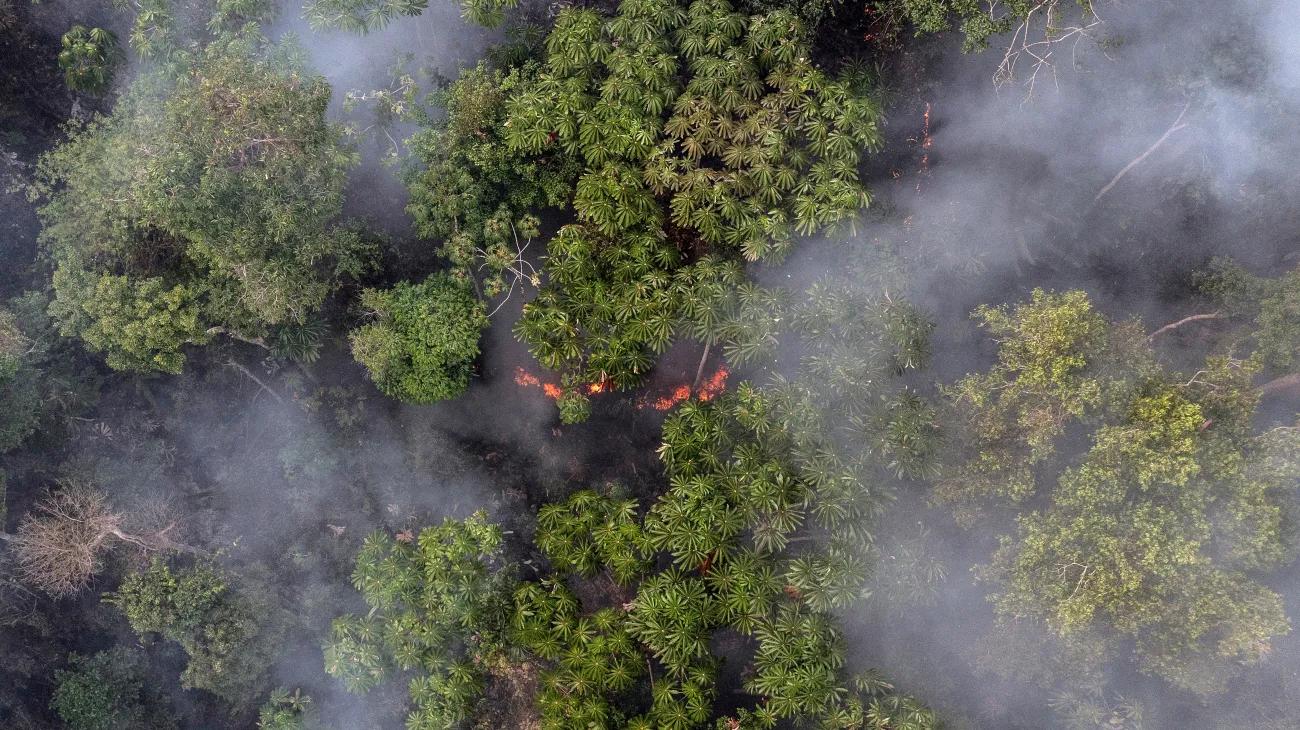
Addressing the event, Ambassador Patriota said:
This is the first [climate] COP that takes place in a tropical forest venue, the first time in the Amazon. I think in itself is an important development that will inspire, and I hope can be portrayed as a demonstration that, international cooperation is alive and producing significant results.
"As you are well aware, is the fact that while we are among the major emitters in the world, we are in a very singular category, because our emissions do not derive from energy use, or fossil fuel, or do not predominantly arise from this source, which is the major source internationally. In fact, we are leaders in terms of the transition. We have already operated an energy transition to some degree, and we have, an energy mix, that is quite unique to the extent that about half of our energy comes from renewable sources, our electricity, more than 90%.
"The G20 world average is around 15%, and ours is 50 percent. So, with that kind of a profile, it would be essential for Brazil to exercise leadership in demonstrating that it is ready to tackle the major source of emissions, which is deforestation, in our case.
"Deforestation, especially from the Amazon, not exclusively. And the idea to start elaborating or conceiving an innovative mechanism that would channel resources for the populations that live in tropical forests and that are not going to move away from there. And there are 20 million in the Amazon in Brazil itself, but many more in Africa, Southeast Asia, etc.
"You need to really perform a relatively major change in mindset, and I would even call it acrobatic.
“But this is an area where an initiative such as a TFFF demonstrates that. We're not only waiting for the developed North or the more powerful private interests in the world to contribute. We're actually taking matters into our own hands and doing our part to the extent possible.”
And he added: “This is one area where there will be no salvation without co-operation.”
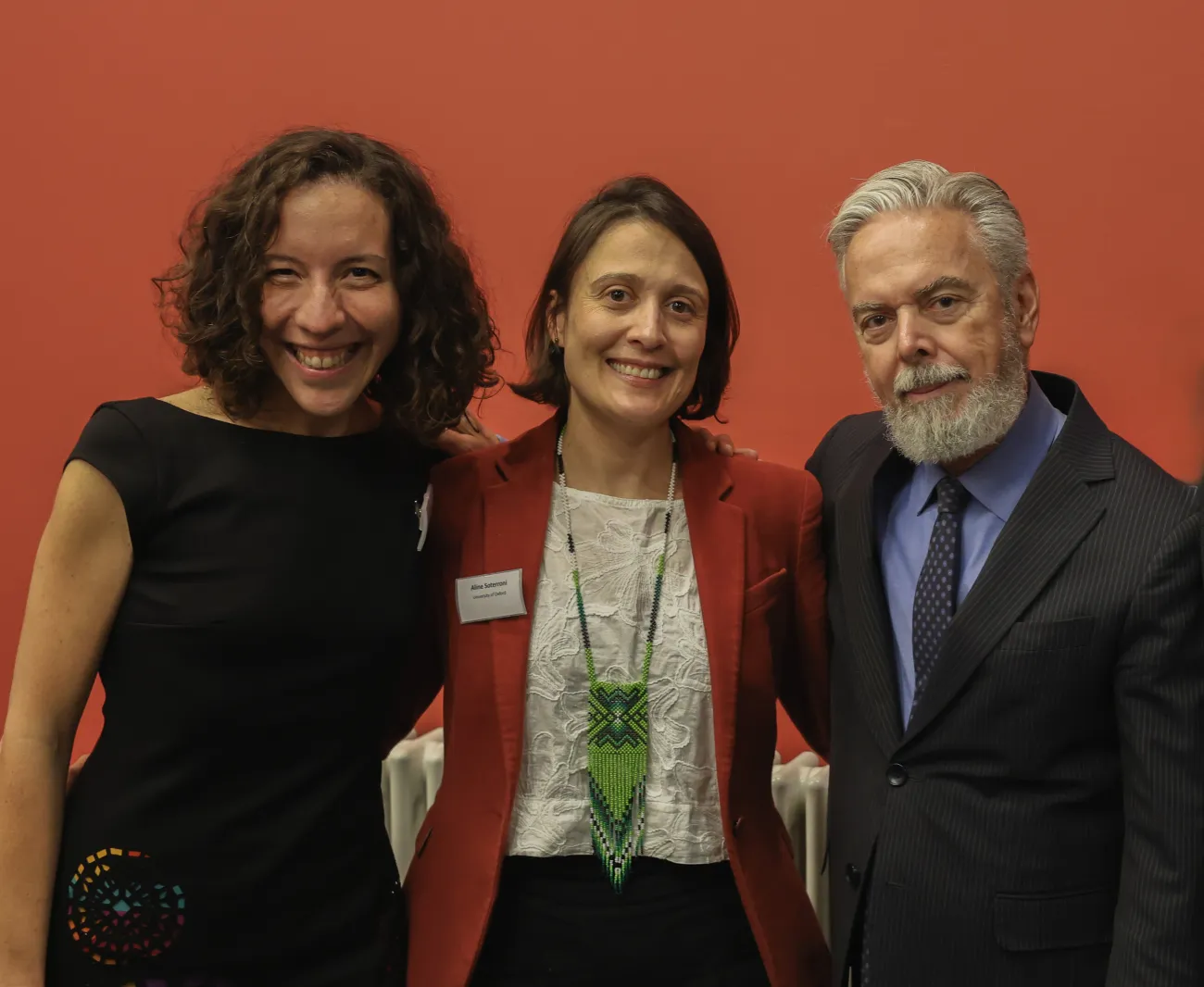
Dr Erika Berenguer, Dr Aline Soterroni and Antonio Patriota
For Dr Erika Berenguer, who will serve as Head of Delegation for the University of Oxford’s COP30 attendees, the event had added meaning as Brazil prepares to host the global summit in her home country. She said:
It was superb to have representatives of Brazil and the UK government together with NGOs and us scientists to bring forest protection to the forefront of discussions, while trying to find solutions to the threats that can undermine their role in climate mitigation.”
Dr Soterroni, who will serve as Deputy Head of Delegation, added:
This timely science-to-policy dialogue, held just days before COP30, underscored that forest protection delivers multiple benefits for addressing the interconnected crises of climate change and biodiversity loss.”
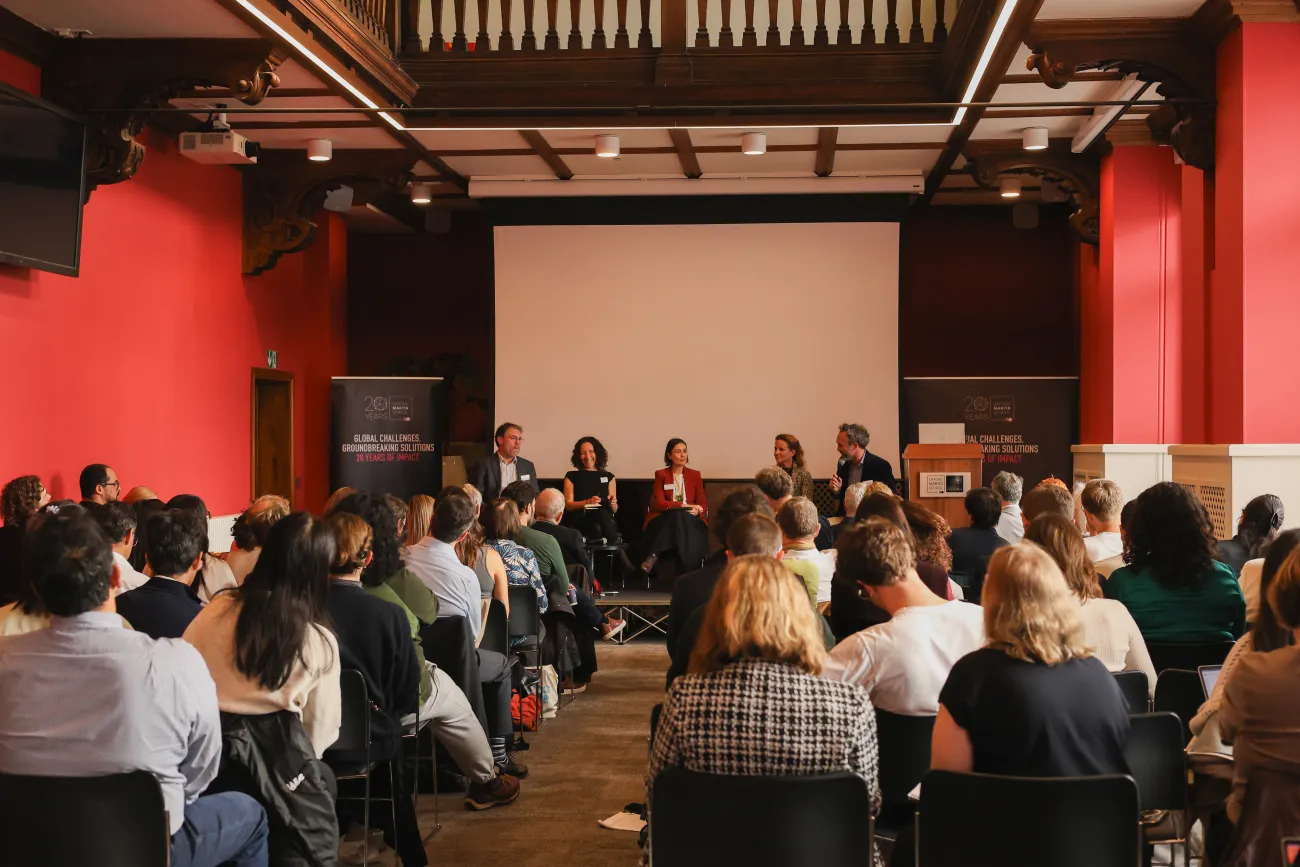
The multidisciplinary event was supported by the University’s Leverhulme Centre for Nature Recovery, the Agile Initiative, Nature-based Solutions Initiative, and Oxford Net Zero.
Participants joined both in person and online, reflecting the event’s global relevance and growing interest in how Brazil’s forest initiatives could transform international climate action.
Rosie Young, MBiol student, said: “For my Master’s project I study tropical forest ecology, focusing on interactions between trees and lianas (woody climbing vines). Attending this event was very interesting - listening to the science-to-policy dialogue ahead of COP30 helped me see how initiatives such as TFFF are translating research into practical measures to protect tropical forests.”
Claudia Coleoni, a DPhil student at the School of Geography and the Environment at the University of Oxford, is attending COP30 as part of her DPhil research. She said: “I'm from Brazil, so it's encouraging to see the country's leadership in TFFF and its historic role in global environmental milestones since the 1992 Earth Summit in Rio de Janeiro. With my DPhil research focused on transboundary water governance in the Amazon, it's refreshing to see Belém hosting this debate, where science-backed finance supports livelihoods tied to standing forests.”
Isha Yadav, Co-president of Oxford Climate Society and Undergraduate Biology student, is also attending COP30. She said: “Community led, bottom-up initiatives are really important in this field, and I’m really excited to use these spaces to connect with other youth leaders. And from a biologists point of view, I’m really excited about the focus that we have at this event, and at this COP, on tropical forest protection - this is a really important opportunity to integrate climate and biodiversity action - we cannot address the climate crisis without also addressing our systematic disconnect from nature.”
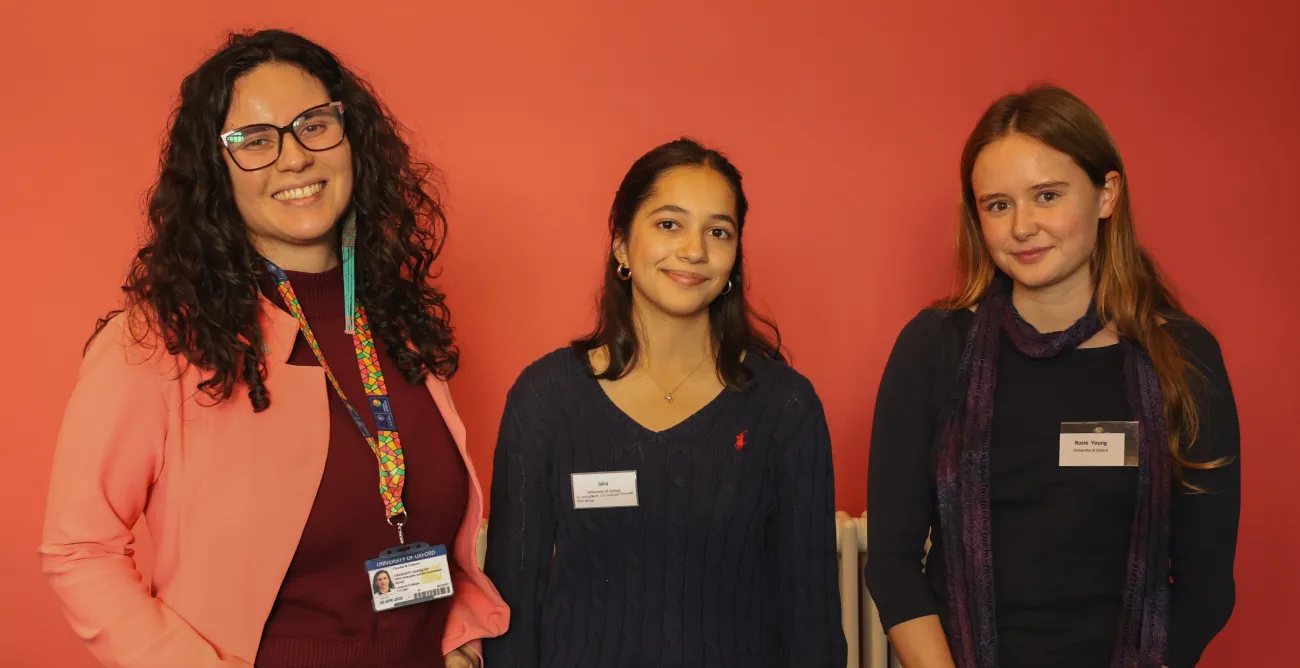
Claudia Coleoni, Isha Yadav and Rosie Young
By linking climate policy to concrete financial mechanisms, the Tropical Forests Forever Facility signals a new era in valuing forests not just as natural resources but as living infrastructure essential for planetary stability. As nations prepare for COP30, the initiative underscores how global cooperation and science-based policy can help build a more resilient, equitable, and biodiverse future.
COP30 in Belém represents a historic opportunity to align national commitments with tangible action on forest protection and sustainable development.
Find out more about the TFFF initiative.
Find out more about TFFF at COP30.