

Researchers from the Environmental Change Institute (ECI) have contributed to a new international case study showing how investors can make infrastructure more resilient to climate change.
The study focuses on the Physical Climate Risk Appraisal Methodology (PCRAM 2.0) — a framework that helps investors assess and address physical climate risks in their projects. Originally developed by the Coalition for Climate Resilient Investment and now led by the Institutional Investors Group on Climate Change (IIGCC), PCRAM 2.0 was used in this case study to test how the approach can be applied in real-world investment decisions.
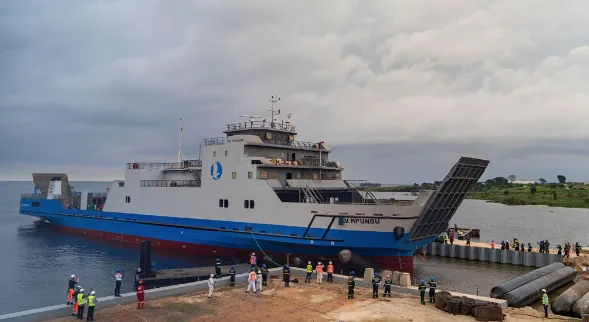
The East Africa Marine Transport vessel, M V Mpungu docked at port
It highlights how the Private Infrastructure Development Group (PIDG) used PCRAM 2.0 to assess and strengthen climate resilience for its investment in East Africa Marine Transport — including the design and construction of the MV Mpungu, a new vessel linking Uganda and Tanzania across Lake Victoria.
The ECI supported PIDG in assessing how changing lake levels could affect future port operations. The case study also tested new features in PCRAM 2.0, such as methods for managing uncertainty in climate projections and understanding how wider system impacts can influence infrastructure resilience.
The study involved Dr Mark Bernhofen, Research Associate with the Oxford Programme for Sustainable Infrastructure Systems (OPSIS) at the ECI, and Greg Briffa, part-time DPhil student with OPSIS. Dr Bernhofen said: "This has been a really interesting case study to work on with PIDG, especially thinking about how we deal with uncertainty in assessments of future climate risk. The changing lake levels of Lake Victoria were identified as a key risk to this asset, yet future projections of Lake Victoria levels are highly uncertain. We used an adaptive pathways approach to combat this uncertainty and looked at how exceeding different lake level thresholds could trigger further resilience investments in the future."
Dr Bernhofen added:
This case study really got us thinking about the wider system in which this asset operates. Climate change isn't the only driver of changing lake levels, a key driver is also hydropower operations, and there are trade-offs that need to be made between energy generation and lake navigability.
When mapping out the potential climate impacts and the resilience benefits of this asset, we found it helpful to take a wider systems perspective; not just looking at the direct impacts on the port’s operations and revenues, but also at how its resilience supports the users who depend on it and the wider regional trade it enables."
Together with IIGCC’s Climate Resilience Investment Framework (CRIF), PCRAM aims to help investors move from viewing climate change purely as a risk to recognising it as an opportunity for smarter, long-term investment.
Read the full case study: Making the Case for Resilience Investment.
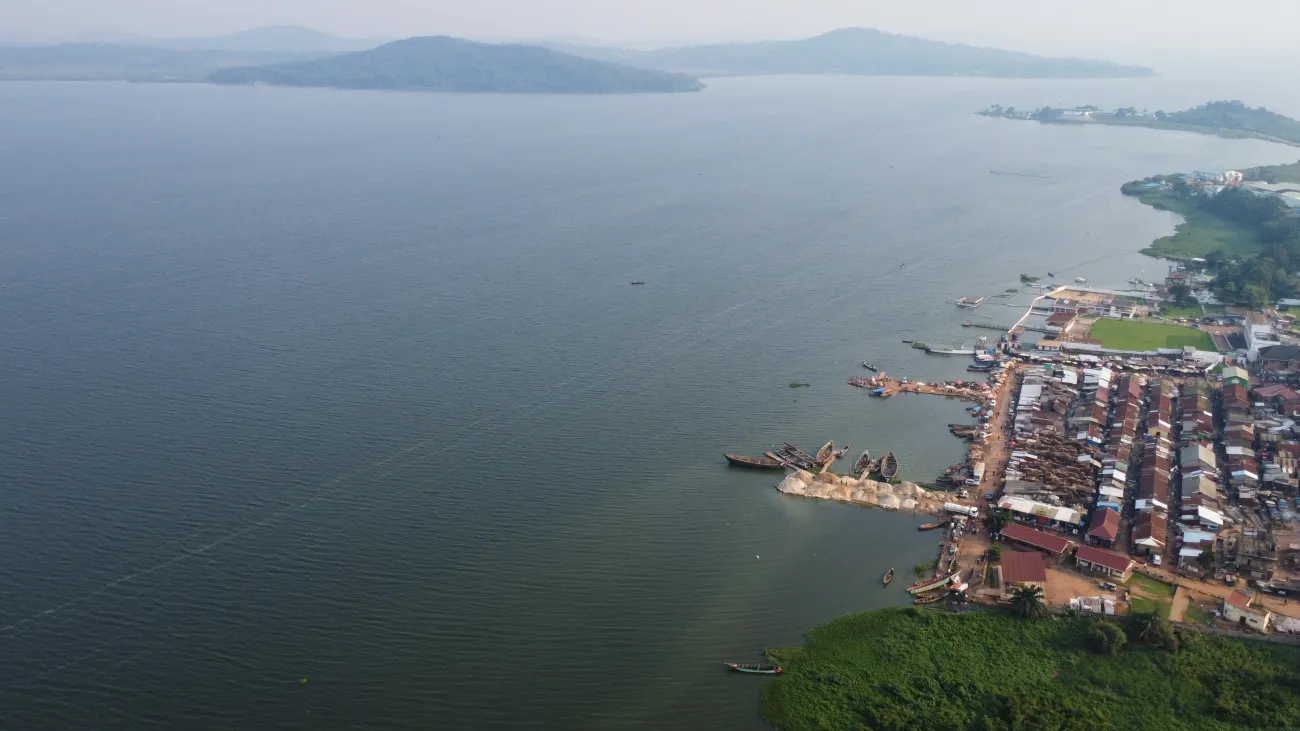
Aerial view of a fishing village on the vast Lake Victoria shoreline