

Former ECI MSc student Nora Zürcher attended the UNCTAD Youth Forum in Geneva after completing her MSc Environmental Change and Management. Drawing on ideas from her ECI studies, she contributed to the UNCTAD Youth Declaration and called for youth to have a genuine seat at the table. Now with the Oxford Climate Policy Hub, she continues to apply the interdisciplinary lens fostered at the ECI.
Discussing the incorporation of human and planetary well-being at UNCTAD – this was my highlight after Oxford. I had the opportunity to attend the United Nations Conference on Trade and Development (UNCTAD) Youth Forum in Geneva, Switzerland. Held every four years alongside the UNCTAD Ministerial Conference, the event brings together youth delegates to contribute their perspectives to the evolving global development agenda.
Attending this forum marked a continuation of my journey from the Environmental Change Institute (ECI) at Oxford, where I completed the MSc in Environmental Change and Management (ECM). Many of the forum’s themes resonated deeply with what we explored throughout the programme - from rethinking the metrics that define progress, to examining how finance, governance and participation shape sustainable and equitable futures.

Rethinking and financing progress
One of the most inspiring sessions focused on moving beyond GDP as a measure of progress - a theme that has been central to the ECM curriculum. Across different modules, we unpacked the shortcomings of GDP as a proxy for well-being and explored alternative approaches like Bhutan’s Gross National Happiness Index.
At UNCTAD, these ideas came to life. Nora Lustig, co-chair of the UN Secretary-General’s High-Level Expert Group on Beyond GDP, outlined ongoing efforts to redefine progress at the global level, while Lyonpo Namgyal Dorji, Bhutan’s Minister for Industry, Commerce and Employment, shared a national-level perspective on translating these efforts into practice.
As a youth delegate, I found it empowering how the ECM programme had prepared me to engage with these conversations critically and constructively. I realised that the conversations on beyond GDP are not just a technical one. They are about reimagining our narratives of progress, human and planetary well-being and the values that underpin decision-making.
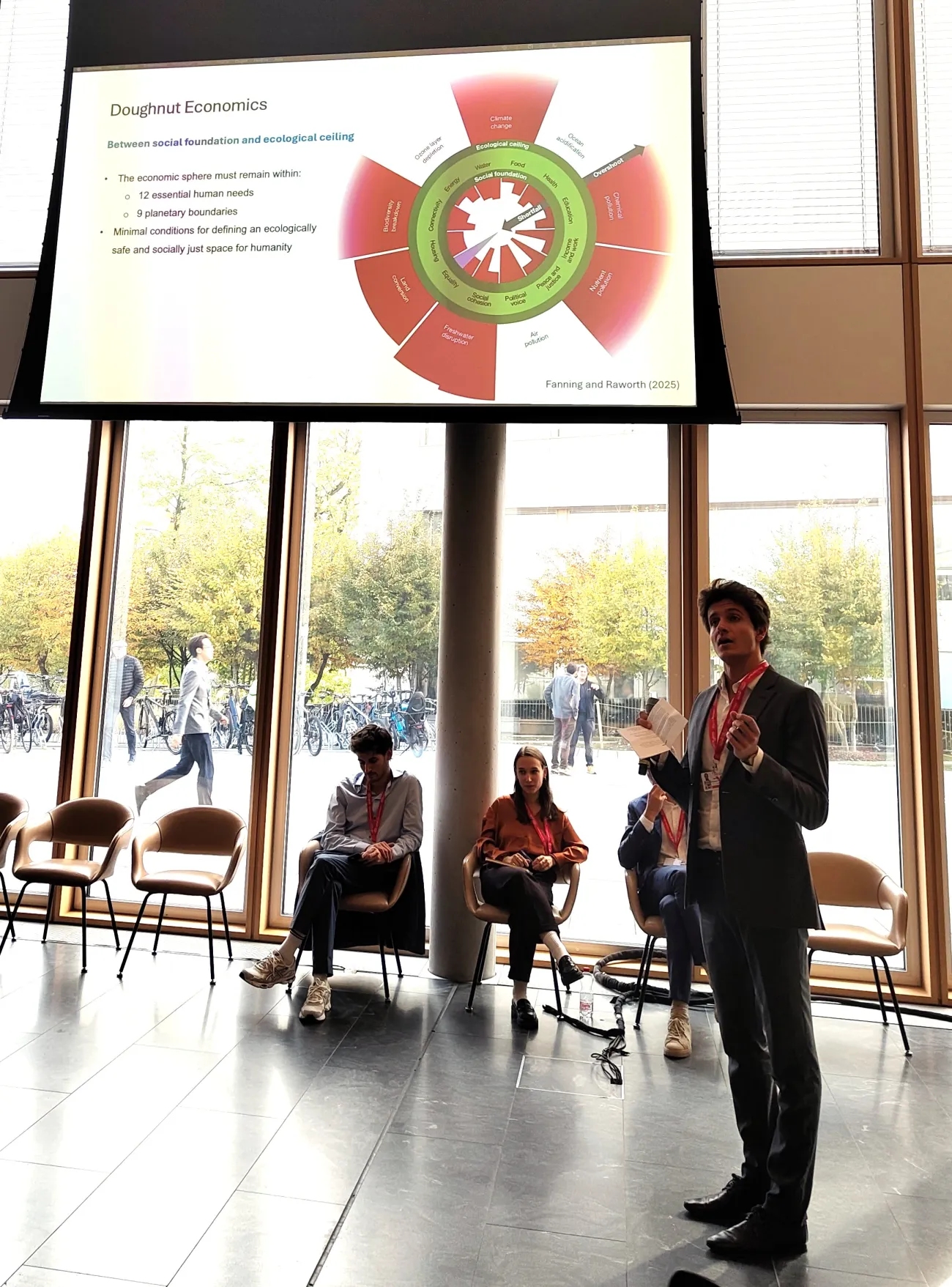
Youth delegates discussing pluralist approaches to economics, reimagining human and planetary well-being.
Another session delved into the financial dimensions of climate-resilient development. Having studied the complexity of resilience and different mechanisms to addressing the financing needs such as blended finance and debt-for-nature swaps through ECM, I was able to put the conversations among delegates from across the Global South into context.
A critical reflection on the inclusion of youth voices
I valued the opportunity to contribute to the UNCTAD Youth Declaration, a document summarising youth perspectives and recommendations presented to the UNCTAD Secretary-General. Concepts central to the ECI’s work, such as circular economies and doughnut economics, featured prominently in the declaration, reflecting a growing global interest in rethinking economics.
Moreover, the UNCTAD Youth Forum provided a platform to reconnect with fellow School of Geography and the Environment (SoGE) students, such as Valery del Carmen Salas Flores.
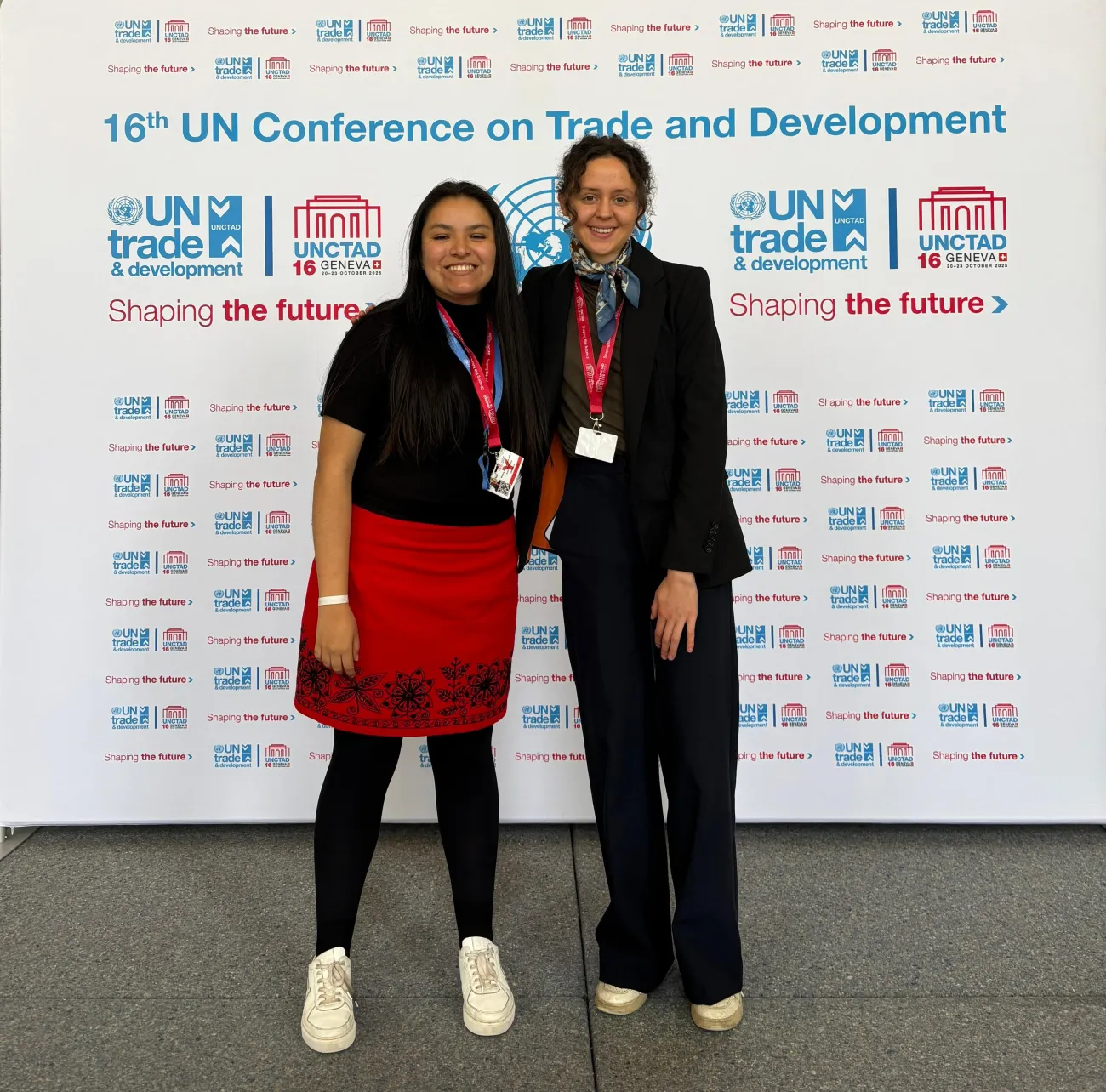
Nora together with fellow SoGE student Valery del Carmen Salas Flores at the UNCTAD Youth Forum
Yet, the forum also prompted reflection. While youth participation spaces are valuable, I found myself questioning to what extent these opportunities translate into genuine procedural justice, especially for young people and communities who lack access to such global platforms. It is an ongoing challenge to ensure that youth engagement moves beyond representation and toward meaningful influence.
Looking forward
As I continue my journey, now working with the Oxford Climate Policy Hub, I carry forward the interdisciplinary and critical lens fostered at the ECI. The UNCTAD Youth Forum reaffirmed the importance of the dialogue between academic understandings and practical engagement. The conversations in Geneva reminded me that shaping a just, net-zero aligned and climate-resilient future requires not only new policies, but also new ways of thinking. The ECI has planted this seed in me and continues to grow.