

While forests often dominate conservation headlines, natural non-forest ecosystems, including grasslands and wetlands, are under mounting pressure worldwide. A new global study, led by Dr Siyi Kan, at the Environmental Change Institute (ECI), shows that these vital ecosystems are being converted to agricultural land at a rate nearly four times the rate of deforestation — with important implications for biodiversity, climate mitigation, and food security.
Dr Kan, who carried out the research while at the Senckenberg Biodiversity and Climate Research Centre in Germany, emphasises the importance of broadening conservation strategies:
Grasslands and wetlands are far more than just ‘green spaces’ – they are one of our planet’s often overlooked service providers. Around 20 to 35% of global terrestrial carbon is stored in grasslands. Wetlands harbour 40% of all known animal and plant species and hold over 30% of the world’s soil organic carbon. Whether for climate change mitigation, biodiversity conservation, or for water storage and protection against soil erosion, they provide important ecosystem services that directly benefit local communities and global socio-economic systems.”
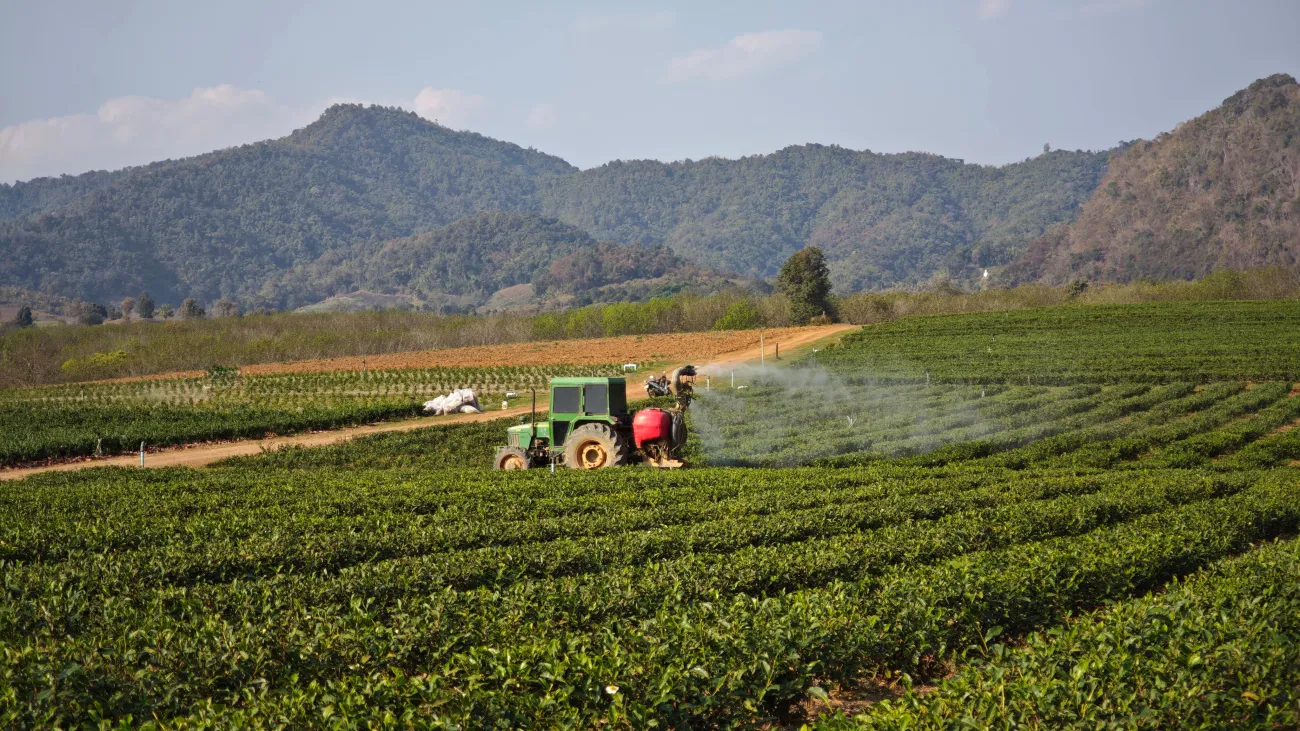
The study, published in the journal PNAS, analysed global trends in the conversion of natural non-forest ecosystems to cropland and pasture between 2005 and 2020. It identifies the specific commodities driving the conversion, and highlights the role of both domestic and international demand for human food, animal feed and bioenergy.
Dr Kan added:
While a large number of studies on deforestation extent, drivers and impacts have already been carried out, the conversion of non-forest ecosystems – especially in connection with livestock production and global agricultural supply chains – has hardly been studied to date.”
Findings show that Brazil leads globally with 13% of the world’s total natural non-forest ecosystem conversion, followed by Russia, India, China, and the USA at around 6 percent each. International demand plays an important role: a substantial share of the conversion is associated with globally traded commodity crops like soy, corn and rapeseed, which are commonly used for animal feed and biofuel production, besides direct human consumption. The outsized role of livestock production should also be recognised: 50% of the conversion is driven by pasture expansion, and another 17% by cropland expansion for feed crops. In countries like Brazil and Argentina, 80% of feed crops grown on converted non-forest lands are export-oriented.
The research highlights the urgent need for more comprehensive conservation measures. Dr Kan said:
Our results identify the natural non-forest ecosystems that are in particular need of protection, and offer suggestions where to start making changes along global supply chains. Since policy measures have focused primarily on protecting forests until now, there is mounting pressure on other ecologically important but often overlooked habitats due to policy leakages. To prevent this utilisation pressure from simply shifting to other ecosystems, we need better coordinated political measures and greater responsibility on the part of producers and consumers in internationally networked supply chains.”
The study was co-authored by researchers from Germany, Sweden, the USA, and the Netherlands.
Read the study in full in Proceedings of the National Academy of Sciences (PNAS): Overlooked and overexploited: Extensive conversion of grasslands and wetlands driven by global food, feed, and bioenergy demand