

A new study by researchers from the Environmental Change Institute and the Danish Technological Institute shows that heat pumps are the most cost-effective solution for decarbonising low and medium temperature industrial process heat in Europe. The analysis finds that heat pumps can deliver up to 75% lower heating costs than hydrogen boilers and significantly outperform biomass and fossil fuel options.
The research, published in Cell Reports Sustainability as “Techno-Economic Analysis of Technologies for Decarbonising Low- and Medium-Temperature Industrial Heat” compares high-temperature heat pumps, electric, hydrogen, and biomass boilers under 2030 and 2050 scenarios. It concludes that combining heat pumps with thermal energy storage further reduces heating costs by up to 15%, reinforcing their position as a cornerstone technology for industrial decarbonisation.
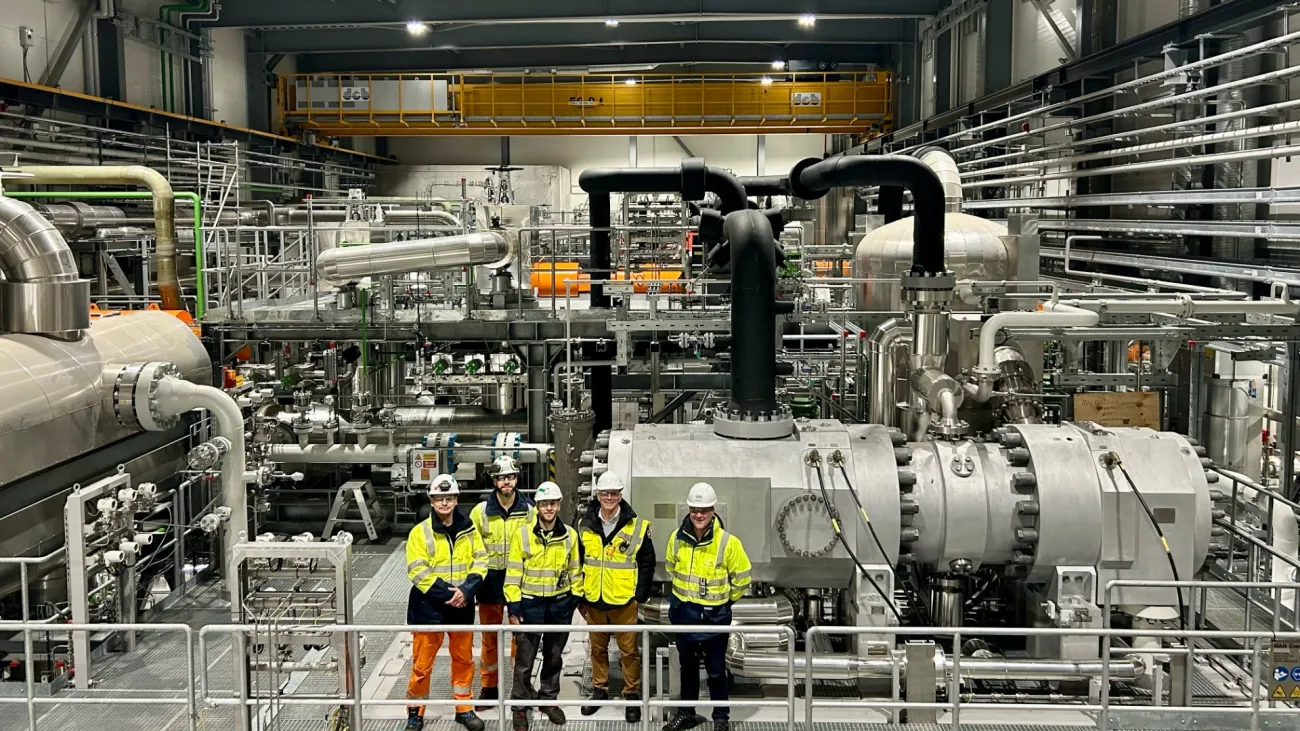
Prof Jan Rosenow, Professor of Energy and Climate Policy, and Energy Programme Leader at the ECI, co-authored the study. He said:
This research provides robust evidence that electrification is the fastest and most affordable pathway to decarbonising industrial heat. “Heat pumps offer far greater efficiency and lower costs. The challenge now is scaling deployment and removing policy and investment barriers.”
The study demonstrates that by 2030, high-temperature heat pumps using free excess heat sources can achieve deliver heat at a cost up to three quarters lower than hydrogen boilers and up to 40% lower than biomass boilers. Even under high electricity price conditions, heat pumps remain the most cost-effective and energy-efficient technology for generating heat up to 150°C.
Wiebke Brix Markussen, Senior Consultant at the Danish Technological Institute and lead author of the study, said:
Our results show that direct electrification using heat pumps is economically superior for industrial heat applications at lower temperatures. By tapping into excess heat and integrating thermal storage, industries can drastically cut emissions while improving their cost competitiveness.”
The authors stress that without targeted policy intervention, industrial heat decarbonisation will remain slow. They call for supportive frameworks that reduce investment risk, expand grid and heat network capacity, and incentivise thermal storage and excess heat recovery.
Prof Rosenow added: “The technology is ready, the economics are compelling — what’s needed now is bold policy action. Europe has a window of opportunity to lead the industrial transition, but it requires coordination and commitment across governments and industries.”
Prof Rosenow was recently invited to brief all 27 EU Energy Ministers of the European Union’s member states on this topic at a formal meeting in Luxembourg, a very rare move by the Presidency.
Read the paper in full in Cell Press: Techno-economic analysis of technologies for decarbonizing low- and medium-temperature industrial heat