

A new study led by researchers at the Environmental Change Institute (ECI) has found that plant traits related to leaf chemistry and photosynthesis predict the structure of plant–pollinator interactions across the tropics, with potential implications for ecosystem stability and food production under climate change.
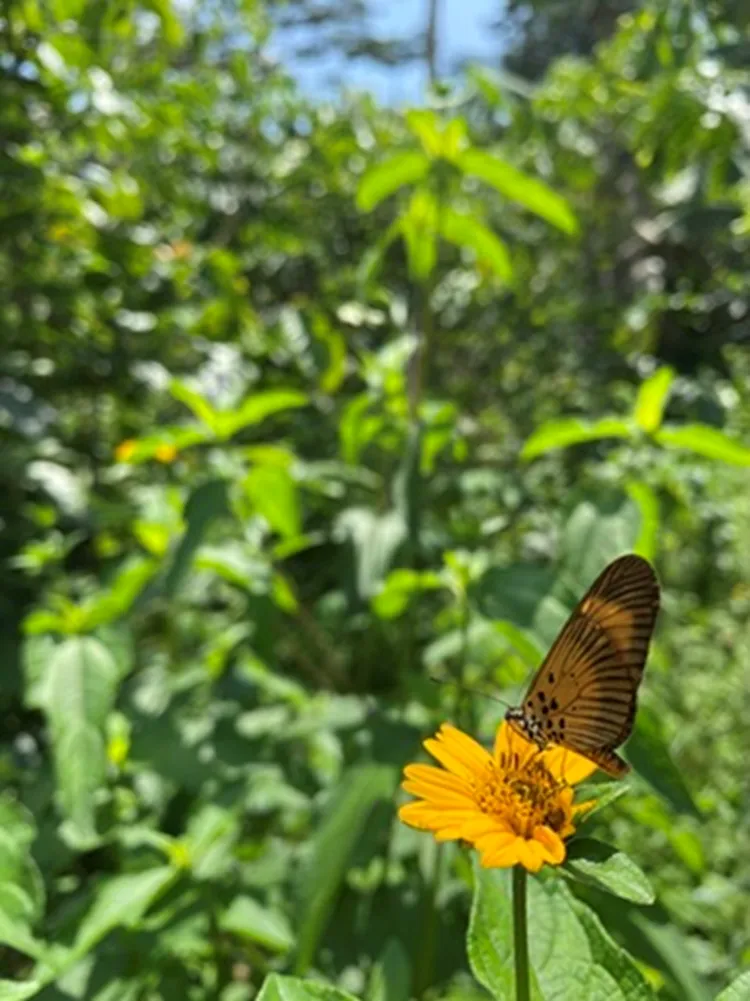
An example of a plant-pollinator interaction observed in the field: a butterfly visits a wild sunflower plant in agroforestry plots Ghana.
Plant–pollinator relationships underpin around a third of global food crops and are essential for the functioning and resilience of natural ecosystems. However, until now, most understanding of these interactions has been based on local field studies, making it difficult to assess how they operate across large spatial scales.
The study, published in Ecology Letters, combined 209 field-based pollination networks from across the tropics with satellite-derived measures of plant functional traits and vegetation structure. This approach allowed researchers to explore how large-scale environmental conditions shape the way plants and pollinators interact.
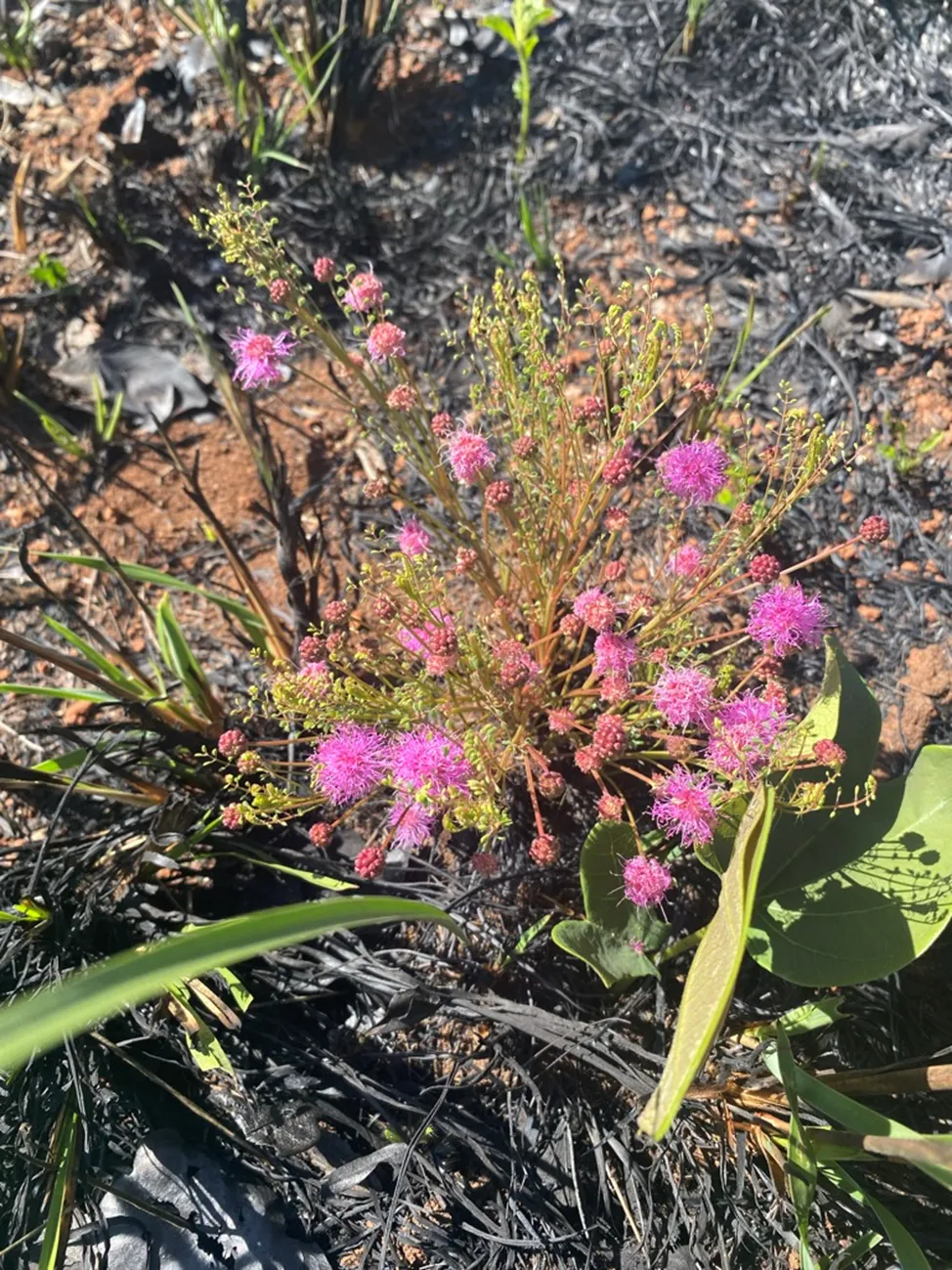
Many pollination networks in the Brazilian Cerrado were included in the study. The Cerrado is home to a rich diversity of plants and pollinators. Here Mimosa gracilis is blooming in the Cerrado after fire.
The results show that plant traits linked to environmental stress — particularly drought and heat — are strongly associated with changes in pollination network structure. In drier, more resource-limited environments, networks tend to become more modular and less connected, meaning interactions are more isolated within smaller groups of species. In contrast, higher nutrient availability, particularly nitrogen, is linked to more generalised and interconnected pollination networks.
Lead author of the study is Dr Kendall Jefferys, Postdoctoral Researcher with the ECI’s Leverhulme Centre for Nature Recovery, working with Dr Jesús Aguirre-Gutiérrez, Associate Professor and leader of the Biodiversity and Earth Observation (BioEO) group at the ECI, in collaboration with the Federal University of Goiás (UFG).
Dr Jefferys said:
Plant traits provide windows into the environmental pressures that plants experience. Here we reveal that these plants strategies also underpin the relationships between plants and pollinators, providing new insights into what shapes pollination networks at broad scales.”
Senior author Dr Jesús Aguirre-Gutiérrez said:
“Remote sensing is allowing us to connect large-scale environmental change with ecosystem functioning in entirely new ways.”
According to the researchers, these shifts could have important consequences for ecosystem resilience. More fragmented or modular networks may be less able to absorb environmental shocks due to lower functional redundancy, potentially making tropical pollination systems more vulnerable under future climate change scenarios.
The study also demonstrates the potential of satellite remote sensing to reveal ecological relationships that are otherwise difficult to detect at scale. By linking plant traits derived from satellite imagery with field observations of pollination, the researchers were able to identify broad patterns connecting vegetation characteristics with ecosystem functioning.
The authors suggest that this approach could help improve understanding of how biodiversity and ecosystem services respond to environmental change, and potentially support the identification of regions most at risk from declining pollination stability.
Read the full study in Ecology Letters: Plant functional traits and vegetation structure explain pollination networks at scale