
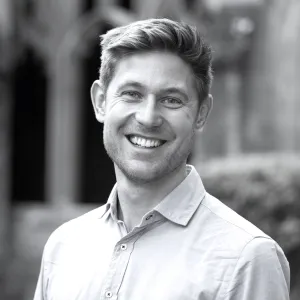

How can we make energy systems work better – balancing different energy sources, technologies, costs and environmental impacts? Marcel Seger and Tim Signer explored this with master's students at the School of Geography and the Environment, through a hands-on course introducing the tools and techniques used to model and optimise energy systems.
In this blog, Marcel shares how they brought the subject to life, the students' response and what's next.
Originally published on Marcel's LinkedIn profile and reproduced here with permission.
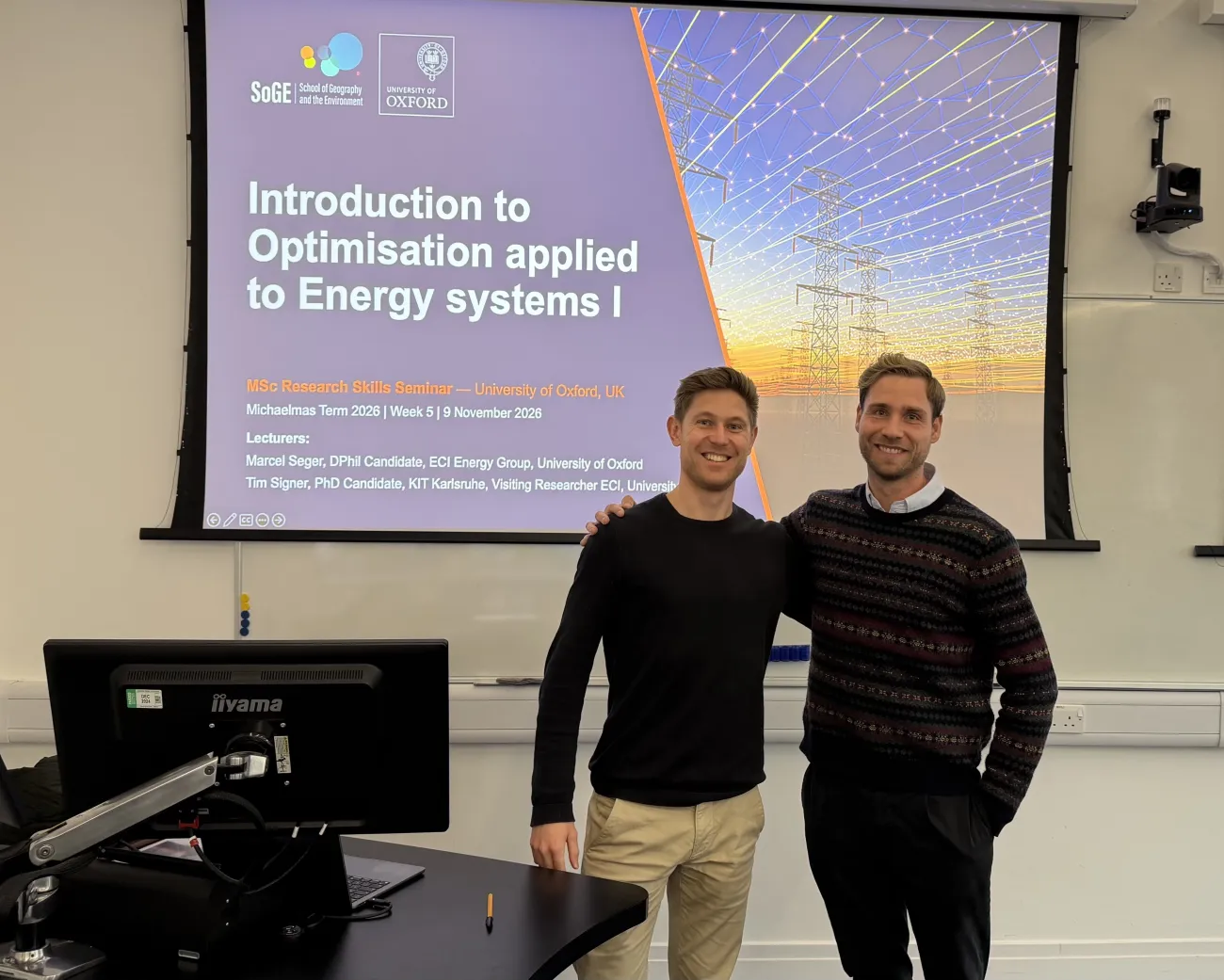
Lecturing experience at Oxford University 🎓
Who would have ever thought…
…that I would get to deliver a teaching module at one of the world’s most renowned universities, the University of Oxford? My younger self certainly wouldn't have!
Over the past two weeks, Tim Signer and I delivered a two-session course on ‘Introduction to Optimisation Applied to Energy Systems’, designed as a ‘research skills’ course offered to all Master’s-level students across the School of Geography and the Environment, University of Oxford. The course was divided into two distinct parts:
Session 1 focused on the theoretical foundations of optimisation. We motivated the topic by exploring different types of optimisation problems in real-world settings. We then introduced the concepts of linear programming, mathematical model formulations and key constraints, applied specifically to a simplified energy system with two generation sources: gas and coal. Using an interactive dashboard, students were then able to solve the optimisation problem visually by exploring the set of feasible solutions.
Session 2 focused on implementation, turning the mathematical model formulation into a Python script, using Pyomo as a modelling framework and HiGHS as an open-source solver. We expanded the problem to include three generation types, introducing wind as a third source with time-varying output and zero marginal cost. For the final part of the session, we introduced PyPSA, an open-source power system modelling framework developed at Technische Universität Berlin, to model two possible future scenarios for the GB electricity grid: Wind Rush vs. Solar Boom. ⚡
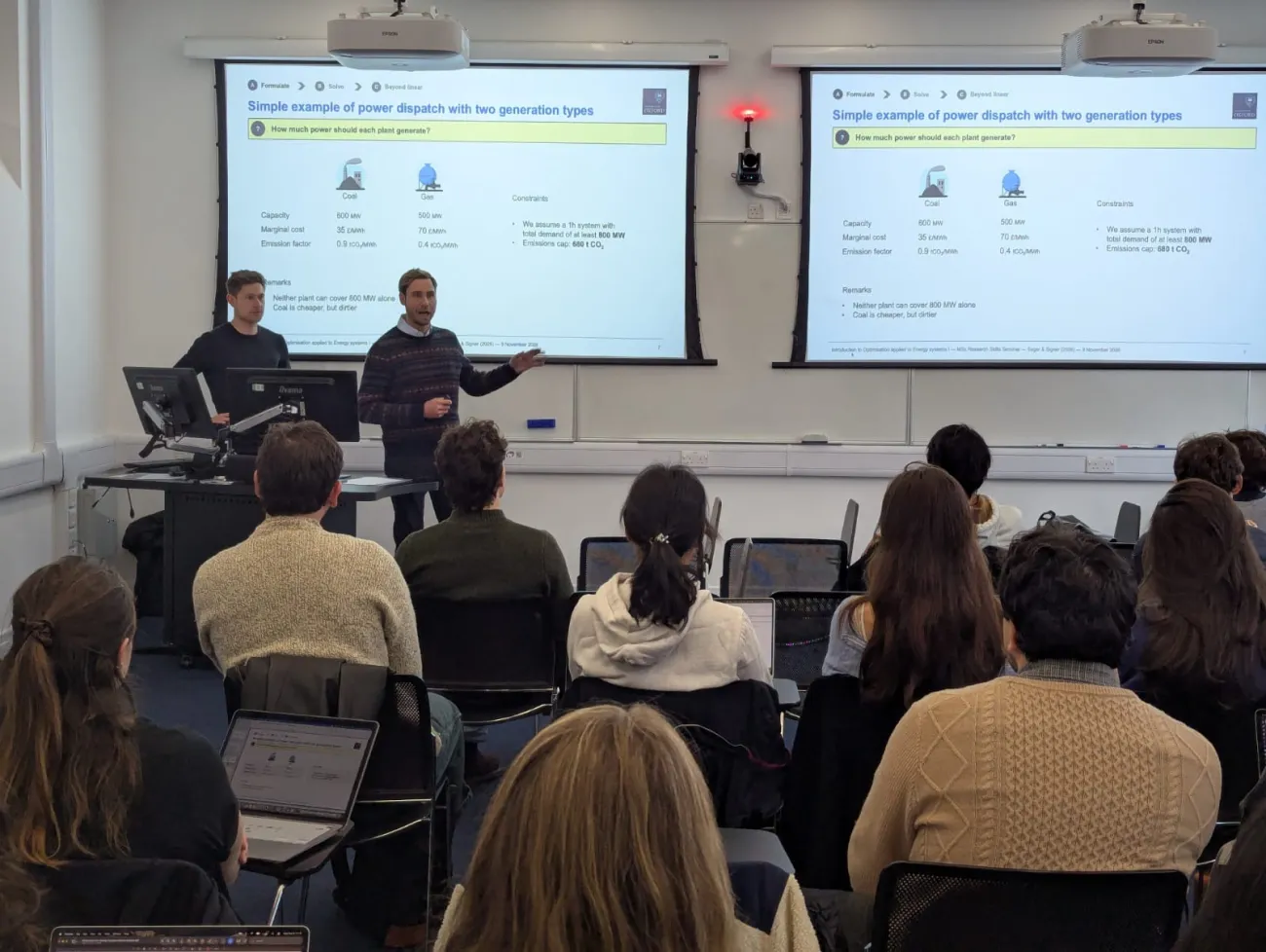
Tim and I were amazed by the students’ dedication and motivation. They actively followed along, were really switched on and showed genuine interest in learning more about the topic. Having received such positive feedback, we are already working on designing a new course module for a session in Hilary Term, this time focusing on an electricity market simulation.
Apart from the immense fulfilment and joy I take away from empowering others, in this case through teaching, the overall experience of designing, planning and delivering the course together with my close friend and dear colleague, Tim Signer, has given me absolute clarity on what comes next after my DPhil (more on this soon 😉).
Tim combines unique character traits that are hard to find as a ‘package’ in one person: He is incredibly hard-working, with an insatiable appetite for building things. He has a deeply technical mind and does not shy away from solving hard problems, as evidenced by his decision to embark on a PhD journey. Most importantly, he is an active listener, with nuanced views, capable of providing thoughtful advice and recommendations when asked.
All in all, a dream teammate and, more importantly, a close friend with whom work feels like pure joy.
Excited for us to embark on the post-PhD journey. Buckle up, my friend! 🎢
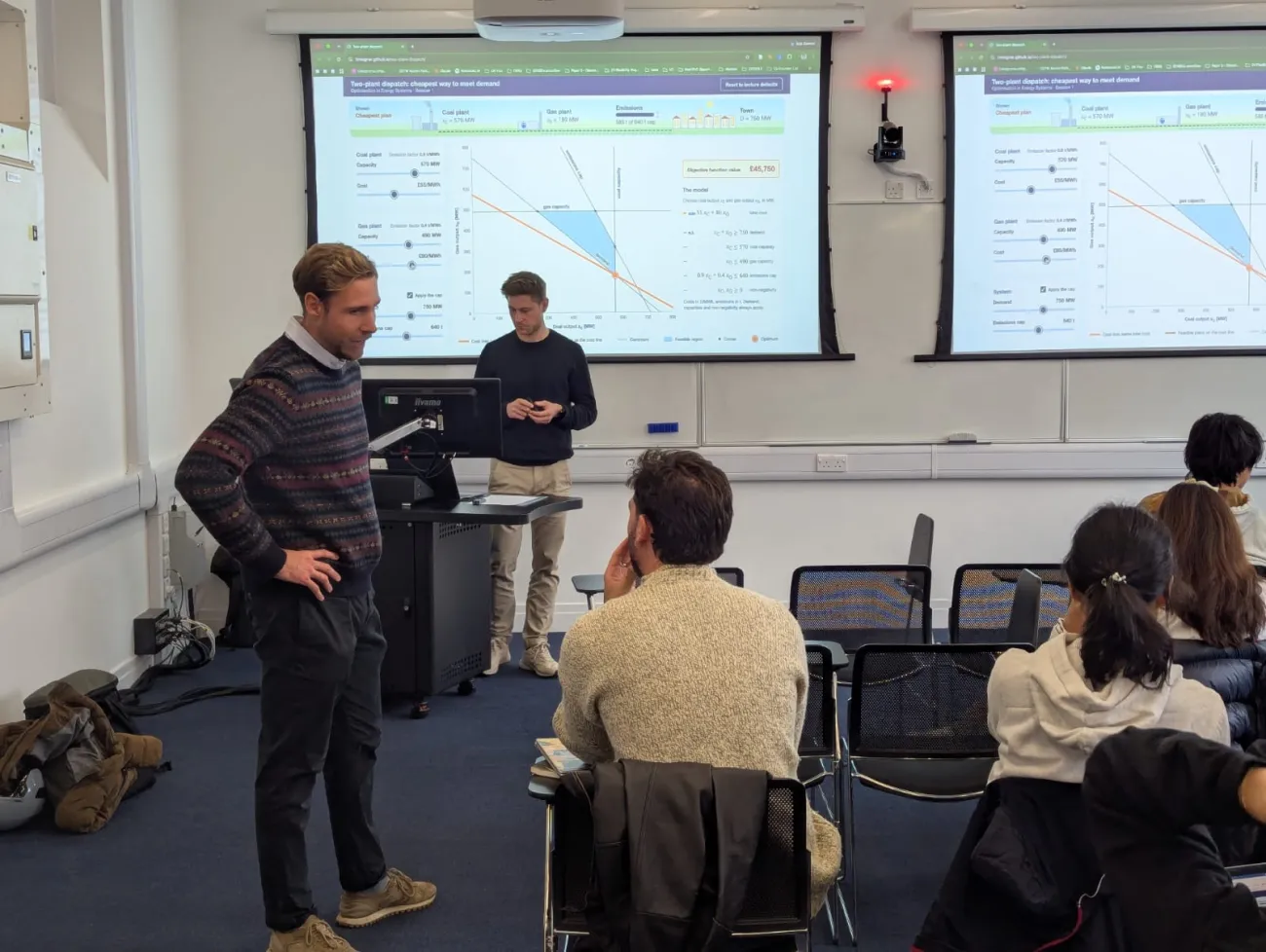
Making complex concepts more accessible
Tim also reflected on the role of AI in developing new approaches to teaching. In a separate LinkedIn post, he highlighted how interactive visualisations can help students explore mathematical concepts and understand optimisation problems in practice.
As he puts it:
AI doesn't replace the need to understand the mathematics. It gives us new ways to make that mathematics accessible."