

A new approach could make it easier for ecologists to use artificial intelligence to study how tropical forests change over time – without needing to know how to code.
Researchers from the Environmental Change Institute at the University of Oxford and international partners have developed a way to use machine learning to analyse photographs of tropical forest canopies. The approach could make it easier to detect subtle changes in the amount of vegetation in forests, including seasonal changes.
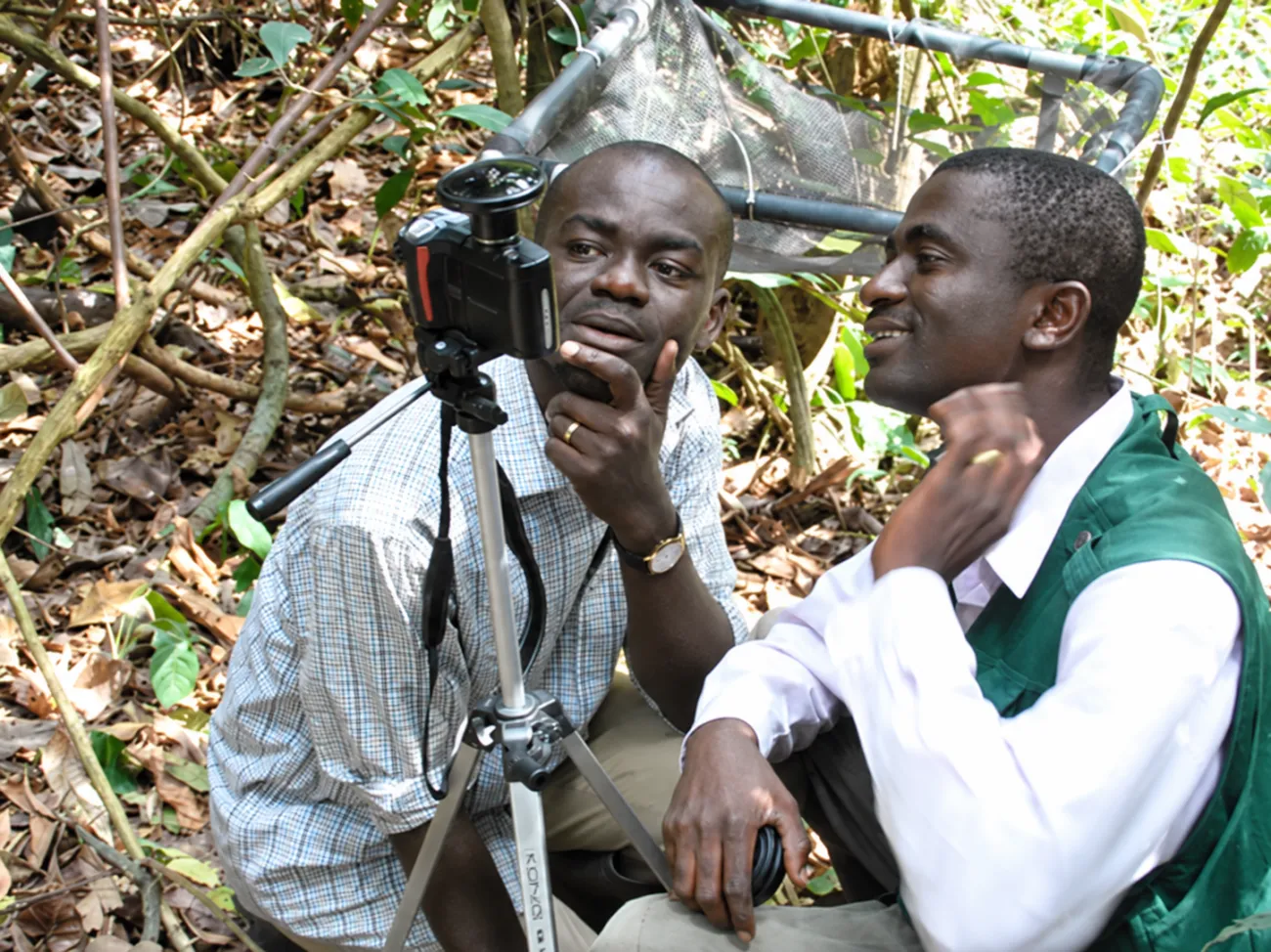
Dr Akwasi Duah-Gyamfi and Dr Shalom D. Addo-Danso taking hemispherical photos at one of the study sites.
Understanding how much vegetation a forest contains, and how this changes over time, is important for studying ecosystems and the global carbon cycle. But getting consistent measurements from photographs of forest canopies has long been a challenge.
Scientists often take photographs looking upwards from beneath the canopy, using a camera fitted with a fisheye lens. The images can then be analysed to estimate the amount of vegetation above the camera.
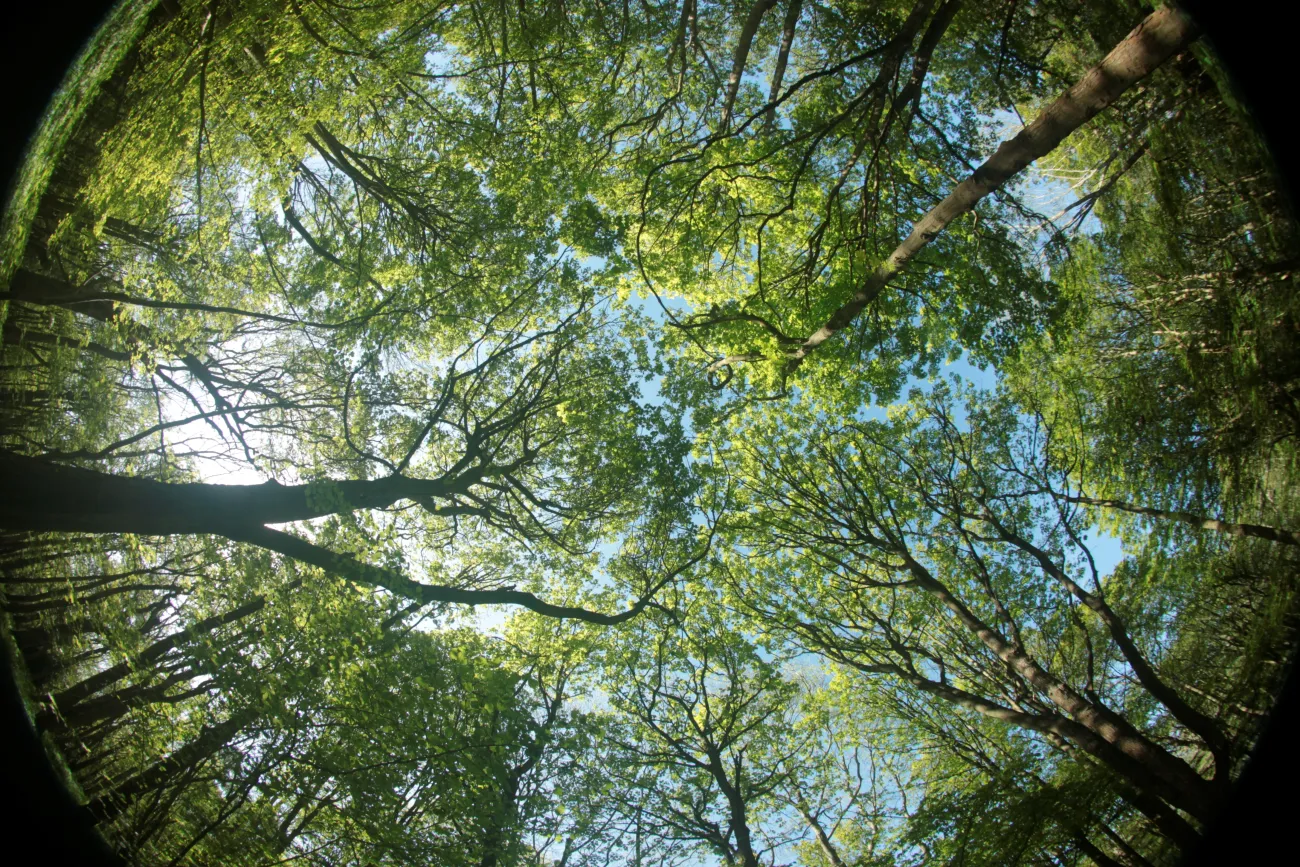
Fisheye photo taken at Wytham Wood, in Oxfordshire. Scientists use these photos to quantify density of the canopy.
The problem is that different methods of processing the same photograph can produce different results. In particular, software needs to distinguish the leaves and branches of the canopy from the sky visible between them. Differences in how this is done can be large enough to obscure the relatively small seasonal changes that scientists are trying to detect.
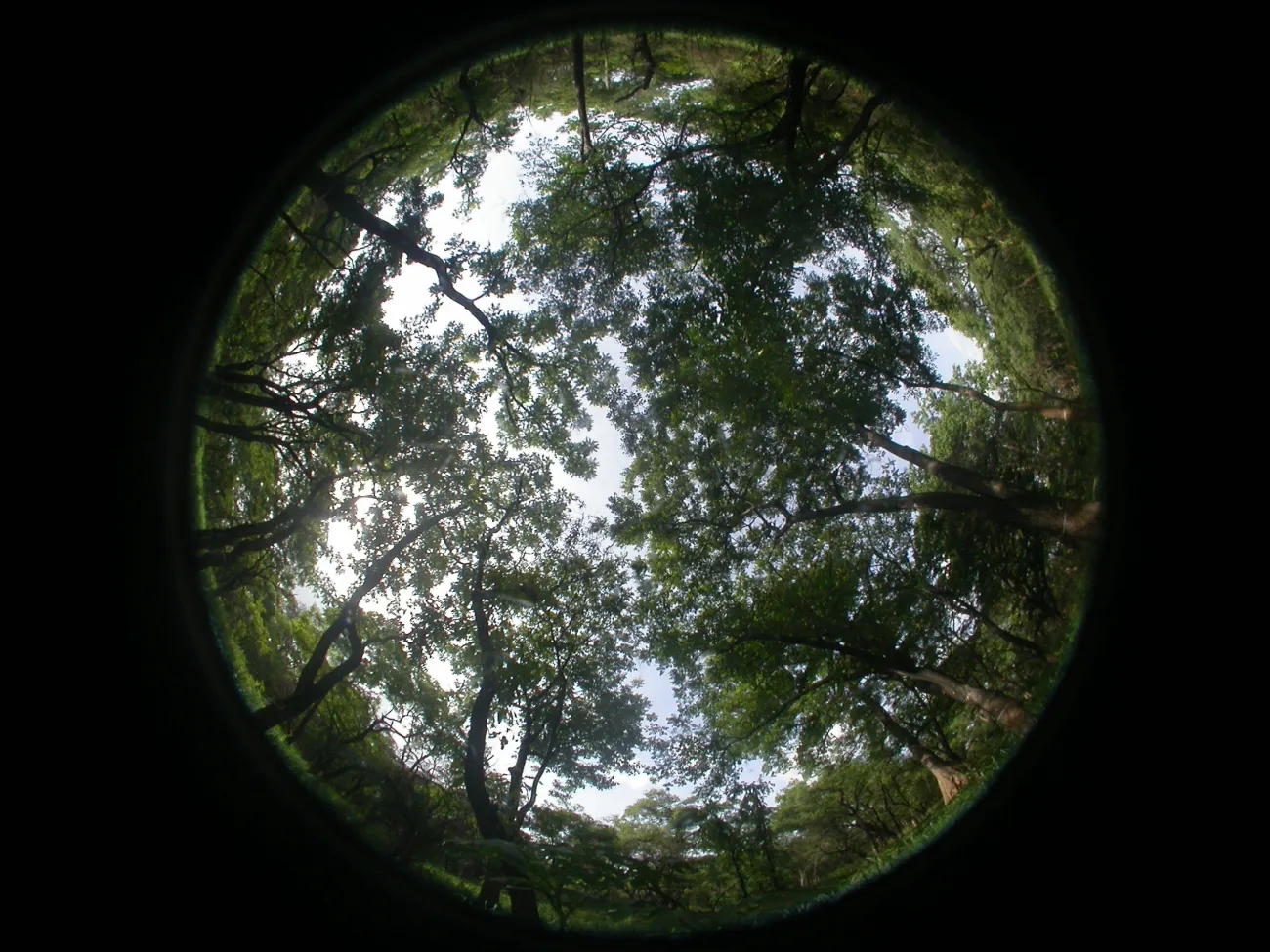
The researchers found that machine learning could make this process much more consistent.
They used a free image-analysis programme called ilastik to train a computer to distinguish the forest canopy from the sky. Once trained, the system could process large numbers of photographs without requiring researchers to manually classify each image, and the above process is completely coding-free.
The team tested the approach on more than 19,000 photographs taken in four types of tropical vegetation in Ghana, ranging from wet evergreen forest to more open woodland and savanna.
Using the AI-based approach reduced the differences between several commonly used methods for analysing the photographs. It also produced consistent seasonal patterns across the different forest types, making subtle changes easier to identify.
The researchers say an important part of the advance is not a new form of AI, but making existing machine-learning techniques accessible to scientists who are not computer specialists. This could help researchers across a wide range of disciplines use AI without needing programming skills.
The machine-learning method used in the study, known as random forest, has been around for more than 20 years. What has changed is the availability of software that allows researchers to use these techniques without needing programming expertise or powerful computing equipment.
Huanyuan Zhang-Zheng, Researcher at the Environmental Change Institute and Leverhulme Centre for Nature Recovery, said:
While we develop new AI algorithms, it is equally important to have scientists and software developers focusing on making these techniques accessible to people in other fields. The application of AI outside computer science depends on how accessible and coding-free these techniques are.”
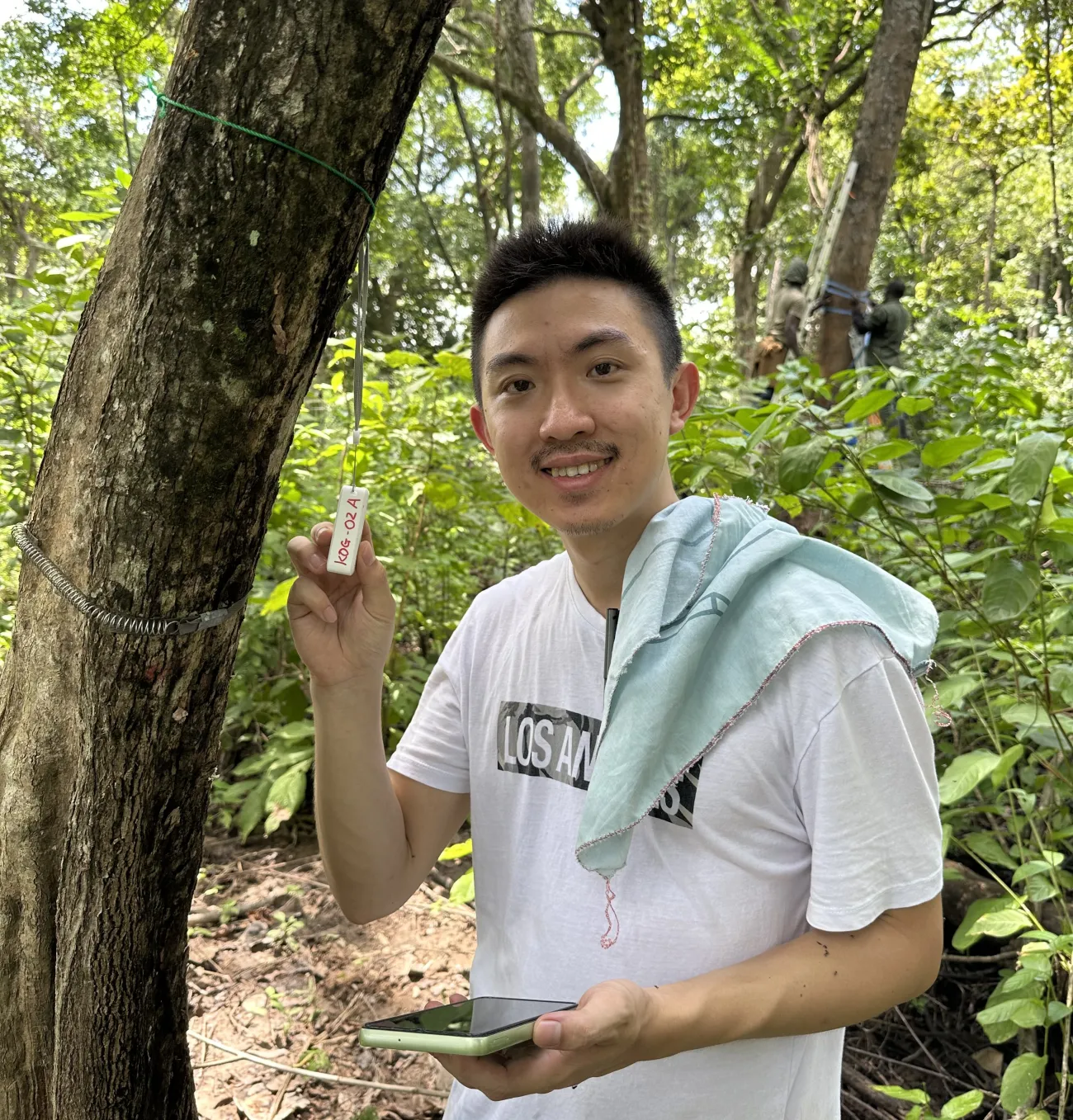
Dr Huanyuan Zhang-Zheng conducting fieldwork in one of the study sites, Kogyae Strict National Reserve in Ghana.
For ecologists, this could make it easier to use AI in research without needing specialist programming skills.
The approach is relatively low-cost, requiring a standard digital camera and fisheye lens alongside freely available software. The researchers suggest this could be particularly useful for ecological studies in regions where access to specialist computing resources or programming expertise is limited.
The study was carried out through the Global Ecosystems Monitoring network and involved researchers from institutions in Africa, Europe and Asia, including ECI researchers Dr Imma Oliveras Menor, Prof Yadvinder Malhi, Dr Cecilia Dahlsjö, Dr Huanyuan Zhang-Zheng and ECI alum Dr Sam Moore.
Read the full paper in Methods in Ecology and Evolution: An AI-based and coding-free integration for forest Leaf Area Index calculation.