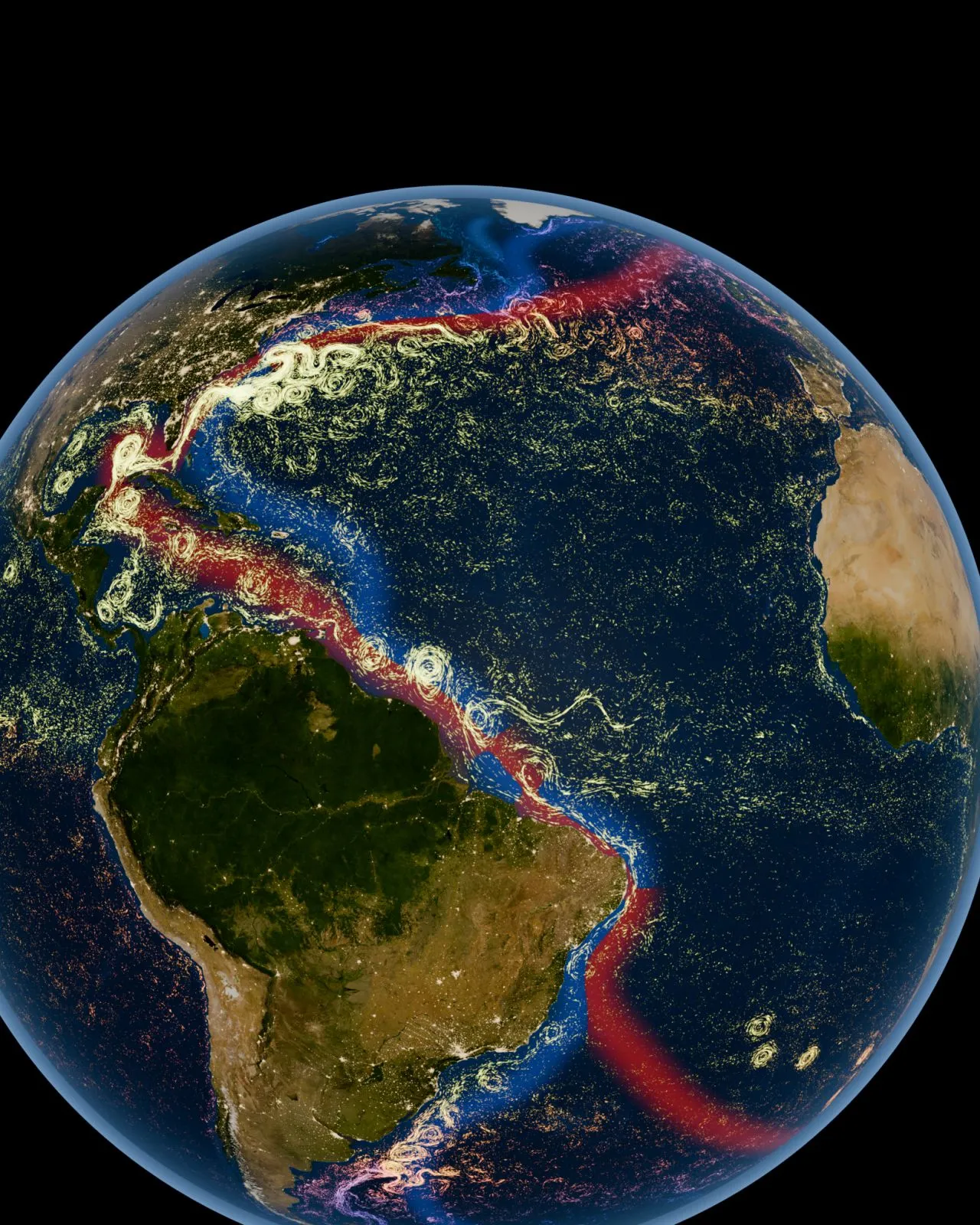
A study published in Nature Sustainability by researchers at the Environmental Change Institute (ECI) found that only two of 91 national adaptation plans submitted to the UN climate convention mention the possibility of a collapse of the Atlantic Meridional Overturning Circulation (AMOC), and neither sets out concrete action in response.
AMOC helps regulate the global climate by moving heat around the planet. A major weakening or collapse could have far-reaching effects on temperatures, rainfall, sea levels, fisheries and food and water security in regions around the world.
Writing in The Conversation, Brenden Jongman, an Honorary Research Associate at ECI, and Prof Jim Hall, Professor of Climate and Environmental Risk and leader of the Oxford Programme for Sustainable Infrastructure Systems (OPSIS) at ECI, explore why governments need to account for this risk when planning for climate change. They outline five ways to prepare, including identifying vulnerable countries and investments, stress-testing infrastructure against different climate scenarios, and ensuring adaptation measures can be adjusted as conditions change.
Read the article in The Conversation
Read the full paper in Nature Sustainability: Adapting to the risk of Atlantic circulation change Access to the full paper may require a subscription.