



Europe’s ports — which underpin trade, food supply, and energy systems — are far more vulnerable to climate change than previously estimated. New research shows that when multiple climate hazards strike at the same time, damage and disruption increase sharply, yet these compound risks are largely missing from current planning and investment decisions.
The study, co-authored by researchers at the Environmental Change Institute (ECI), University of Oxford, and published in Environmental Research: Climate, finds that failing to account for compound climate hazards — where events such as flooding, storms, heat, and high sea levels occur simultaneously — leads to a substantial underestimation of risks to port infrastructure and operations across Europe.
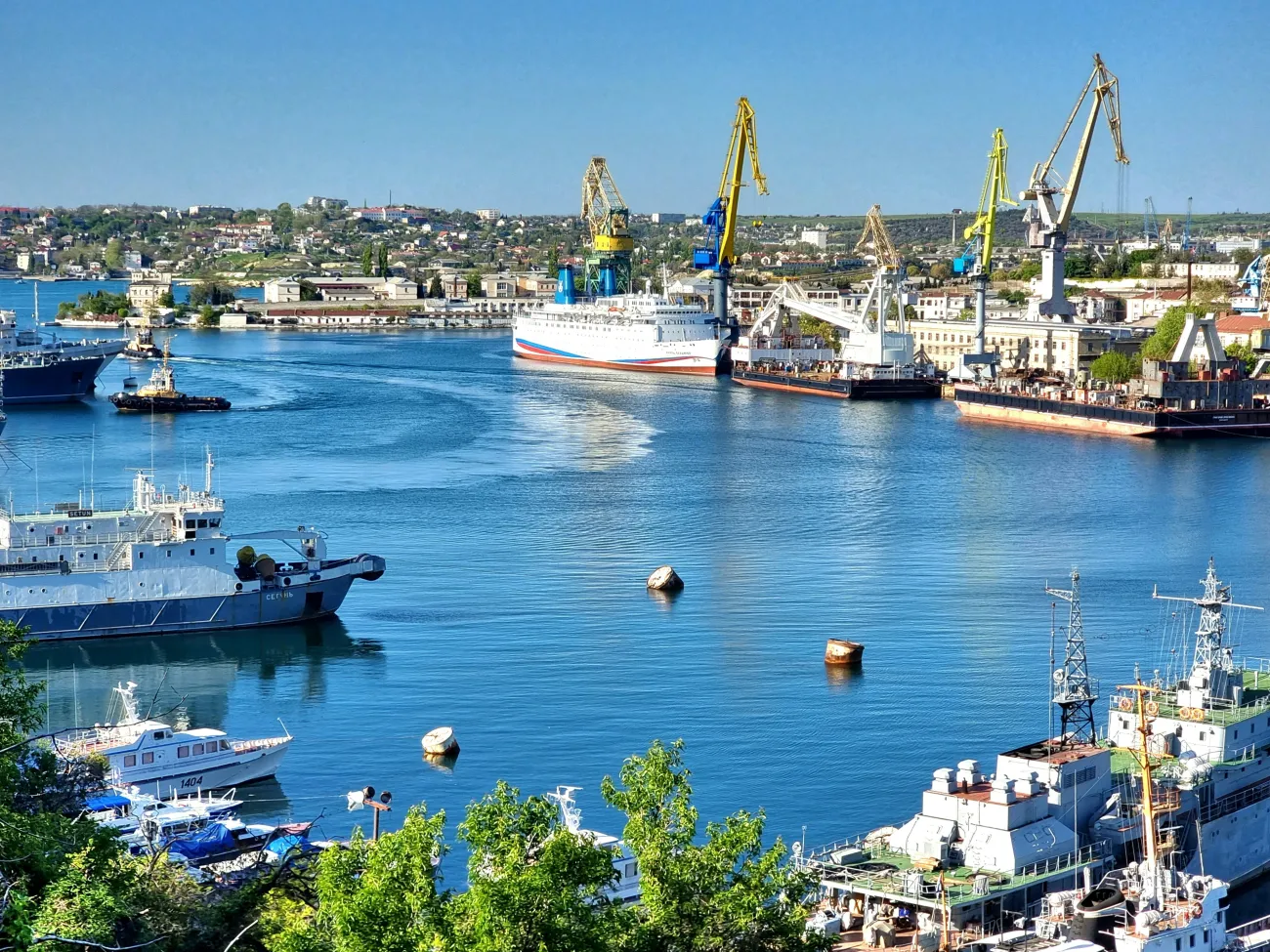
Sevastopol - a major port city on the southwestern Crimean Peninsula
Ports are critical nodes in global supply chains, underpinning food, energy, and goods distribution. Disruption or damage can therefore have far-reaching economic consequences well beyond port boundaries.
Analysing 406 medium to large European ports, the researchers find that compound climate events add around €360 million per year to direct infrastructure damages, equivalent to a 35% increase compared with assessments that consider hazards individually. When interactions between hazards are ignored, expected annual losses across European ports are underestimated by around €100 million.
The study estimates that total expected annual losses across the European port system reach €1.05 billion, with around €890 million due to physical damage and €160 million due to operational downtime. More than one-third of annual damage losses are driven by compound climate events.
Importantly, the research shows that compound effects become increasingly dominant as events become more extreme. For the most severe events — those with a probability of occurrence below 0.5% — compound hazards account for over 50% of total losses, with extreme events potentially causing up to €50 billion in damage, nearly half of which is linked to interacting climate impacts.
Major European ports including Rotterdam, Antwerp, Le Havre and Saint Petersburg are among those facing particularly high expected losses from compound climate risks.
The study was led by Dr Alberto Fernández-Pérez, Research Associate with ECI’s Oxford Programme for Sustainable Infrastructure Systems (OPSIS). Dr Fernández-Pérez said:
Most infrastructures’ risk assessments still treat hazards in isolation, yet real-world disruptions rarely occur that way. By explicitly modelling the compound and non-linear interactions of concurrent climate hazards, our analysis reveals how damages and losses are systematically amplified. If extreme impacts emerge from interacting hazards, then our risk frameworks must reflect that reality, anything less underestimates risk.
Also involved in the study was Dr Jasper Verschuur, Honorary Research Associate, ECI, and Assistant Professor in Engineering Systems and Climate Security at Delft University of Technology and Prof Jim Hall, Professor of Climate and Environmental Risk at the ECI, and OPSIS Director. They worked alongside Dr Javier López Lara and Prof Iñigo Losada from the research institute IHCantabria.
The authors emphasise that many current infrastructure risk assessments and adaptation plans focus on single hazards, such as flooding or storms in isolation. The findings highlight the need for integrated, multi-hazard approaches to climate risk assessment and infrastructure design — especially as climate change is expected to increase the frequency and intensity of extreme events and their interactions.
The research provides an important evidence base for climate adaptation planning, helping policymakers, port authorities and investors better understand where risks are concentrated and how resilience measures can be more effectively targeted.
Read the full study in Environmental Research: Climate: Compound climate risks to European ports