
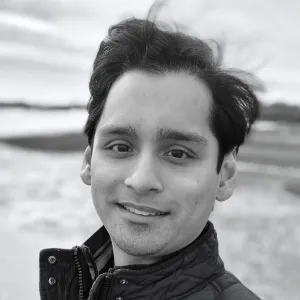
Geography encourages us to look beyond the classroom—to understand the world around us, how people and environments are connected, and how we can respond to the challenges facing our planet.
For Dr Avidesh Seenath that curiosity began as a schoolboy in Trinidad and Tobago and has since shaped a career dedicated to environmental research and education.
Returning to his former school, he reflects on the opportunities Geography can create and the important role it plays in helping the next generation understand and protect the world they will inherit.
Recently, I had the opportunity to return to my alma mater, Couva East Secondary School in Trinidad and Tobago, to speak with Form 4 Geography students (equivalent to Year 10 students in the UK) about a simple question: How far can Geography take you?
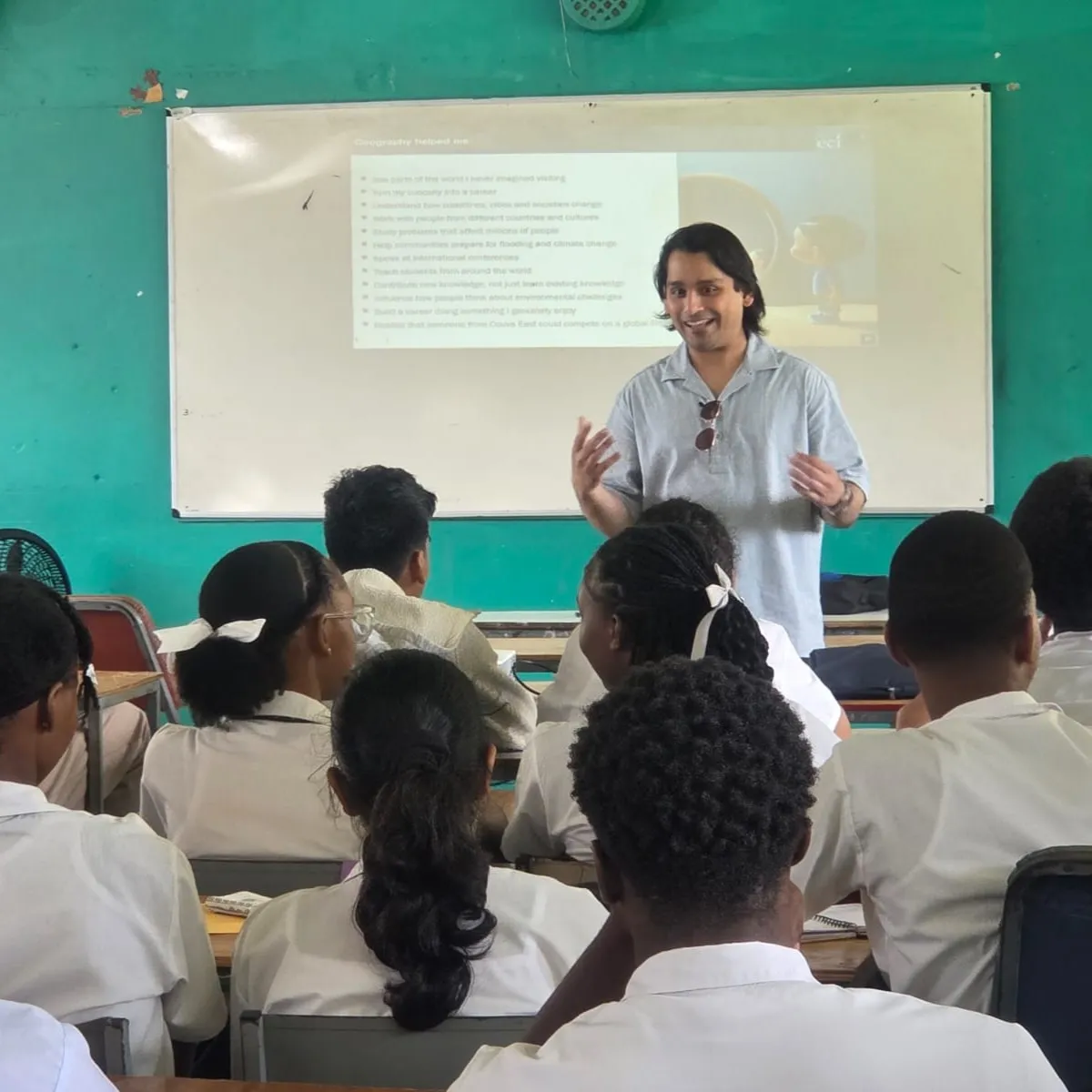
As Course Director of the MSc in Environmental Change and Management (ECM) at Oxford's Environmental Change Institute, I spend much of my time working with future environmental leaders from around the world. During this visit, however, I found myself speaking to a much younger audience: students sitting in the same classrooms where my own interest in Geography first developed.
The talk focused on my journey from Couva East to Oxford, but more importantly on the breadth of opportunities that Geography can provide. One of the key objectives was to broaden students' understanding of what Geography can be. At secondary school level, the subject is often viewed quite narrowly, yet it sits at the centre of many contemporary environmental challenges and provides pathways into a remarkably diverse range of careers.
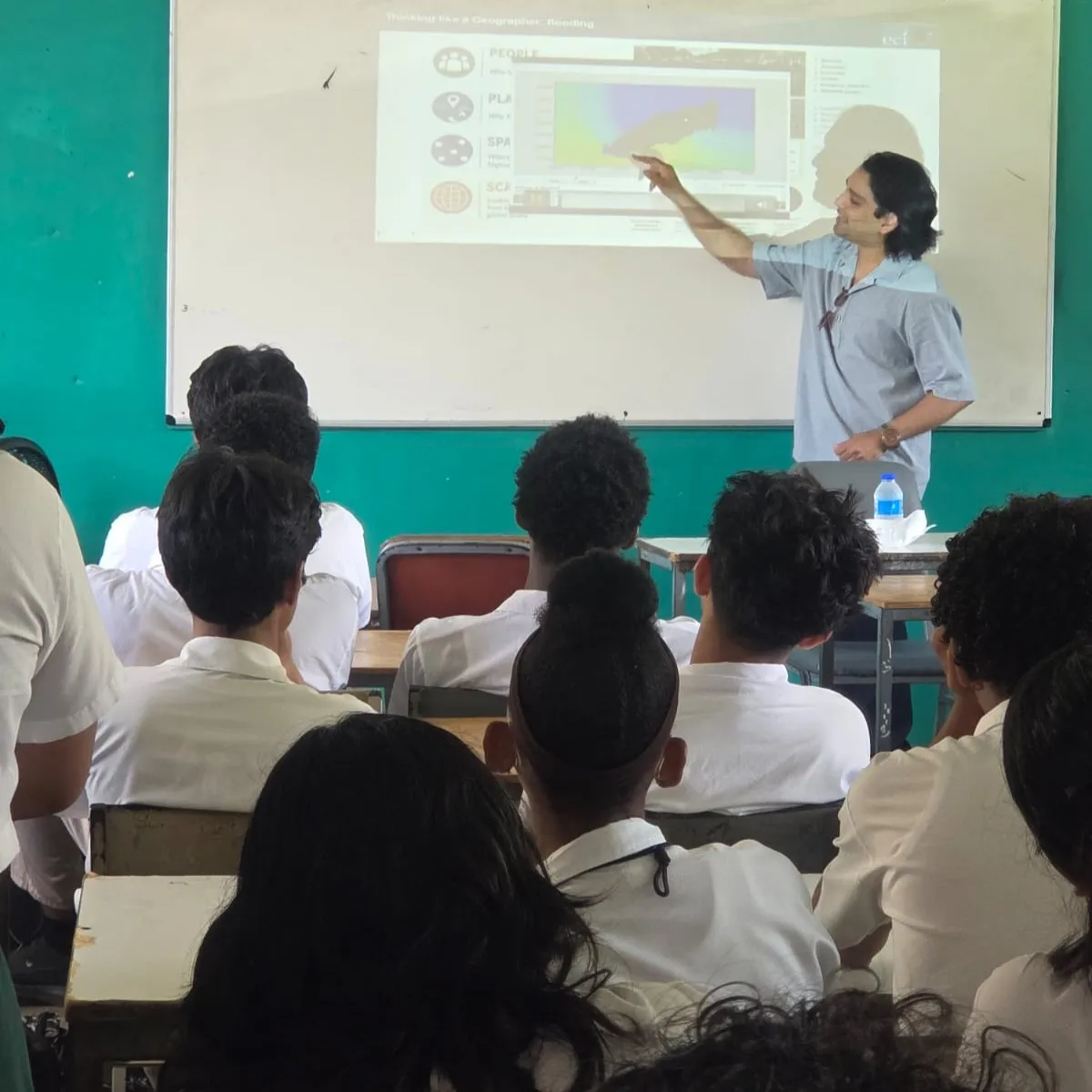
I also shared examples from my research on coastal change and flood risk, demonstrating how contemporary geographers increasingly use data, modelling, remote sensing, and interdisciplinary approaches to understand environmental systems and support decision-making. My aim was to show students that Geography today extends far beyond the classroom and can lead to careers in research, technology, policy, environmental management, and many other fields.
One of the key messages I wanted to leave with students was that opportunities in environmental science and policy are not limited by geography. Talent, curiosity, and ambition are distributed far more widely than opportunity. Students from small island states, including Trinidad and Tobago, have valuable perspectives to contribute to global conversations about climate change, sustainability, and environmental management.
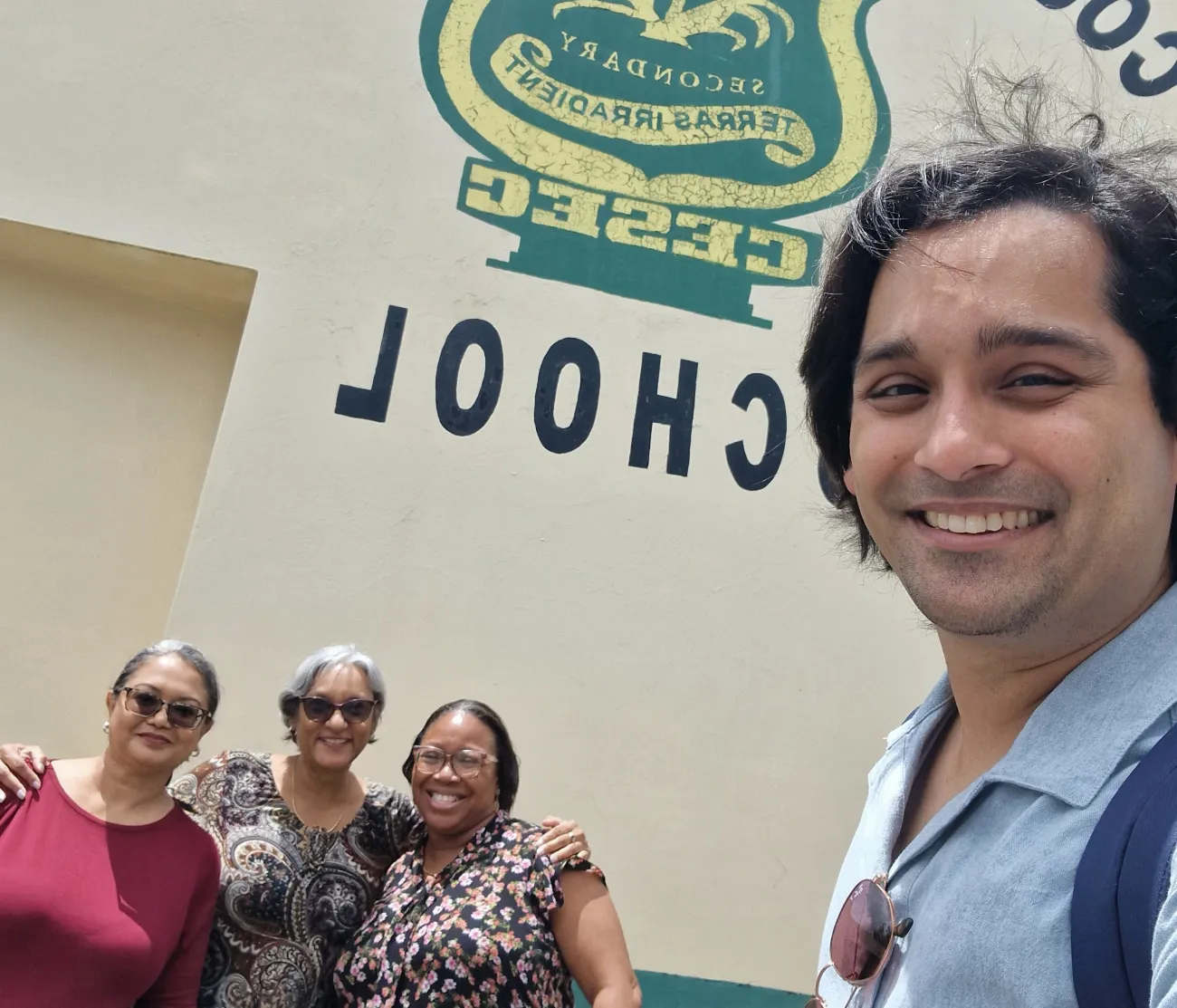
The visit also provided an opportunity to reconnect with the Geography teachers at Couva East. During the talk, I reflected on the important role they played in laying the foundations for the path that followed. They remain the best Geography teachers in Trinidad and Tobago.
At a time when environmental challenges are becoming increasingly complex and interconnected, encouraging the next generation to engage with these issues has never been more important. It was a privilege to spend time with students considering their futures and discussing the many directions Geography can take them, whether in research, policy, business, technology, or environmental management.
Environmental leaders do not emerge from a single programme, institution, or career path. More often, their development begins with a teacher, a subject, or an opportunity that expands their sense of what is possible. I hope this visit helped do that for at least some of the students in the room.
Find out more about the MSc
The MSc in Environmental Change and Policy (ECP) aims to equip future environmental leaders with the critical thinking, research expertise, and analytical tools needed to design and evaluate policies for addressing the world’s most pressing environmental challenges. It builds on the former MSc in Environmental Change and Management and places strong emphasis on both environmental change and the policy and practice needed to respond to it, aligning with emerging demands in the field for graduates who can both understand and act upon environmental science.