

A new study co-authored by Dr Diogo Veríssimo at Oxford’s Environmental Change Institute (ECI) has developed a practical way to assess the effectiveness of online conservation campaigns. Published in Conservation Science and Practice, the research uses “culturomics” – the analysis of human–nature interactions through digital data – to track how audiences engage with biodiversity online.
Digital campaigns have become a cornerstone of conservation communication – from viral videos about plastic pollution to humorous skits featuring endangered animals. But do these efforts actually change how people behave or seek out information?
The team, led by Dr Veríssimo and lead author Gabriel Caetano of the Jacob Blaustein Center for Scientific Cooperation and the Mitrani Department of Desert Ecology at Ben-Gurion University of the Negev, Israel, analysed two campaigns: one focusing on India’s Western Ghats, a global biodiversity hotspot, and another using comedic skits to highlight species and conservation threats worldwide. By tracking changes in Wikipedia page views of featured species and habitats, and comparing them to similar topics not included in the campaigns, the researchers were able to assess whether people sought out more information after watching.
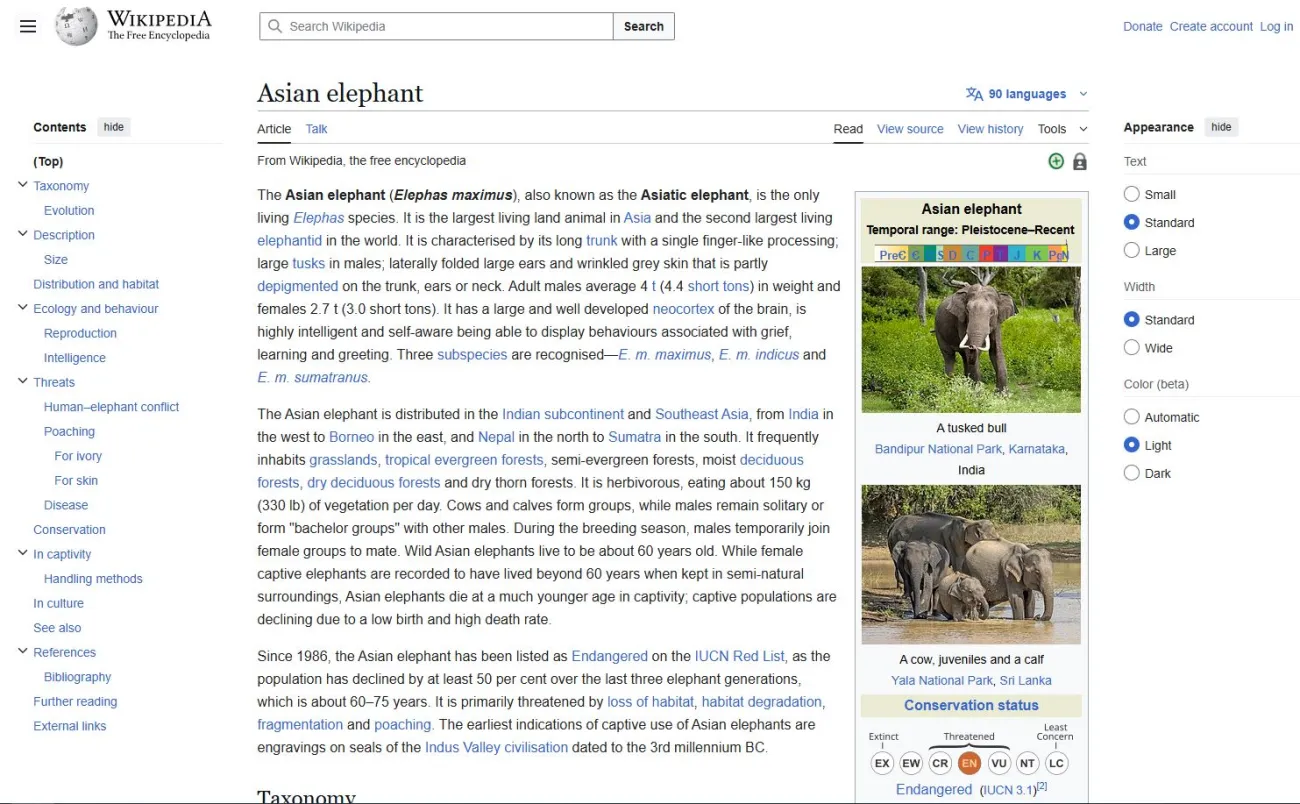
Their results were sobering – of 21 topics studied, only three showed significant changes in Wikipedia traffic – two positive, and one negative. The regional campaign in India had some success in boosting interest in species such as the Asian Elephant (in Urdu) and the Kottigehar Dancing Frog (in English). However, the global skits campaign had no measurable impact.
Dr Veríssimo, Lead of the ECI’s Biodiversity & Behavioural Science Team (BBeST) said the findings highlight both the challenges and opportunities for conservationists:
Digital campaigns are an increasingly powerful way to reach people, but we still know very little about how effective they are. By using freely available data, we’ve shown that it’s possible to measure impact quickly and at low cost – a vital step for organisations working with limited resources.”
The study demonstrates that while online conservation campaigns may not always drive large-scale engagement, targeted regional efforts – particularly when delivered in local languages – could prove more effective.
Beyond the specific results, the research provides conservationists with a valuable new tool: a replicable framework that combines digital data with rigorous statistical methods. This approach could allow organisations to adapt campaigns in real time, invest resources more effectively, and better understand how online engagement translates into real-world conservation action.
Dr Veríssimo added:
The ultimate goal is to connect online engagement to offline behaviours – from fundraising to policy support. This study is one step towards making conservation communication more evidence-based and impactful.”
Read the full paper in Conservation Science and Practice: Measuring impact of digital conservation campaigns using culturomics