
Professor Yadvinder Malhi, Professor of Ecosystem Science at the Environmental Change Institute, (ECI), took part in a high-level scientific session at COP30 in Belém that brought together the Science Panels for the Amazon, Congo Basin and Borneo — the world’s three largest tropical forest regions.
The event, Tropical Forest Scientific Cooperation for Conservation and Sustainable Development, marked the launch of the 2025 Amazon Assessment Report and previewed key findings from the first-ever comprehensive scientific assessments for the Congo Basin and Borneo.
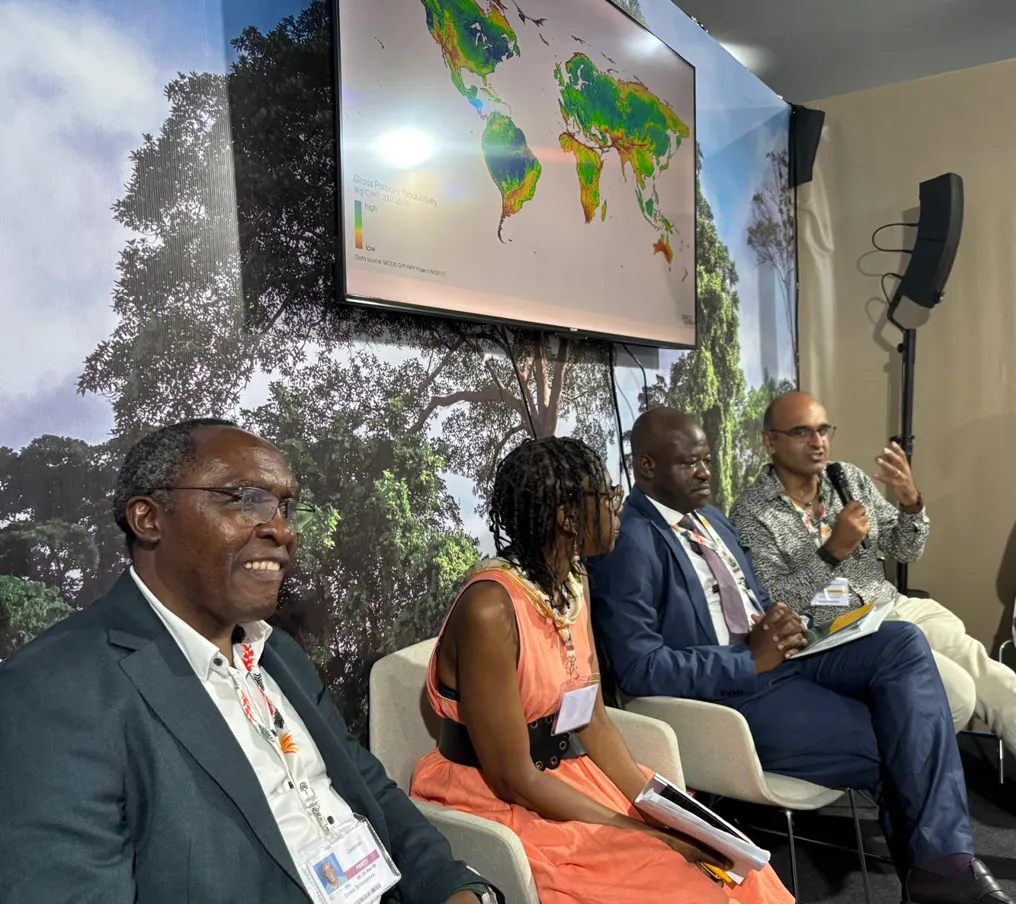
Together, the panels highlight shared threats across the major tropical forest biomes — including deforestation, climate change, fires, extractive industries, and pressures on Indigenous and local communities — and set out science-based pathways for conservation, restoration, and sustainable development.
Speaking alongside experts from across South America, Africa and Southeast Asia, Professor Malhi contributed to discussions on tropical forest resilience, climate impacts, and the importance of South–South scientific collaboration.
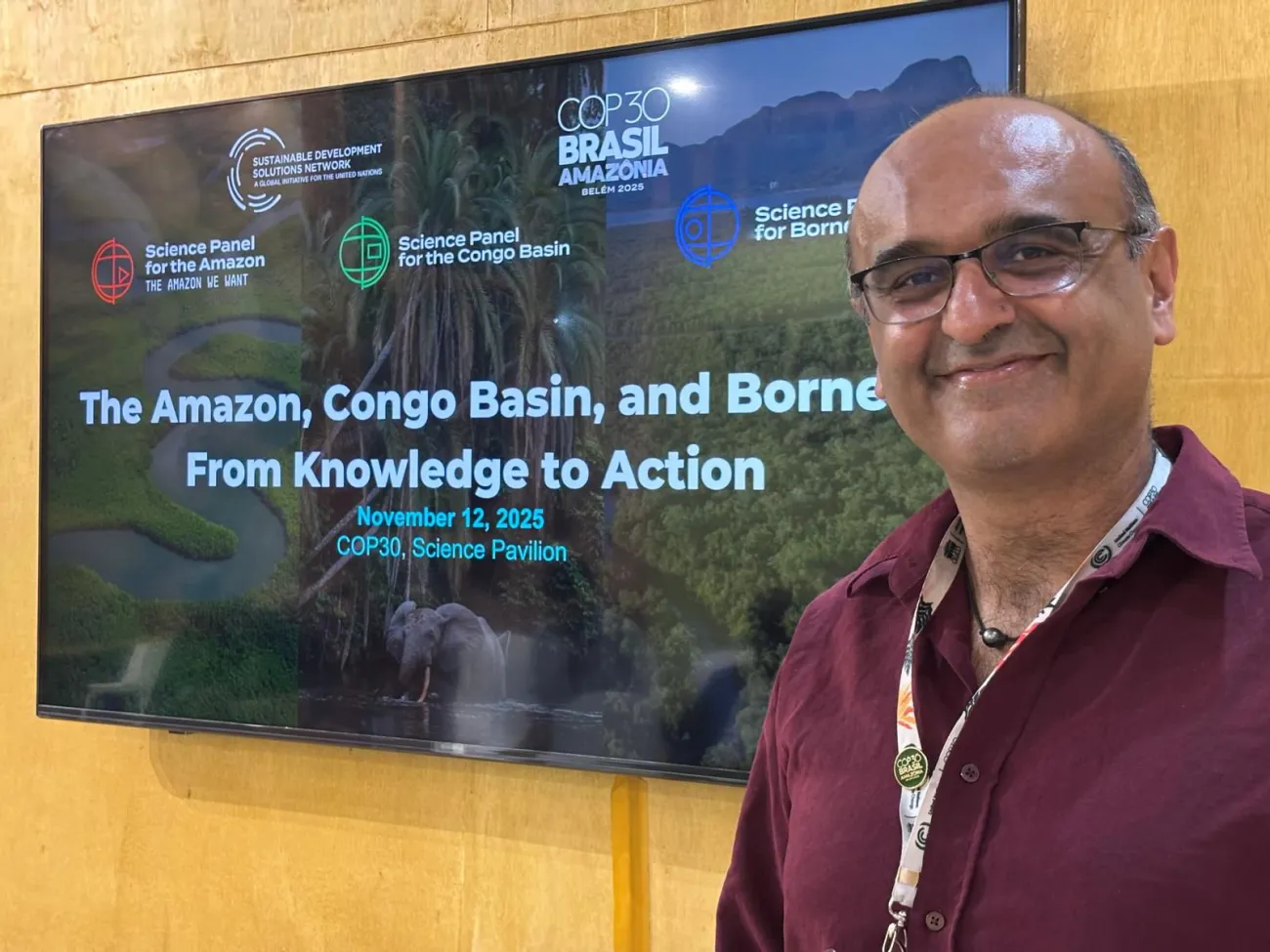
Prof Malhi, Ecosystems and Biodiversity Programme Leader at the ECI and Director of the Leverhulme Centre for Nature Recovery, said:
This has been billed as the ‘rainforest COP’ by its Brazilian hosts, and rightly so. We’re seeing real progress on new global mechanisms to protect rainforests and halt deforestation.
Here in Belém, an Amazonian city, I’ve been highlighting the vital role of tropical forests and the research that supports this. I’ve also been highlighting the Congo Basin is the other great rainforest system our planet depends on, and talking about different pathways towards its futureThe assessments emphasise that coordinated global and regional action is urgently needed to safeguard ecosystems central to biodiversity, climate stability, and the livelihoods of more than 180 million people.”
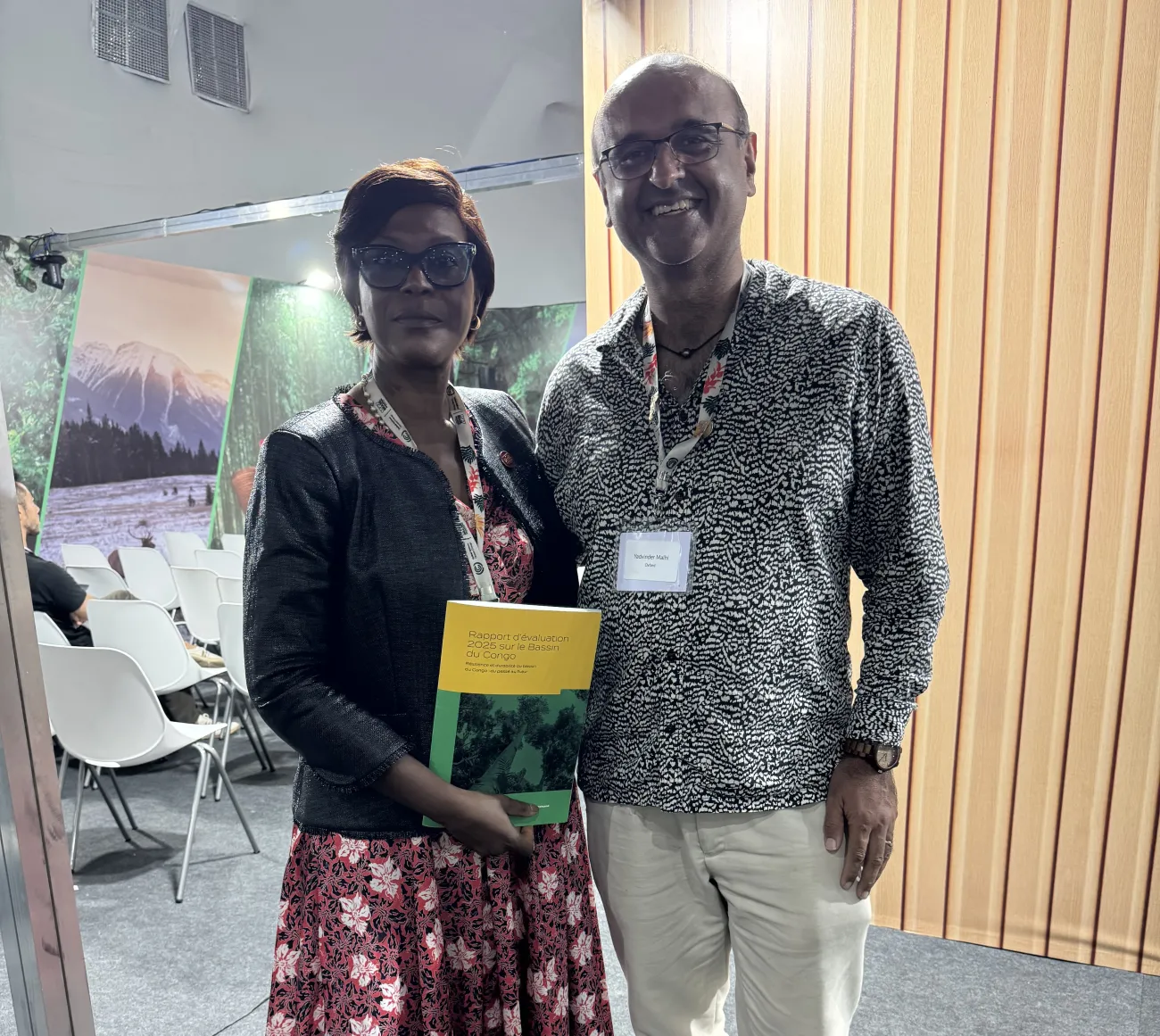
Arlette Soudan-Nonault, the Minister of Environment for the Republic of the Congo with Professor Yadvinder Malhi
Read the full press release from the UN Sustainable Development Solutions Network: Science Panels for the Amazon, Congo Basin, and Borneo Urge Action on Threats and Opportunities in World's Largest Tropical Forests