

E-cargo bikes could play a significant role in reducing household car use, with new research showing that 60% of journeys made by participants in domestic trials across three UK cities replaced a car journey.
The study, led by Environmental Change Institute (ECI) and Transport Studies Unit (TSU) researcher Dr Labib Azzouz, examined how e-cargo bikes (ECBs) were used by households in Oxford, Leeds, and Brighton.
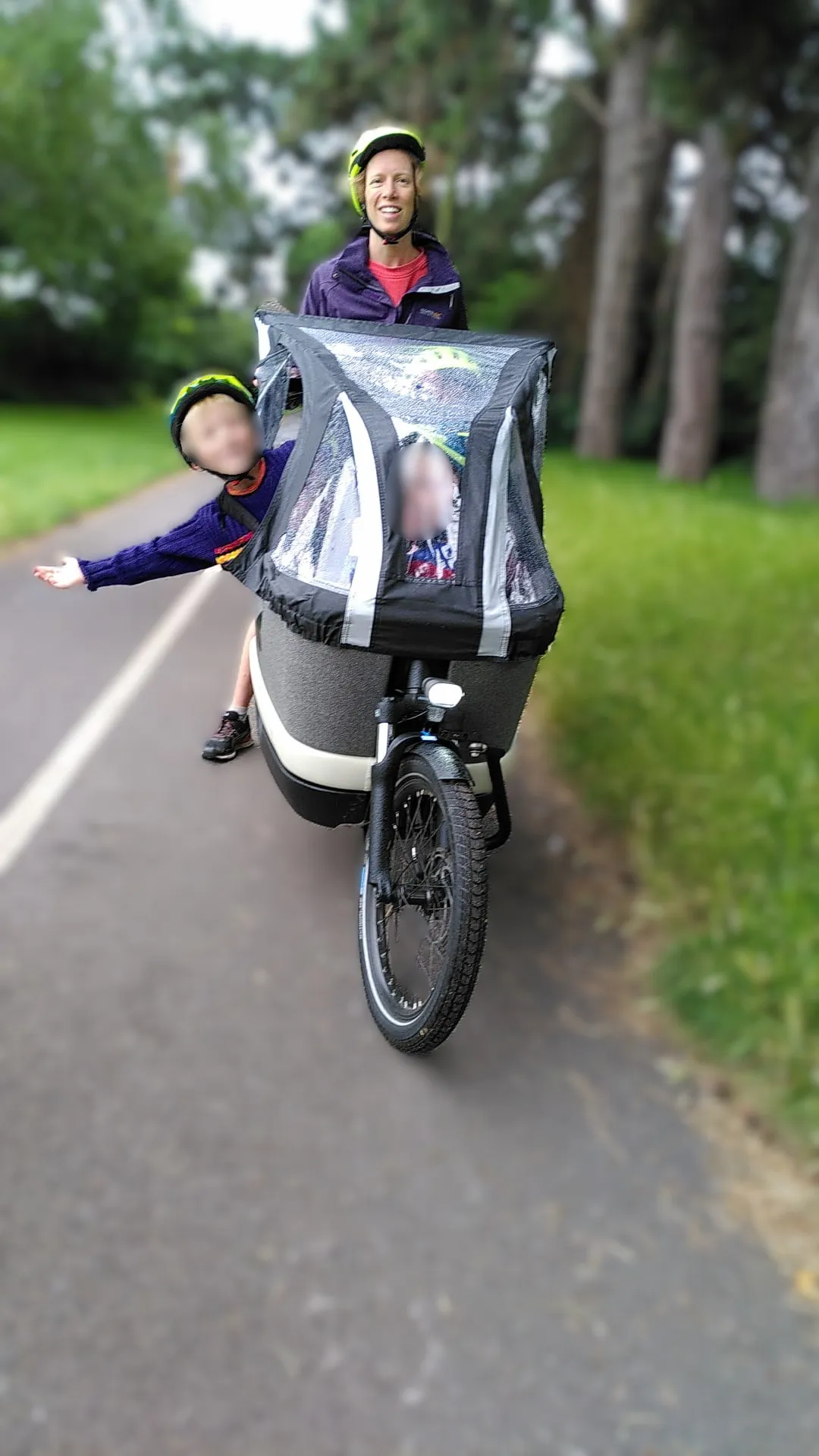
Published in Transportation Research Part D: Transport and Environment, the research combined travel diaries from 42 households with interviews to explore not only which journeys ECBs replaced, but why people chose them over other forms of transport.
Of the 816 journeys recorded during the trials, 60% replaced car journeys, while 23% replaced conventional cycling and 17% replaced walking. In total, journeys made using ECBs replaced more than 2,500 miles of car travel.
The findings show that ECBs were particularly effective for everyday journeys involving children, shopping and leisure. Carrying capacity and electric assistance made it easier for participants to transport children and goods, while also reducing the physical effort involved.
For some households, the benefits went beyond replacing individual car journeys. Multi-car households described the bikes as a realistic alternative to a second car, suggesting that ECBs could contribute not only to reducing car use but, in some cases, to reducing car ownership and dependency.
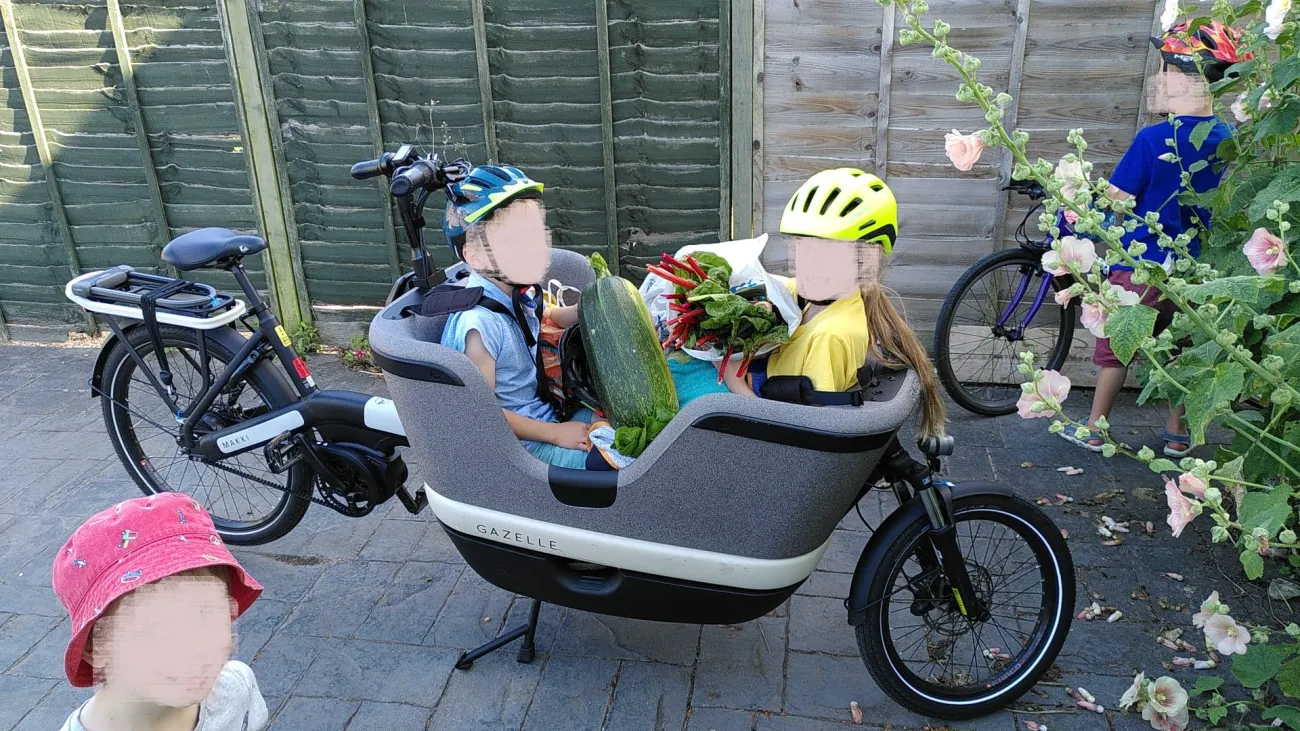
The study also highlights the importance of time and familiarity. Participants described gradually building confidence with the bikes and adapting their routines, shopping habits and journey planning around their capabilities. Some felt that the initial four-week trial was not long enough for the ECB to become fully integrated into everyday life.
Dr Azzouz, Research Associate in Transport and Energy Innovation, said: “E-cargo bikes have the potential to fundamentally change how families move around our cities, fulfilling everyday journeys such as school runs, shopping and leisure. These bikes can play a meaningful role in reducing car dependency, cutting vehicle mileage and supporting a shift towards more sustainable mobility, while also making travel experiences more enjoyable and active, and providing physical and mental health benefits.”
The research suggests that policies designed to encourage ECB use need to reflect different patterns of use. Longer-term trials, financial support, secure storage and safer, connected cycling infrastructure could all help households overcome barriers to adoption and make it easier to replace more car journeys.
The researchers also highlight the need for targeted approaches rather than a one-size-fits-all model. ECBs may be particularly valuable for households with children and for multi-car households, while affordability and accessibility remain important considerations if their benefits are to extend beyond relatively affluent early adopters.
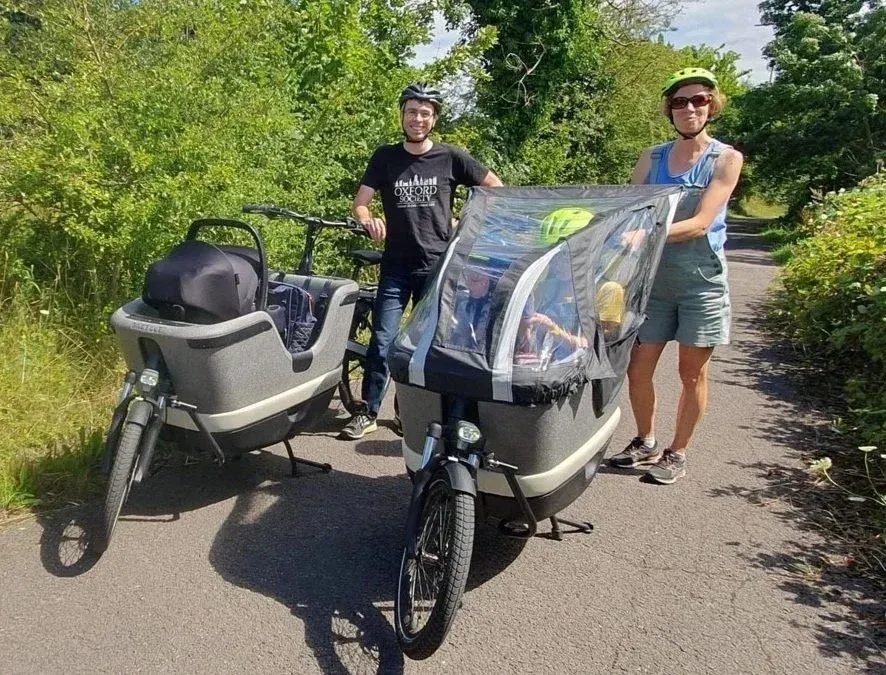
Dr Labib Azzouz is a researcher in transport and energy innovation at the ECI and TSU. He is the lead author of the study, which was co-authored by Dr Noel Cass at the Institute for Transport Studies at the University of Leeds and Dr Zhaoqi Zhou at the TSU.
The research was conducted as part of the ELEVATE project, which explores how light electric vehicles, including e-cargo bikes, can reduce energy consumption and carbon emissions while supporting healthier lifestyles.
Read the full paper in Transportation Research Part D: Understanding e-cargo bike substitution of car, cycling, and walking through domestic trials in three UK cities.