
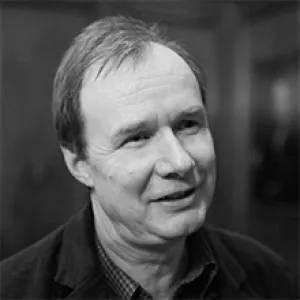
Dr James Painter, senior teaching associate at Oxford’s Environmental Change Institute and research fellow at the Reuters Institute for the Study of Journalism, has a career that bridges academia and the media, including many years with the BBC World Service. In this blog, he explores how climate communication is evolving in an era of influencers, short-form video and AI — and where research most needs to keep pace.
Five years ago, myself and a colleague, published an overview of the major forces within the media, politics and technology that were shaping climate journalism around the world. We mapped the rapid changes particularly in three areas: the diversification of voices, the rise of social and digital-born media, and developments in journalistic practice itself.
While trends and media landscapes differed widely across countries, common elements were often to be found:
- Organisational make-up: Economic pressures and newsroom cuts had reduced specialist environmental reporters, and full-time climate correspondents were unusual.
- Role perceptions and performance: Journalistic roles were diversifying. Some journalists were moving from detached reporting toward curation or ‘soft’ advocacy, raising questions about objectivity and trust.
- Relationships with sources: News production involved a wider array of sources, but elite voices and PR campaigns often dominated.
We also argued that researchers had to be more cognisant of the rapid changes happening in media landscapes around the world, as mapped annually by the Reuters Institute at Oxford.
Five years later, and it is already apparent that we failed to predict several important developments which are now shaping climate communication, particularly in the media. To name but four, these are:
i) the preference of many audiences for short-form videos compared to text,
ii) the boom in social media influencers (including climate influencers) as a source of climate information,
iii) the rapid adoption of AI/Gen AI by many newsrooms and
iv) the ever-changing nature of climate denialism or obstructionism.
Audience preferences: from text to video
Audiences increasingly favour visual, dynamic formats. A 2024 eight-country study by the Reuters Institute found that 51% of respondents now prefer video for climate information, far exceeding text-based formats. This shift affects how climate knowledge is understood, emotionally experienced, and shared. Only in the UK did more respondents prefer text, suggesting that information cultures differ by country, audience, and platform.
The rise of influencers
In general, influencers on social media are an increasingly important source of news, and some of these are clearly carrying out some of the tasks of traditional journalism such as providing original stories, explainers and exclusive interviews.
Some influencers are very active in the environment and climate information space, such as Hugo Clément and Salomé Saqué in France.
A range of specialist ‘climate creators’ are providing original, educational and often visual climate information on Tik Tok, YouTube and Instagram, but several influencers are in part responsible for the growing propagation of climate mis/disinformation.
Generative AI in the newsroom
AI/GenAI is now deeply embedded in the general practice of journalism, although much less is known about the impact of AI/GenAI on specialist journalism such as science and climate reporting. In general reporting, research has identified several common applications of AI:
- Access & Observation: Tools help detect stories, analyse audiences, and support ideation.
- Selection & Filtering: Automated claim-checking, categorisation, translation, and metadata searches guide content curation.
- Processing & Editing: GenAI assists in drafting, formatting, and adapting content for multiple platforms.
- Distribution: AI personalizes content, recommends headlines, and moderates engagement.
However, initial evidence suggests that science journalists (in Germany) are much more reluctant to use these tools for generating content. They may use them for specific problems regarding the production and distribution of news (e.g., translations, transcriptions, spellchecks, data analysis, and distribution) but not for news selection or to produce content.
Anecdotal evidence suggests the climate journalism has peculiar characteristics, in that it requires high degrees of accuracy, specialism, transparency, and interpretation, which only experienced climate reporters can give.
Where AI is being used by journalists is through Chatbots helping readers to answer questions about climate change (See the Washington Post) or via platforms like Earth Genome, which uses satellite data and machine learning to track emissions and land use changes in near real time. These tools enable investigative journalists, NGOs, and citizen scientists to verify claims about environmental damage and policy performance. While promising, questions about data access, governance, and control remain.
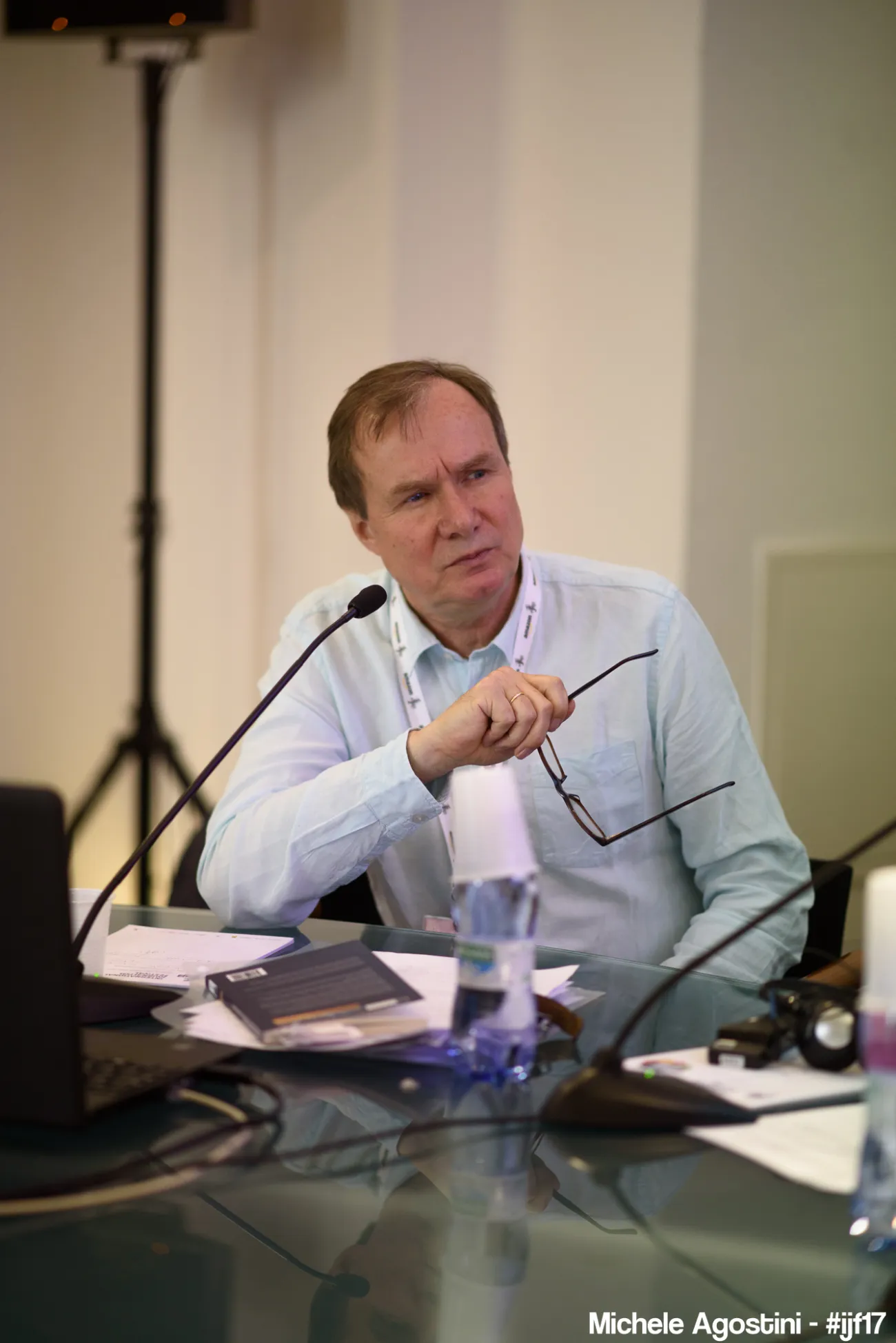
Dr James Painter at the International Journalism Festival in Perugia in 2017
Misinformation and the climate infodemic
AI is also a driver of misinformation. The World Economic Forum’s Global Risk Perception Survey (2023–2024) found that AI-generated misinformation ranks second among perceived global risks (53%), just behind extreme weather (66%). GenAI enables scalable creation of plausible disinformation—from deepfake weather events to fabricated policy documents.
Climate mis- and dis-information in the media is an ever-changing phenomenon. Scholars had identified a major shift of emphasis from ‘old-fashioned’ science denial to ‘climate obstructionism’ (i.e. opposing climate policy), but in recent months there is some evidence that the former is making a comeback. Attention needs to be paid too to the growing incidences of misinformation about extreme weather events, on social media.
Towards a research agenda
Prompted by these changes in technology and political environments, a team of researchers, including myself, recently proposed a new research agenda for climate communication via the media:
- Focus attention on phenomena that bridge or confound the traditional dividing lines of mediated climate communication research
- Seek to build or expand research institutions and networks that bring together climate communication scholars from across related disciplines, geographical areas, and cultural contexts
- Strengthen university programs that connect climate communication researchers with activists and media-makers.
This blog was ‘helped’ by a touch of AI assistance, though any mistakes or questionable phrasing are entirely human generated. It is based on the text and slides of a lecture given at Umeå university in Sweden on 16 September 2025.
The lecture will be available to watch soon.
Dr Painter will be speaking at the International Journalism Festival 2026.